Waterproof vs resistant
Waterproof vs Water-Resistant Work Boots
Water resistant means treated leather. Waterproof means a membrane. Neither handles standing water.
These two terms are used almost interchangeably in marketing and mean substantially different things, and the confusion costs people money in both directions - buying a membrane boot for dry hot work where it makes them miserable, and buying a treated-leather boot for wet work where it fails within an hour.
The three categories, precisely
| Category | How it works | Handles | Does not handle |
|---|---|---|---|
| Water resistant | Treated or oiled leather sheds water at the surface | Light rain, brief splash, wet grass | Sustained rain, puddles, standing water |
| Waterproof (membrane) | A waterproof-breathable layer inside the boot | Rain, splash, shallow puddles, wet ground | Water over the collar - and then traps it inside |
| Waterproof (rubber) | No entry path, nothing absorbent | Standing water up to the shaft height, wash-down | Breathability - none at all |
The practical rule: if water comes at you, buy a membrane boot. If you stand in water, buy rubber. If both happen in your week, own both - which is what most people in genuinely wet trades do, as boots for plumbers and boots for farming describe.
Head to head
Ranked by our published scoring rubric. Tap any row for the full write-up.
| # | Product | Best for | Score | Price |
|---|---|---|---|---|
| 1 | 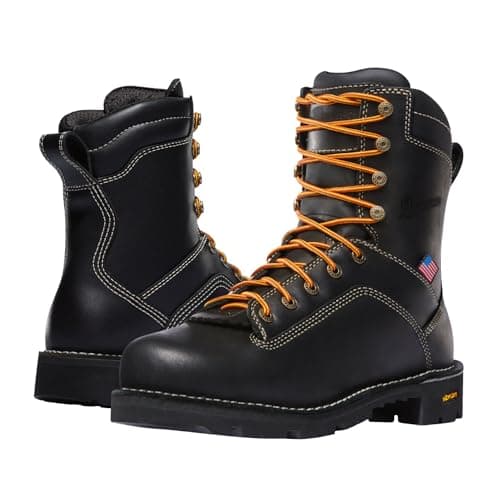 Danner Quarry 8" Waterproof Alloy ToeWinner for genuine wet-weather work - Gore-Tex plus a gusseted tongue and real height. | Waterproof: the most reliable membrane made | 8.6 | |
| 2 | 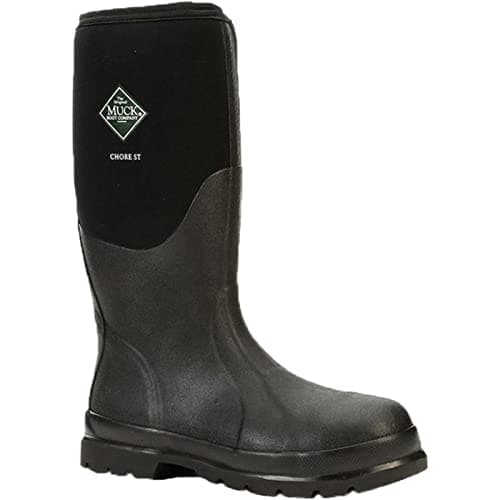 Muck Boot Chore Classic Tall Steel ToeWinner when you stand in it - rubber cannot wet out and dries in minutes. | Standing water, where both membranes fail | 8.4 | |
| 3 | 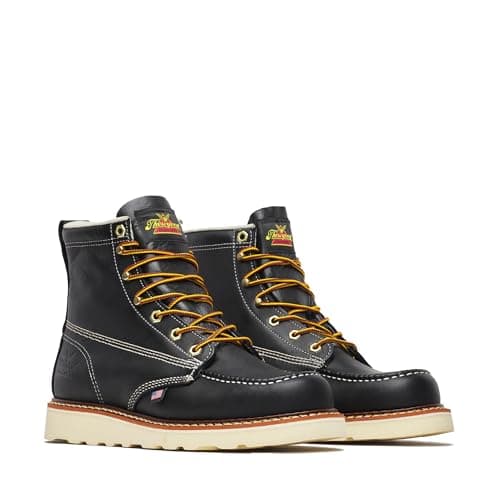 Thorogood American Heritage 6" Moc ToeNot waterproof - and the right choice if your work is dry or hot. | Water resistant: when breathability matters more | 7.4 |
#ad Prices pulled from Amazon and stamped as of October 6, 2026; they change, and we show no number we cannot verify. How we are funded.
Winner for wet weather · Waterproof: the most reliable membrane made
Danner Quarry 8" Waterproof Alloy Toe
Winner for genuine wet-weather work - Gore-Tex plus a gusseted tongue and real height.
Gore-Tex has the longest field record of any waterproof-breathable membrane, and in an 8-inch stitchdown boot it is about as reliable as footwear waterproofing gets. The gusseted tongue and shaft height matter as much as the membrane - a membrane is irrelevant if water comes over the collar.
Recraftable, so the cost spreads over years. Expensive, stiff and heavy, and a poor choice for flat-concrete standing work.
Specs that matter
- Toe:
- Alloy toe, ASTM F2413
- Height:
- 8 inch
- Waterproof:
- Gore-Tex lined
- Build:
- Stitchdown, recraftable
Our scoring
- Keeps rain out
- 9.4
- Keeps standing water out
- 6.4
- Breathability
- 7.4
- Durability
- 9.6
- Value
- 7.4
What works
- Danner will recraft it, so the price is spread over many years
- Gore-Tex is the most reliable waterproof lining in footwear
- Alloy toe is lighter than steel at the same rating
What to know
- Expensive up front
- Stiff and heavy for flat-concrete work
- Long break-in
Winner in standing water · Standing water, where both membranes fail
Muck Boot Chore Classic Tall Steel Toe
Winner when you stand in it - rubber cannot wet out and dries in minutes.
The case nobody shopping for waterproof boots thinks about. A membrane handles water coming at you; it does nothing once water comes in over the collar, and then it traps that water inside for days because it blocks vapor.
Rubber over neoprene has no entry path and nothing that absorbs, so it rinses clean and dries immediately. Steel toe, and the neoprene insulates. Zero breathability - the sock is your whole moisture system.
Specs that matter
- Toe:
- Steel toe, ASTM F2413
- Material:
- Rubber over neoprene
- Waterproof:
- Fully waterproof, not just resistant
- Height:
- Tall shaft
Our scoring
- Keeps rain out
- 9.4
- Keeps standing water out
- 9.8
- Breathability
- 2.5
- Durability
- 8.0
- Value
- 8.8
What works
- Genuinely waterproof in a way no membrane boot matches
- Neoprene lining insulates and flexes
- Rinses clean with a hose
What to know
- No breathability — feet sweat, so socks matter more than usual
- Rubber outsole wears fast on abrasive concrete
- Little arch support in the stock build
No. 3 · Water resistant: when breathability matters more
Thorogood American Heritage 6" Moc Toe
Not waterproof - and the right choice if your work is dry or hot.
Treated full-grain leather sheds light rain for a while and eventually wets through. That is water resistance, and it is genuinely the better property for dry and hot work, because there is no vapor barrier trapping your sweat.
Conditioning the leather maintains the repellency, and unlined leather dries in hours rather than days when it does soak. If you stand in water, this is the wrong boot entirely.
Specs that matter
- Toe:
- Soft toe (no safety rating)
- Height:
- 6 inch
- Sole:
- MAXwear wedge, slip-resisting
- Build:
- Goodyear storm welt, resoleable
Our scoring
- Keeps rain out
- 6.0
- Keeps standing water out
- 3.0
- Breathability
- 8.4
- Durability
- 9.2
- Value
- 8.2
What works
- Welt construction means a cobbler can resole it instead of you rebuying
- Flat wedge does not pack mud and does not scuff finished floors
- Removable footbed, so an aftermarket insole drops straight in
What to know
- Soft toe only — not legal where a safety toe is required
- Wedge sole gives up grip on wet steel and ladder rungs
- Premium price for a boot with no safety rating
The gusseted tongue, which matters more than the membrane
Here is the detail that decides whether a laced boot actually keeps water out. The commonest entry point is not the leather and not the membrane - it is the tongue. A plain tongue leaves an open channel either side of it, and water runs straight down into the boot regardless of how good the lining is.
A gusseted tongue is stitched to the boot along both edges, closing that path. It is cheap to make and hugely effective, and a surprising number of boots marketed as waterproof do not have one. Check for it specifically - it is more predictive of real-world dryness than the membrane brand.
What waterproofing costs you
Breathability, and it is a real cost rather than a footnote. A membrane passes some vapor but far less than unlined leather, and nowhere near what a working foot produces in heat. So a waterproof boot in hot dry work makes your feet wetter than an unlined boot would - from the inside. That is the whole argument on boots for hot weather and boots for sweaty feet.
There is also a maintenance consequence: membranes are thin layers that can be abraded, creased and contaminated, and a boot that has wet out is not repairable. That is typically what ends the life of a cheap waterproof boot, well before the upper fails.
Sprays and treatments
Worth being clear: a waterproofing spray or wax improves the leather's surface repellency, which is useful and is not the same as making a boot waterproof. It restores water resistance on a treated-leather boot and is a sensible part of maintenance - see boot care and conditioning - but it cannot repair a failed membrane or turn an unlined boot into a waterproof one.
The verdict, plainly
Rain, wet ground, wet seasons: a membrane boot with a gusseted tongue and adequate shaft height. Standing water, sewer, wash-down, flooded ground: rubber. Dry or hot work: water-resistant treated leather, and keep it conditioned - the breathability is worth more to you than waterproofing you do not need.
Frequently asked
What is the difference between waterproof and water-resistant boots?
Water resistant means treated or oiled leather that sheds light rain at the surface and eventually wets through. Waterproof means a membrane inside the boot, or a rubber construction, that water cannot pass at all. Marketing blurs the two, so look for a named membrane rather than the word alone.
Are waterproof boots enough for standing water?
No. A membrane stops water coming at you but does nothing once water comes over the boot collar - and it then traps that water inside for days, because it blocks vapor in both directions. Standing water needs a rubber boot tall enough to clear it.
What is a gusseted tongue and why does it matter?
A tongue stitched to the boot along both edges, closing the channel either side that water otherwise runs straight down. It is the most common entry point on a laced boot, so a gusset matters more for real-world dryness than the membrane brand - and many "waterproof" boots do not have one.
Does waterproofing spray make boots waterproof?
No - it improves the leather's surface repellency, which restores water resistance and is worth doing as maintenance. It cannot repair a failed membrane or turn an unlined boot into a waterproof one.
Sources
Back to Comparisons, or see how we pick. Spotted something wrong? We publish corrections — see our editorial policy.