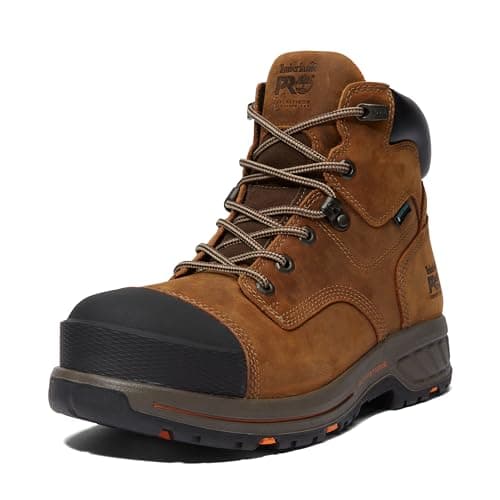
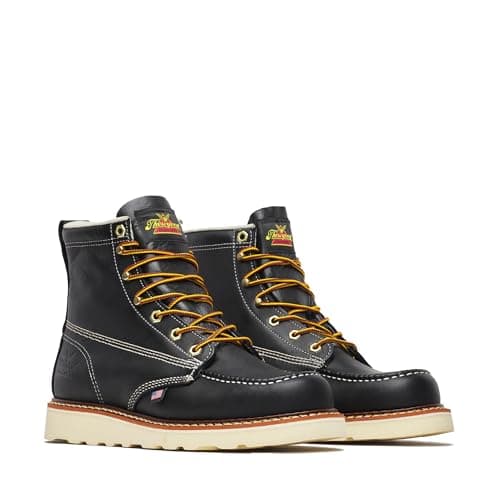
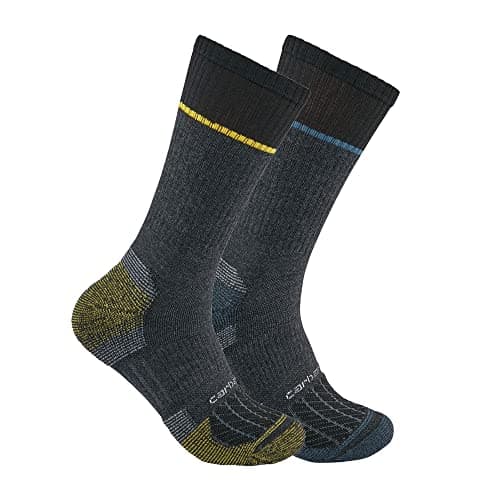
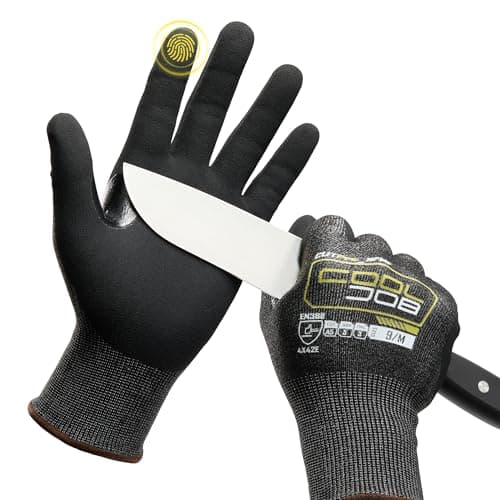
Best for HVAC techs
Best Work Boots for HVAC Techs
Attic, roof, crawlspace, customer's hallway. One pair of boots has to do all four.
HVAC technicians have a genuinely harder footwear problem than most trades, and it is not because the work is more dangerous - it is because it is so varied. A single service call can involve a ladder, a 140-degree attic, a roof, a crawlspace with standing water, and a customer's hardwood floor. Specialized boots are the wrong strategy here; what you want is the boot that is competent everywhere.
You are an electrical trade, whatever the job title says
HVAC techs work on energized equipment routinely - contactors, capacitors, control boards, disconnects, condensing-unit wiring. That means the same two specs that define an electrician's boot belong on your list too: an EH rating under ASTM F2413, and ideally non-metallic construction so there is no conductive path through the boot. See boots for electricians for the full explanation of what EH does and does not do, and electrical hazard boots for the dedicated shortlist.
Worth repeating the limit: EH is secondary protection against accidental contact in dry conditions. Discharging a capacitor properly and pulling the disconnect are the real controls.
Quick picks
Ranked by our published scoring rubric. Tap any row for the full write-up.
| # | Product | Best for | Score | Price |
|---|---|---|---|---|
| 1 | 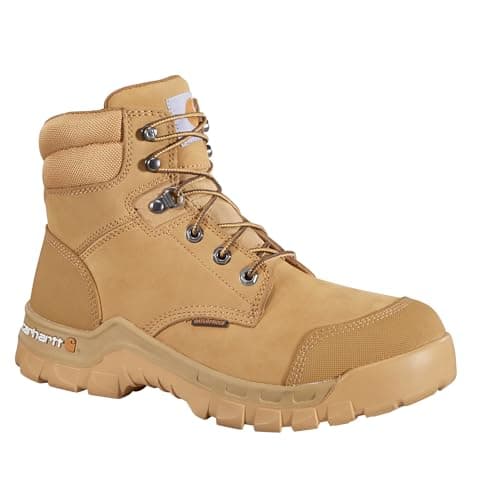 Carhartt Rugged Flex 6" Composite Toe WaterproofLight, flexible, non-metallic and quiet on a customer's floor - the best all-rounder here. | Service calls and attic work | 8.8 | |
| 2 | 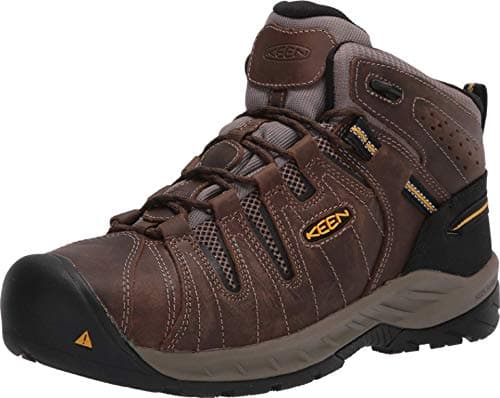 KEEN Utility Flint II Mid Steel ToeUnlined and breathable - the only pick that genuinely helps in a hot attic. | Attics and summer work | 8.2 | |
| 3 | 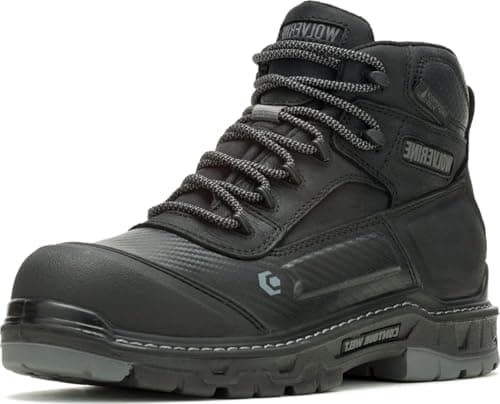 Wolverine Overpass 6" Composite Toe WaterproofThe most flexible waterproof boot here, and the heel catches a rung. | Crawlspaces and roof curbs | 8.4 | |
| 4 | 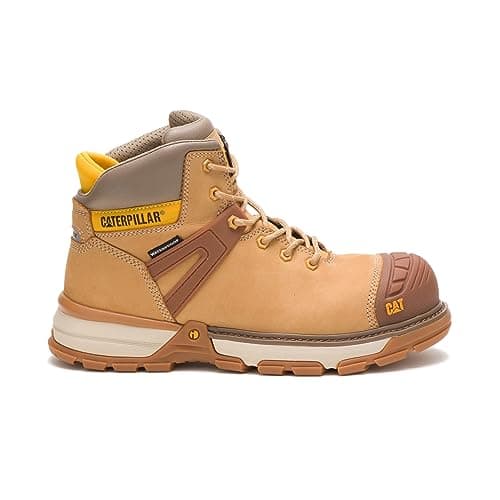 Caterpillar Excavator Superlite Waterproof Composite ToeLightest non-metallic waterproof pick, at the best price here. | Keeping weight down on ladders | 8.3 |
#ad Prices pulled from Amazon and stamped as of October 6, 2026; they change, and we show no number we cannot verify. How we are funded.
Top pick · Service calls and attic work
Carhartt Rugged Flex 6" Composite Toe Waterproof
Light, flexible, non-metallic and quiet on a customer's floor - the best all-rounder here.
HVAC service is the most varied footwear brief in the trades. In one call you climb into an attic at 140 degrees, step onto a roof, crawl under a house, and walk through a finished living room. No boot is optimal for all of that, so the right answer is the one that is adequate everywhere and bad nowhere.
This is that boot: light enough for attic ladders, flexible enough for crawlspaces, waterproof for condensate and wet roofs, non-metallic for the electrical side, and non-marking on floors. The EVA midsole will compress inside a year of daily use.
Specs that matter
- Toe:
- Composite toe, ASTM F2413
- Height:
- 6 inch
- Waterproof:
- Yes
- Midsole:
- Cushioned EVA
Our scoring
- Versatility
- 9.2
- Heat tolerance
- 7.0
- Flexibility
- 9.0
- Floor manners
- 8.8
- Value
- 8.6
What works
- Flexes immediately — close to no break-in
- Lighter than the Force HD with the same toe protection
- Cushioned midsole helps on hard floors
What to know
- EVA midsole compresses over a year of daily wear
- Softer upper than the Force HD
- Membrane runs hot in summer
No. 2 · Attics and summer work
KEEN Utility Flint II Mid Steel Toe
Unlined and breathable - the only pick that genuinely helps in a hot attic.
An attic in summer is among the hottest environments any trade works in, and a waterproof membrane in that setting is actively counterproductive: it traps sweat, your foot slides, and you finish the call with soaked socks. An unlined boot breathes properly and dries between calls.
Steel toe and EH rated, light, with KEEN's wide toe box. No water resistance at all is the trade - so if your work includes wet rooftop units year-round, this is the summer pair rather than the only pair. Wear it with moisture-managing socks, never cotton.
Specs that matter
- Toe:
- Steel toe, ASTM F2413
- Height:
- Mid
- Waterproof:
- No — unlined for airflow
- Electrical hazard:
- EH rated
Our scoring
- Versatility
- 7.4
- Heat tolerance
- 9.4
- Flexibility
- 8.2
- Floor manners
- 7.6
- Value
- 8.4
What works
- No membrane, so it genuinely breathes in summer
- One of the lighter steel-toe boots on the market
- KEEN's wide toe box without the waterproof weight penalty
What to know
- Zero water resistance beyond the leather itself
- Low shaft offers little ankle protection
- Thin stock footbed
No. 3 · Crawlspaces and roof curbs
Wolverine Overpass 6" Composite Toe Waterproof
The most flexible waterproof boot here, and the heel catches a rung.
The two most awkward places an HVAC tech works are a crawlspace and the edge of a rooftop unit, and both reward a boot that bends at the forefoot. The Overpass does, while staying waterproof and safety-rated, and unlike a wedge boot it has a heel breast that catches a ladder rung - which matters when you are on a ladder several times a day.
Less underfoot stiffness than a heavy industrial boot, which is a fair trade for a trade that is rarely on rubble.
Specs that matter
- Toe:
- Composite toe, ASTM F2413
- Height:
- 6 inch
- Waterproof:
- Yes
- Build:
- Contour Welt, flexible forefoot
Our scoring
- Versatility
- 8.6
- Heat tolerance
- 6.6
- Flexibility
- 9.2
- Floor manners
- 7.8
- Value
- 8.4
What works
- Flexes at the forefoot, so climbing and kneeling feel natural
- Light for a waterproof composite-toe boot
- Good ankle hold without an 8-inch shaft
What to know
- Flexibility costs some underfoot protection on rebar and rubble
- Outsole wears faster than a stiffer boot's
- Not a cold-weather boot
Best value · Keeping weight down on ladders
Caterpillar Excavator Superlite Waterproof Composite Toe
Lightest non-metallic waterproof pick, at the best price here.
If your day is a lot of ladder work and a lot of driving, weight and price are the two things you notice. This is a light, waterproof, carbon-composite-toe boot at an entry-level price, and for a tech who replaces boots annually that maths works.
The light build means the outsole wears sooner and there is less protection underfoot. For clean mechanical work, acceptable; for new construction with debris, not.
Specs that matter
- Toe:
- Carbon composite toe, ASTM F2413
- Height:
- 6 inch
- Waterproof:
- Yes
- Weight:
- Lightweight construction
Our scoring
- Versatility
- 8.2
- Heat tolerance
- 6.8
- Flexibility
- 8.4
- Floor manners
- 8.0
- Value
- 9.2
What works
- Genuinely light for a waterproof safety boot
- Non-metallic throughout — no metal detector problems
- Cheaper than most composite-toe waterproof boots
What to know
- Light build means the outsole wears sooner
- Less underfoot protection than a heavier boot
- Not resoleable
Attic heat, and why a membrane hurts you there
An unconditioned attic in summer routinely runs well above the outside temperature, and it is one of the few workplaces where heat illness is a serious risk during an ordinary day. A waterproof membrane is a vapor barrier: it stops sweat escaping, so your feet get wetter and hotter, and a wet foot inside a boot is a blister and a slip on a ladder rung.
If your work is heavily attic-based through summer, an unlined breathable boot and a merino or synthetic sock will do more for you than any other footwear decision. Hot weather work boots covers the category, and socks for hot weather covers what to put in them.
Ladders, roofs and two incompatible sole requirements
Here is the genuine conflict in this trade. On a ladder - which you are on constantly - you want a heel breast to catch the rung, so a lugged heel beats a wedge. On a sloped roof around a package unit, a flat wedge gives better contact with the surface. You cannot have both in one boot, and the honest advice is to weight whichever you do more of. For most service techs that is ladders, which is why three of the four picks here have heeled soles. Wedge sole vs heel sets out both cases, and if roofs dominate your work, read boots for roofing.
What we would skip
Skip insulated boots unless you do cold-climate rooftop work in winter - you will be in attics in summer in the same boots. Skip heavy 8-inch industrial boots: nothing in HVAC needs them and you will be climbing ladders all day. Skip steel toes where you can, since you are around electrical constantly. And skip sheet-metal work without decent gloves - duct edges are the sharpest thing most techs handle, which makes cut-resistant gloves genuinely relevant rather than overkill.
Frequently asked
What kind of boots do HVAC techs need?
A versatile, lightweight, EH-rated boot - ideally non-metallic and waterproof - with a heeled sole for ladder work and a non-marking outsole for customers' floors. HVAC covers so many environments in one day that the most adaptable boot beats the most specialized one.
Should HVAC boots be waterproof?
It depends on your mix. Waterproofing helps with condensate, wet rooftop units and crawlspaces; it actively hurts in hot attics by trapping sweat. If your summers are attic-heavy, an unlined breathable boot is often the better daily choice, with a waterproof pair for wet work.
Do HVAC techs need EH rated boots?
Yes. HVAC work involves energized equipment, capacitors and control wiring daily, so an ASTM F2413 electrical hazard rating belongs on your specification even though the job title is not electrician. Non-metallic construction is a sensible addition for the same reason.
What boots are best for working in hot attics?
Unlined, non-waterproof, lightweight boots with a breathable upper, worn with merino or synthetic socks rather than cotton. A waterproof membrane traps sweat and makes attic work worse, and a wet foot on a ladder rung is a safety problem as much as a comfort one.
Sources
Back to Work Boots, or see how we pick. Spotted something wrong? We publish corrections — see our editorial policy.