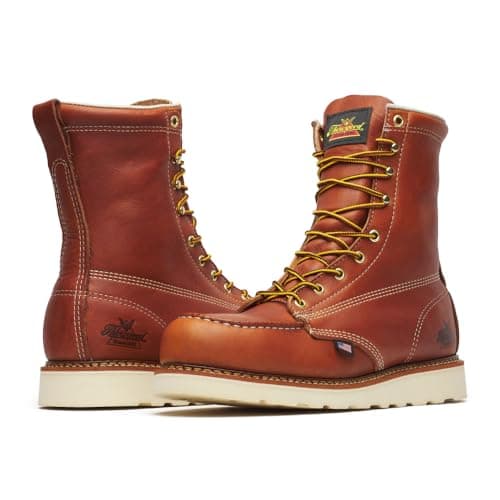
Wedge vs heel
Wedge Sole vs Heeled Work Boots
Two different grip mechanisms. Hard surfaces need contact area; soft ground needs lugs to bite.
Sole geometry affects daily comfort more than any other spec on a work boot, and it is also the most commonly mismatched - people buy an aggressive lug sole because it looks more capable, then stand on a concrete slab in it for a year. The underlying physics is simple and worth understanding once, because it answers the question for any surface.
Two grip mechanisms
On hard surfaces - concrete, tile, shingle, decking, steel - grip comes from friction, which depends on the rubber compound and on how much of it is actually touching the surface. Deep aggressive lugs deliberately remove rubber to create the lugs, so they have *less* contact area. That is why a flat wedge genuinely grips better on a shingle roof or a sealed floor.
On soft surfaces - dirt, mud, wet grass, gravel, snow - grip comes from mechanical interlock: the lugs sink into the material and push against it, and the material itself provides the resistance. A flat sole has nothing to engage and slides across the surface.
This single distinction explains why roofers prefer flat wedges while landscapers need deep lugs, even though both work outdoors on sloped surfaces.
Head to head
Ranked by our published scoring rubric. Tap any row for the full write-up.
| # | Product | Best for | Score | Price |
|---|---|---|---|---|
| 1 | 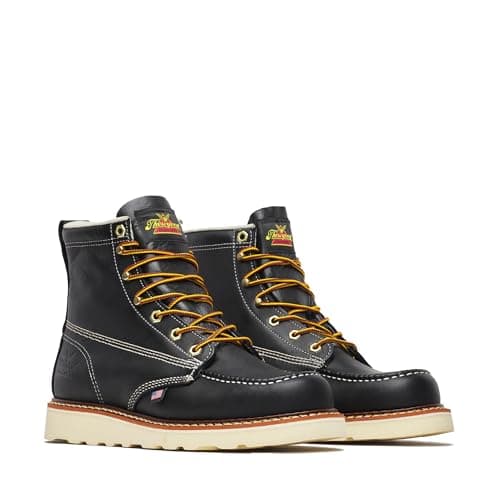 Thorogood American Heritage 6" Moc ToeWinner on hard flat ground - more rubber down, lower peak pressure, no marking. | Wedge: flat ground, shop floors and finished surfaces | 8.4 | |
| 2 | 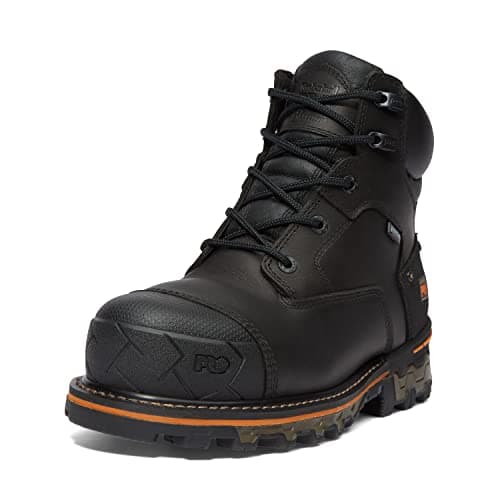 Timberland PRO Boondock 6" Composite Toe WaterproofWinner off-pavement - lugs bite into soft material and the heel catches a rung. | Heeled lug: loose ground, mud and ladders | 8.0 | |
| 3 | 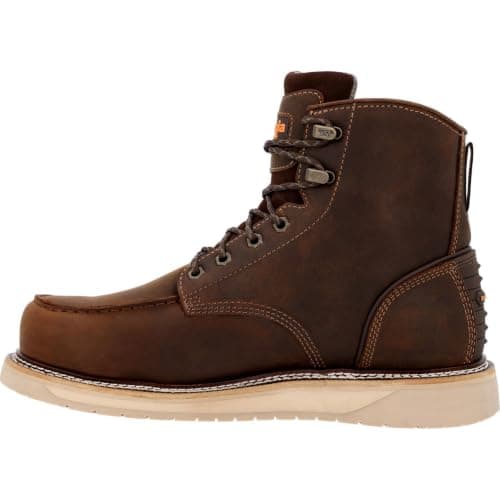 Georgia Boot AMP LT Wedge Waterproof Composite ToeThe wedge geometry in a compliant, waterproof, lightweight package. | A wedge with a safety toe and waterproofing | 8.2 |
#ad Prices pulled from Amazon and stamped as of October 6, 2026; they change, and we show no number we cannot verify. How we are funded.
Winner on flat ground · Wedge: flat ground, shop floors and finished surfaces
Thorogood American Heritage 6" Moc Toe
Winner on hard flat ground - more rubber down, lower peak pressure, no marking.
A flat wedge contacts the floor across its whole area, which does two useful things: it maximizes friction on a hard surface, where grip comes from contact area rather than tread depth, and it spreads your weight so the peak pressure under your heel and forefoot drops.
It also does not pack mud or sawdust and does not mark finished floors. On ladders it has no heel breast to catch a rung, and on loose dirt it slides - both genuine limitations.
Specs that matter
- Toe:
- Soft toe (no safety rating)
- Height:
- 6 inch
- Sole:
- MAXwear wedge, slip-resisting
- Build:
- Goodyear storm welt, resoleable
Our scoring
- Hard-surface grip
- 9.2
- Loose-ground grip
- 5.5
- Ladder rungs
- 4.0
- Standing comfort
- 9.2
- Floor manners
- 9.4
What works
- Welt construction means a cobbler can resole it instead of you rebuying
- Flat wedge does not pack mud and does not scuff finished floors
- Removable footbed, so an aftermarket insole drops straight in
What to know
- Soft toe only — not legal where a safety toe is required
- Wedge sole gives up grip on wet steel and ladder rungs
- Premium price for a boot with no safety rating
Winner off-pavement · Heeled lug: loose ground, mud and ladders
Timberland PRO Boondock 6" Composite Toe Waterproof
Winner off-pavement - lugs bite into soft material and the heel catches a rung.
On soft ground, grip works by mechanical interlock: the lugs sink into dirt or mud and push against it. A flat sole has nothing to engage with and slides. The defined heel also gives you a breast that catches a ladder rung, which a wedge cannot do.
Aggressive lugs track mud indoors and have less rubber in contact on a hard floor, so they are poorer on a shop floor. Deep lugs also mean a stiffer, heavier boot.
Specs that matter
- Toe:
- Composite toe, ASTM F2413
- Height:
- 6 inch
- Waterproof:
- Yes, membrane lined
- Sole:
- Aggressive lug, slip and oil resisting
Our scoring
- Hard-surface grip
- 7.0
- Loose-ground grip
- 9.4
- Ladder rungs
- 9.0
- Standing comfort
- 6.4
- Floor manners
- 5.5
What works
- Composite toe is non-metallic, so it clears metal detectors and conducts less cold
- Waterproof membrane plus a gusseted tongue genuinely keeps water out
- Outsole bites on broken ground where a wedge slides
What to know
- Heavy and stiff — a hard boot to stand on concrete in all day
- Long break-in; the outsole stays rigid for weeks
- Lug pattern tracks mud indoors
No. 3 · A wedge with a safety toe and waterproofing
Georgia Boot AMP LT Wedge Waterproof Composite Toe
The wedge geometry in a compliant, waterproof, lightweight package.
Traditional wedge boots are often soft-toe heritage models, which rules them out on many sites. This keeps the flat wedge and adds a composite toe and a waterproof membrane, so you get the flat-ground comfort argument in a boot that passes a safety check.
Same wedge limitations on ladders and loose ground, a less durable upper than the heritage brands, and not resoleable.
Specs that matter
- Toe:
- Composite toe, ASTM F2413
- Sole:
- Flat wedge
- Waterproof:
- Yes
- Height:
- 6 inch
Our scoring
- Hard-surface grip
- 8.8
- Loose-ground grip
- 5.5
- Ladder rungs
- 4.5
- Standing comfort
- 9.0
- Floor manners
- 8.8
What works
- Waterproof, safety-rated wedge is a genuinely uncommon spec
- Light enough to wear on a long standing shift
- Better stock insole than most boots at the price
What to know
- Wedge sole is wrong for ladders and loose ground
- Less durable upper than the heritage brands
- Not resoleable
The ladder problem, which decides it for many trades
A heeled boot has a heel breast - the vertical face at the front of the heel - and when you stand on a ladder rung, that breast catches the rung and locks your foot in place. A wedge sole has no breast at all; your foot simply rests on the rung and relies on friction.
If you are on ladders several times a day - electricians, HVAC techs, carpenters setting trusses - that is a real safety and fatigue difference, and on its own a sufficient reason to choose a heeled sole even for otherwise flat work.
Load spreading, which decides it for the rest
The other half of the argument. A wedge contacts the ground across its whole area, so your weight is distributed over a larger footprint and the peak pressure under your heel and forefoot is lower. A heeled sole concentrates that load on two smaller areas.
On a rigid surface that you stand on for nine hours, that difference is exactly what you feel at the end of a shift - which is the entire argument on boots for standing on concrete. Wedges also do not pack mud or sawdust into a tread pattern, and they are easier on finished floors.
The verdict, plainly
Wedge for flat hard ground: shops, warehouses, plants, slabs, finished floors, shingle roofs, finish carpentry. Heeled lug for soft, loose or uneven ground and for anyone on ladders daily: groundwork, landscaping, farming, framing, utilities. Both kinds of week: two pairs, or a moderate lug sole as the compromise. Work boot sole types covers compounds and slip ratings in more depth.
Frequently asked
Are wedge sole boots better for concrete?
Yes, on flat hard ground. A wedge contacts the floor across its whole area, which lowers the peak pressure under your heel and forefoot and maximizes friction on a hard surface. It also does not pack debris or mark finished floors.
Are wedge sole boots good for ladders?
No - a wedge has no heel breast, so there is nothing to catch the rung and your foot relies on friction alone. If you are on ladders several times a day, a heeled sole is noticeably more secure and less tiring.
Why do lug soles slip on smooth floors?
Because deep lugs remove rubber to create the tread, so there is less material in contact with the surface - and on a hard floor grip comes from contact area and compound, not tread depth. Lugs only help where they can sink into soft material.
What sole is best for construction?
It depends on the phase. Framing and groundwork on muddy, broken ground favor a lugged heel. Finish work and flat-slab work favor a wedge, which spreads load and does not track debris into finished rooms. Many people on mixed sites keep both.
Sources
Back to Comparisons, or see how we pick. Spotted something wrong? We publish corrections — see our editorial policy.