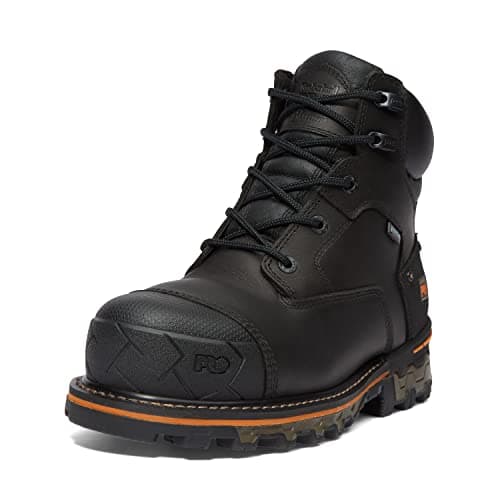
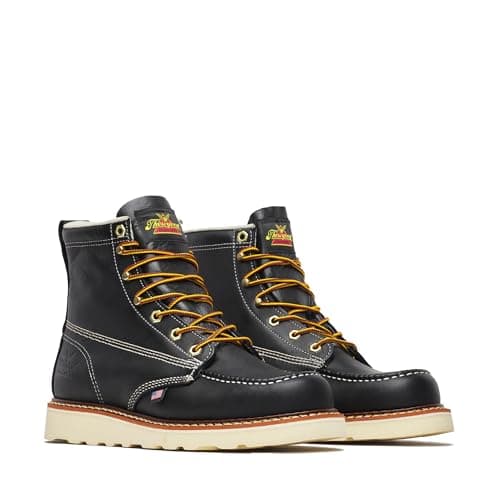
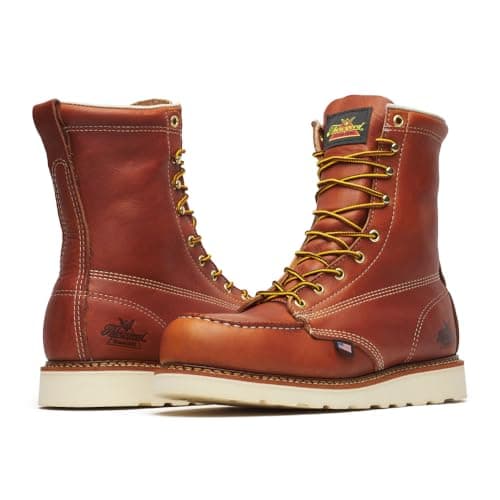
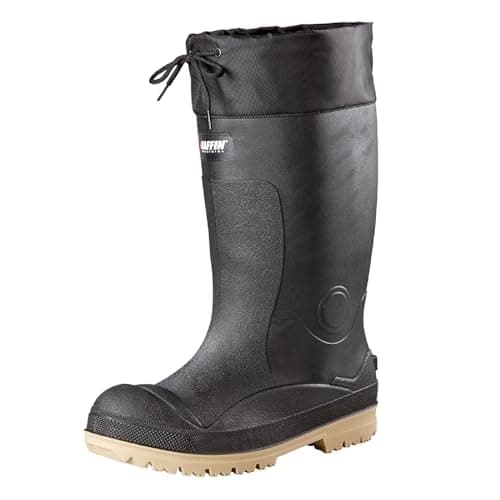
Grip, fixed
How to Make Work Boots Non-Slip
You can improve a slick sole a little. You cannot turn a heritage wedge into a slip-resistant outsole - and knowing which problem you have saves money.
You can make a slick work boot grip better, within limits. The things that genuinely help are scuffing the sole with coarse sandpaper to break the glossy mold finish, cleaning the tread properly so the rubber actually contacts the floor, and replacing or resoling the boot with a slip-resisting outsole if the compound is the problem. Grip sprays and adhesive traction pads work briefly. What you cannot do is convert a smooth heritage wedge into a slip-resistant outsole - that property comes from the rubber compound and the tread siping, and neither can be added at home.
Slipping has three different causes and they need different fixes. The first is a new-boot problem: outsoles come out of a mold with a thin glossy release layer on the surface, and until that wears off the rubber is not really touching the floor. The second is a worn-boot problem: once the tread pattern is smoothed flat there is nowhere for water to go, so you hydroplane on a film of liquid. The third is a wrong-boot problem: the sole is the wrong compound and the wrong pattern for the floor you work on, and no amount of modification changes that.
What actually works
- Scuff a new sole with coarse sandpaper. 50 to 80 grit, worked over the whole contact surface including the heel, until the gloss is gone and the rubber looks matte. This removes the mold release layer and genuinely improves grip on a new boot. It is the single most effective home fix and it costs nothing.
- Clean the tread properly, and often. A sole packed with dried mud, sawdust, grease or concrete slurry has no rubber in contact with the floor. A stiff brush and warm water, into the lug voids, restores more grip than most people expect.
- Walk them in on an abrasive surface. Twenty minutes on rough concrete or gravel does what the sandpaper does, more evenly. Useful for a sole whose shape makes sanding awkward.
- Resole with a slip-resisting outsole. If the boot is welted or stitchdown, a cobbler can fit a different outsole entirely - a genuinely different compound rather than a modification. This is the real fix for a good boot with the wrong sole, and it is one of the reasons welted construction is worth paying for: see Goodyear welt vs direct attach.
- Replace the boot. If it is cemented, worn flat, and your floor is wet daily, this is the honest answer. A dedicated slip-resistant boot costs less than most people's excess on a fall claim.
What works briefly
- Adhesive traction pads. Stick-on grip pads for the ball and heel. They do work, and they peel off within days to weeks under work conditions - more realistic for a one-off occasion than as a daily solution.
- Grip or traction sprays. Tacky spray-on products made for dance and theater footwear. They give a real short-term improvement and need reapplying constantly. Never use them where the tackiness could pick up grit you then track onto a finished floor.
- Hairspray. The classic home remedy. It is a mild, very short-lived tackifier. It is harmless and it is not a solution.
What does not work - and what damages the boot
Cutting your own tread pattern into an outsole with a knife is the most commonly repeated bad advice. It removes material, weakens the sole, can breach a puncture-resistant plate and will void any slip-resistance claim the boot carried - and because the cuts are not siping channels, it does little for wet grip. Gluing sandpaper, mesh or fabric to the sole fails in hours and leaves adhesive you cannot remove. And anything oil-based, including leather dressings that get onto the outsole, makes grip actively worse: wipe treatments off the sole every time you condition a boot.
It is also worth saying plainly that none of these modifications gives you a slip-resistant boot in any certifiable sense. Slip resistance is measured on the whole boot under ASTM F2913, with a specified contaminant and surface, and a tested boot carries that claim because it was tested. A modified boot does not, which matters if your workplace requires certified slip-resistant footwear.
Quick picks
Ranked by our published scoring rubric. Tap any row for the full write-up.
| # | Product | Best for | Score | Price |
|---|---|---|---|---|
| 1 | 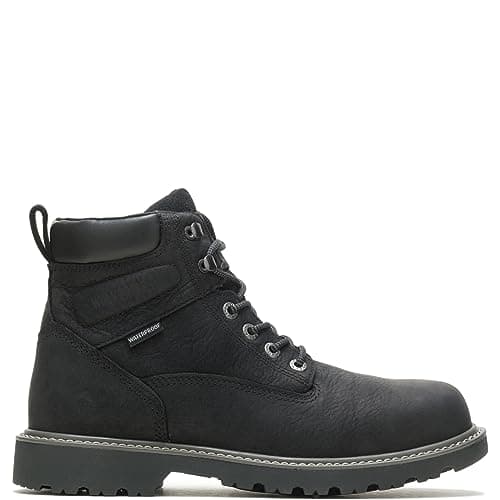 Wolverine Floorhand 6" Steel Toe WaterproofA waterproof steel-toe boot built around a slip-resisting outsole - the honest answer to a slick-floor problem. | When the fix is a different boot | 9.5 | |
| 2 | 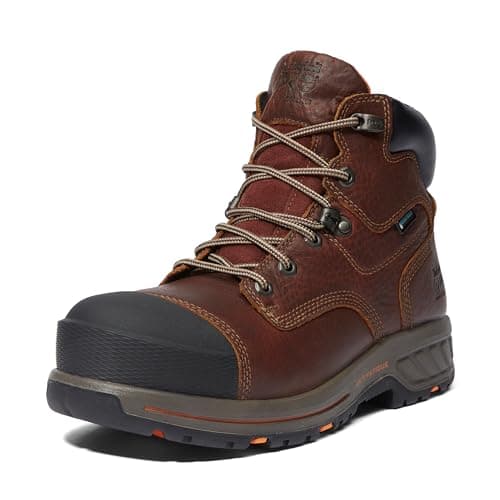 Timberland PRO Helix HD 6" Composite Toe WaterproofA waterproof composite-toe boot with a lugged slip-resisting outsole - mixed indoor and outdoor traction. | Grip that also has to work outdoors | 9.4 | |
| 3 | 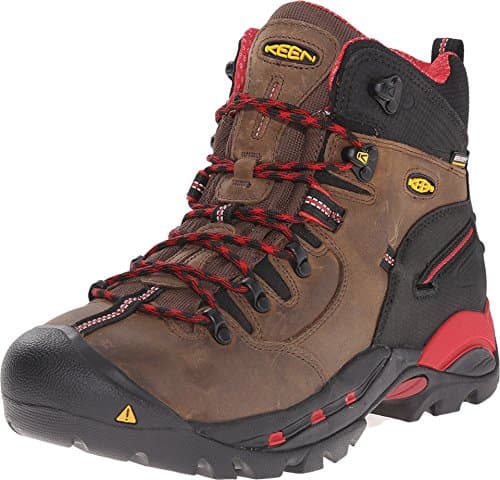 KEEN Utility Pittsburgh 6" Steel Toe WaterproofA waterproof steel-toe boot with a wide last and a competent outsole - good grip without specializing for it. | A general boot with decent grip | 9.3 |
#ad Prices pulled from Amazon and stamped as of November 14, 2026; they change, and we show no number we cannot verify. How we are funded.
Best wet grip · When the fix is a different boot
Wolverine Floorhand 6" Steel Toe Waterproof
A waterproof steel-toe boot built around a slip-resisting outsole - the honest answer to a slick-floor problem.
#ad No buyable offer at the last price check. How we are funded
- Our score
- 9.5/10
Category-defining
There is a point at which modifying a sole is throwing money at the wrong problem, and this boot is what the right answer looks like. It is built around an outsole designed and tested for slip resistance on wet and oily floors, which is a different thing from a lugged outsole designed for mud - the compound is softer and the tread pattern is cut with fine channels that break the water film rather than deep lugs that shed soil.
Waterproof construction and a steel toe make it a complete answer for wash-down areas, kitchens, dairies, food plants and any floor that is wet by design rather than by weather. For the money it is the most practical slip-resistant boot on the site.
The trade-offs of a slip-resistant compound are real: a softer rubber grips better and wears faster, so expect a shorter outsole life than a hard lugged boot. Fine siping channels also clog with mud, so this is an indoor-floor boot rather than a site boot. And it is a steel toe, which conducts cold. More options are in slip resistant work boots.
Specs that matter
- Toe:
- Steel toe, ASTM F2413
- Height:
- 6 inch
- Waterproof:
- Yes
- Upper:
- Full-grain leather
Rubric profile
Raw per-criterion marks out of 10, before weighting — this is the shape of the pick, not its published score. A low mark is a scope limit, not a fault: how we score.
- Wet grip
- 9.4
- Oil grip
- 9.0
- Sole life
- 6.8
- Comfort
- 8.0
- Value
- 8.8
Why we picked it
- Waterproof and safety-rated at an entry price
- Full-grain leather rather than split or synthetic
- Cushioned footbed is better than most boots at the price
Good to know: Honest value rather than a long-term boot: expect the membrane to give up before the leather does, and size with your work socks on.
Best mixed-surface grip · Grip that also has to work outdoors
Timberland PRO Helix HD 6" Composite Toe Waterproof
A waterproof composite-toe boot with a lugged slip-resisting outsole - mixed indoor and outdoor traction.
#ad Price as of November 14, 2026. How we are funded
- Our score
- 9.4/10
Outstanding
Plenty of jobs are not one floor. You walk a wet shop floor, cross a muddy yard and climb a ramp in the same hour, and a fine-siped indoor sole clogs the moment it meets soil. This boot's outsole is the compromise that works: lugged enough to shed mud and bite loose ground, with a compound and pattern that still perform on wet smooth surfaces rather than hydroplaning the way a heritage wedge does.
The composite toe is the other practical advantage - same ASTM F2413 rating as steel, less weight, no cold conduction and no metal at a detector. For mixed-environment work it is a more useful boot than a specialist on either side.
A compromise sole is beaten by a specialist in both directions: it will not match a fine-siped kitchen sole on wet tile, and it will not match an aggressive lug on mud. The membrane runs warm in summer. And like most cemented boots it is not resoleable, so the sole's life is the boot's life.
Specs that matter
- Toe:
- Composite toe, ASTM F2413
- Height:
- 6 inch
- Waterproof:
- Yes
- Electrical hazard:
- EH rated
Rubric profile
Raw per-criterion marks out of 10, before weighting — this is the shape of the pick, not its published score. A low mark is a scope limit, not a fault: how we score.
- Wet grip
- 8.4
- Oil grip
- 8.0
- Sole life
- 8.2
- Comfort
- 8.4
- Value
- 8.4
Why we picked it
- Balances cushioning and support better than either Boondock or Hypercharge
- Wide platform feels stable on ladders and scaffold planks
- EH rated and non-metallic
Good to know: The all-rounder of the range rather than a specialist — if your job has one dominant hazard, a focused model suits you better.
Best all-rounder · A general boot with decent grip
KEEN Utility Pittsburgh 6" Steel Toe Waterproof
A waterproof steel-toe boot with a wide last and a competent outsole - good grip without specializing for it.
#ad Price as of November 14, 2026. How we are funded
- Our score
- 9.3/10
Outstanding
Most people do not need a dedicated slip-resistant boot; they need a decent general boot whose outsole is not slick. This is that boot. The outsole is a conventional lugged rubber pattern that performs respectably on wet concrete, damp ground and wet steel, and the rest of the boot - waterproof, roomy toe box, steel toe, well padded - is good enough that it works as a daily boot across most trades.
The genuinely wide KEEN last is worth noting in a grip context, because a boot that fits properly contributes to stability in a way an outsole cannot. A heel that lifts or a foot that slides inside the boot makes you less sure-footed regardless of what the sole is made of.
It is not a slip-resistance specialist: on a wet polished floor or an oily shop floor, the two boots above will out-grip it clearly. The steel toe conducts cold, the membrane runs warm, and the roomy last is wrong for a narrow foot - a sliding foot is itself a stability problem.
Specs that matter
- Toe:
- Asymmetrical steel toe, ASTM F2413
- Height:
- 6 inch
- Waterproof:
- Yes, KEEN.DRY membrane
- Build:
- Goodyear welt
Rubric profile
Raw per-criterion marks out of 10, before weighting — this is the shape of the pick, not its published score. A low mark is a scope limit, not a fault: how we score.
- Wet grip
- 7.6
- Oil grip
- 7.0
- Sole life
- 8.6
- Comfort
- 8.8
- Value
- 8.6
Why we picked it
- Left and right specific toe caps, so the toe box is shaped like a foot
- Welted, so it can be resoled
- The go-to recommendation for wide feet in a safety toe
Good to know: Runs large: most buyers go down a half size. The toe box is genuinely roomy, which is the reason to pick KEEN.
Matching the sole to the floor
| Surface | What grips | What does not |
|---|---|---|
| Wet smooth tile, sealed concrete | Soft compound, fine siping, flat contact | Deep lugs, hard rubber, flat gum wedges |
| Oily or greasy shop floor | Oil-resistant compound with siping channels | Any sole with a smooth continuous face |
| Mud, soil, loose ground | Deep self-cleaning lugs, harder compound | Fine-siped indoor soles - they clog instantly |
| Wet painted steel, scaffold, ladder rungs | Defined heel breast, moderate lugs | Flat wedge soles - nothing to locate or channel water |
| Snow and ice | Soft cold-rated compound; strap-on cleats for ice | Any standard outsole - rubber hardens and glazes |
The row most people get wrong is the first one. A heavily lugged boot looks like the grippy option and is often worse on a wet smooth floor than a flat fine-siped sole, because lugs reduce the contact area and have no fine channels to break the water film. That is the whole reason slip-resistant work shoes look flat and unimpressive. The sole-type trade-offs in full are in work boot sole types explained and wedge sole vs heel.
When to stop modifying and replace
There are three clear signals. If the tread pattern is worn flat anywhere on the contact surface - usually the outer heel first - the sole has no drainage left and no modification restores it. If you can see the midsole or any plate through the outsole, the boot is finished and unsafe. And if you have slipped more than once on the floor you work on daily, treat that as data rather than bad luck: the boot is wrong for the surface, and the next slip may not end with a wet sleeve.
Falls are among the most common causes of serious workplace injury, and footwear is one of the few parts of the system a worker controls directly. If your employer requires certified slip-resistant footwear, a modified boot does not satisfy that requirement regardless of how well it grips. The wear indicators worth watching are set out in how long work boots last.
What to skip
Skip cutting grooves into your own outsole - it weakens the sole, may breach a puncture plate, and does little for wet grip. Skip gluing anything to the bottom of a boot. Skip oil-based dressings anywhere near the outsole. Skip assuming deep lugs mean grip on smooth wet floors, because the opposite is often true. And skip modification entirely if your workplace requires certified slip-resistant footwear - buy a boot tested to ASTM F2913 instead, and keep the old pair for dry work.
Frequently asked
How do you make work boots non-slip?
The most effective home fix is scuffing the sole with 50 to 80 grit sandpaper until the glossy mold-release finish is gone and the rubber looks matte, which genuinely improves grip on a new boot. After that, keep the tread clean so rubber actually contacts the floor. If the sole compound is simply wrong for your floor, the real fix is resoling a welted boot or replacing it.
Does sanding the bottom of boots help with slipping?
Yes, on a new boot. Outsoles come out of the mold with a thin glossy release layer that stops the rubber gripping properly, and scuffing it off with coarse sandpaper removes it. It does nothing for a worn boot whose tread is already smoothed flat - at that point the sole has no drainage left and needs replacing.
Do traction sprays and stick-on grip pads work?
Both give a real but short-lived improvement. Adhesive pads peel off within days to weeks under work conditions, and sprays need reapplying constantly. They are reasonable for a one-off situation and they are not a daily solution, and neither makes a boot slip-resistant in any certifiable sense.
Should I cut grooves in my boot soles for grip?
No. It removes material and weakens the sole, it can breach a puncture-resistant plate, and it voids any slip-resistance claim the boot carried. The cuts are also not fine siping channels, so they do very little for grip on wet smooth floors. If you need grip, change the outsole or the boot.
Are lugged soles better than flat soles for slippery floors?
Usually worse. Deep lugs reduce the contact area and have no fine channels to break the water film, so on wet tile or sealed concrete a flat, finely siped sole grips better. Lugs are for mud and loose ground, where they bite and self-clean. This is why purpose-made slip-resistant work shoes look flat and unimpressive.
When should I replace a boot instead of fixing the grip?
When the tread is worn flat anywhere on the contact surface - often the outer heel first - because there is no drainage left to restore. Also when you can see the midsole or a plate through the outsole, or when you have slipped more than once on the floor you work on every day. If your employer requires certified slip-resistant footwear, a modified boot does not meet it.
Our recommendation
If you read nothing else on this page, these are the two to look at — the one we would buy, and the one to take instead if its trade-off suits you better.
Best wet grip · When the fix is a different boot
Wolverine Floorhand 6" Steel Toe Waterproof
A waterproof steel-toe boot built around a slip-resisting outsole - the honest answer to a slick-floor problem.
#ad No buyable offer at the last price check. How we are funded
Runner-up · Grip that also has to work outdoors
Timberland PRO Helix HD 6" Composite Toe Waterproof
A waterproof composite-toe boot with a lugged slip-resisting outsole - mixed indoor and outdoor traction.
#ad Price as of November 14, 2026. How we are funded
Prices are read live from Amazon and stamped with the date. How we pick.
Sources
Back to Guides, or see how we pick. Spotted something wrong? We publish corrections — see our editorial policy.