Welt vs direct attach
Goodyear Welt vs Direct Attach
The least visible spec on a work boot is the one that decides how long you own it.
Goodyear welted boots can be resoled, so the upper decides when the boot is over - buy one if you will actually pay a cobbler, and it is usually the cheaper choice over five years. Direct attach and cemented boots cannot be resoled, so the sole decides, which typically means one to two years of daily wear; they are cheaper up front, lighter, more comfortable immediately, and the direct-attach joint is genuinely more watertight than a welt. Neither is better in the abstract: the question is whether a resole is something you will really do.
Construction is the spec least likely to appear in a product photo and most likely to decide what the boot costs you per year. There are more than two methods, but on a work boot shelf the choice is nearly always between a Goodyear welt and some form of direct-attach or cemented sole, so that is the comparison worth making.
How each one is built
In a Goodyear welt, the upper is turned in over an insole rib and stitched together with a strip of leather - the welt - that runs around the perimeter. The outsole is then attached to that welt rather than to the upper itself. Because the two joints are separate, a cobbler can remove the outsole without touching the upper, which is what makes a resole possible. A storm welt is the same thing with a raised lip at the joint to shed water.
In direct attach, the lasted upper is placed in a mold and polyurethane or rubber is injected around it, so the sole forms onto the upper and bonds chemically. Cemented construction glues a pre-made outsole to the upper with adhesive. Both produce a single inseparable unit. That is not a defect - it is cheap, light, and in the direct-attach case completely sealed - but it does mean the boot is finished when the sole is.
How to tell which one you are looking at
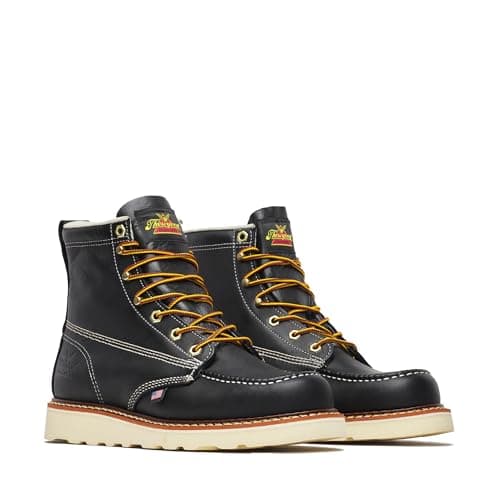
- Look for a line of stitching around the sole edge. Visible stitching running around the perimeter of the welt is the signature of a welted boot. No stitching, or decorative stitching that stops short, usually means cemented or direct attach.
- Look at the sidewall. A welted boot has a distinct leather welt strip between upper and sole. A direct-attach boot's sole appears to climb up and grip the upper in one continuous molded piece.
- Read the listing for the words. "Goodyear welt", "storm welt" and "stitchdown" mean resoleable. "Direct attach", "cemented", "injection molded" and "bonded" mean not.
- Check whether the brand offers a recrafting service. If the manufacturer will rebuild the boot, the construction supports it. Stitchdown boots - Danner's, for instance - are resoleable by a different method and belong on the welted side of this argument.
Head to head
Ranked by our published scoring rubric. Tap any row for the full write-up.
| # | Product | Best for | Score | Price |
|---|---|---|---|---|
| 1 | 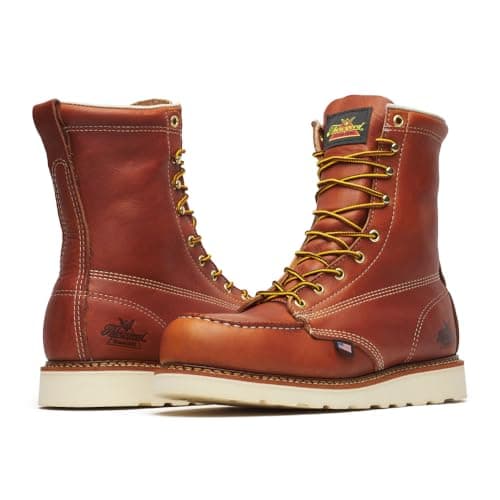 Thorogood American Heritage 8" Steel ToeA Goodyear storm welt with a safety toe - the clearest example of construction you can pay a cobbler to renew. | Buying a boot to keep | 9.5 | |
| 2 | 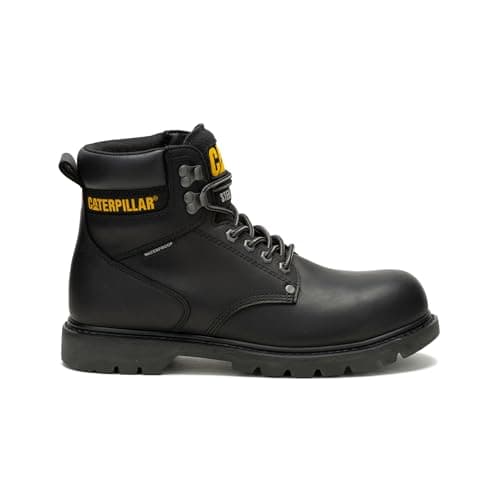 Caterpillar Second Shift Waterproof Steel ToeGoodyear welted, waterproof and steel-toed well below heritage money - the value route into resoleability. | Welted construction at a mid price | 9.4 | |
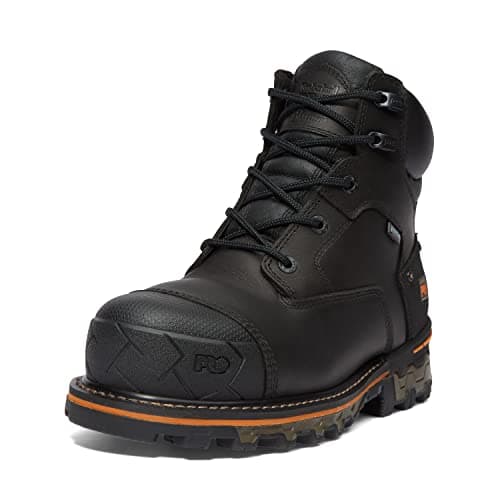
| 3 | 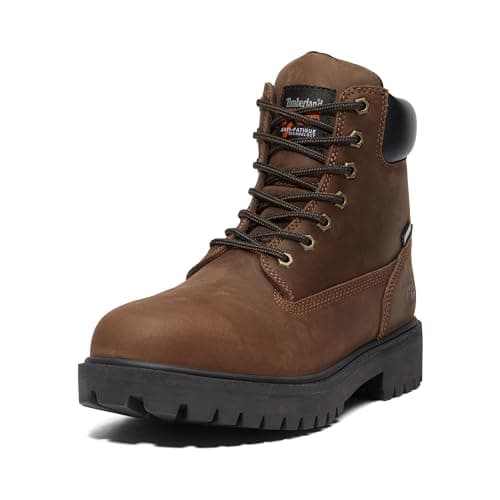 Timberland PRO Direct Attach 6" Steel Toe Insulated WaterproofDirect attach doing what it is genuinely good at: a waterproof joint, low cost, no resole, ever. | A sealed sole joint and a low price | 9.2 |
#ad Prices pulled from Amazon and stamped as of November 14, 2026; they change, and we show no number we cannot verify. How we are funded.
Best welted · Buying a boot to keep
Thorogood American Heritage 8" Steel Toe
A Goodyear storm welt with a safety toe - the clearest example of construction you can pay a cobbler to renew.
#ad Price as of November 14, 2026. How we are funded
- Our score
- 9.5/10
Category-defining
A Goodyear welt stitches the upper and a leather welt together, then stitches or cements the outsole to that welt. The practical consequence is the whole argument: a cobbler can cut the outsole stitching, pull the sole off and put a new one on, two or three times, without disturbing how the boot fits your foot. The storm welt variant adds a raised lip that helps shed water at the joint.
You pay for it twice - once up front, once per resole - and you only get the value if you actually have the work done. It is heavier than a direct-attach boot of the same size, stiffer for the first couple of weeks, and the stitching is a maintenance item that wants conditioning. The economics are in how long work boots last.
Specs that matter
- Toe:
- Steel toe, ASTM F2413 rated
- Height:
- 8 inch
- Sole:
- MAXwear wedge
- Build:
- Goodyear storm welt
Rubric profile
Raw per-criterion marks out of 10, before weighting — this is the shape of the pick, not its published score. A low mark is a scope limit, not a fault: how we score.
- Resoleability
- 9.6
- Water seal
- 7.6
- Out-of-box comfort
- 7.4
- Durability
- 9.2
- Value
- 8.4
Why we picked it
- Safety toe plus resoleable welt construction in one boot
- Taller shaft keeps debris out on demolition and dirt work
- Full-grain leather that takes conditioner and keeps going
Good to know: Order your measured length, not a size up — and expect the 8-inch shaft to need about two weeks before it stops feeling stiff across the ankle.
Best value · Welted construction at a mid price
Caterpillar Second Shift Waterproof Steel Toe
Goodyear welted, waterproof and steel-toed well below heritage money - the value route into resoleability.
#ad Price as of November 14, 2026. How we are funded
- Our score
- 9.4/10
Outstanding
Welted boots are usually sold at heritage prices, and this is the standing exception: a Goodyear welt, a waterproof lining and a steel toe at a mid-market price, from a brand stocked everywhere so replacing your size is easy. If the welt argument appeals but the price does not, this is where to start.
It is heavy, the stock footbed is minimal enough that an insole should be part of the purchase, and the leather stiffens if you never condition it. You are also unlikely to find a cobbler keen on resoling a boot at this price - which is the honest limit of the argument, because a resole can cost a meaningful fraction of a new pair.
Specs that matter
- Toe:
- Steel toe, ASTM F2413
- Height:
- 6 inch
- Waterproof:
- Yes
- Build:
- Goodyear welt
Rubric profile
Raw per-criterion marks out of 10, before weighting — this is the shape of the pick, not its published score. A low mark is a scope limit, not a fault: how we score.
- Resoleability
- 9.0
- Water seal
- 8.6
- Out-of-box comfort
- 7.0
- Durability
- 8.6
- Value
- 8.8
Why we picked it
- Welted construction at a mid-market price
- Waterproof and safety-rated together
- Widely stocked, so sizing is easy to replace
Good to know: A heavy boot by modern standards, and the stock footbed is minimal — an insole makes more difference here than on most boots.
Best direct attach · A sealed sole joint and a low price
Timberland PRO Direct Attach 6" Steel Toe Insulated Waterproof
Direct attach doing what it is genuinely good at: a waterproof joint, low cost, no resole, ever.
#ad Price as of November 14, 2026. How we are funded
- Our score
- 9.2/10
Outstanding
Direct attach means the outsole is molded directly onto the upper, so the two become one piece with no stitching and no gap. That is a genuinely watertight joint - better than a welt at keeping water out - and it is cheap to produce, which is why this insulated waterproof steel-toe boot costs what it does. For cold, wet outdoor work it is the value benchmark.
When the sole wears out, the boot is finished: there is nothing to unstitch and no cobbler can help. 200g insulation also makes it too warm indoors, and steel conducts cold against the insulation on the worst mornings. Buy it understanding that it is a replace-not-rebuild boot, which for many people is the right trade.
Specs that matter
- Toe:
- Steel toe, ASTM F2413 I/C, EH rated
- Insulation:
- 200g Thermolite
- Waterproof:
- Yes, waterproof leather upper
- Sole:
- TPU MaxTRAX, oil- and slip-resistant, non-marking
Rubric profile
Raw per-criterion marks out of 10, before weighting — this is the shape of the pick, not its published score. A low mark is a scope limit, not a fault: how we score.
- Resoleability
- 1.0
- Water seal
- 9.4
- Out-of-box comfort
- 8.0
- Durability
- 8.2
- Value
- 9.0
Why we picked it
- 200g is the right amount of insulation for cold outdoor work without cooking your feet indoors
- Waterproofed leather rather than a membrane, so there is less to delaminate
- One of the cheapest insulated waterproof safety boots from a major brand
Good to know: Insulated and waterproof, which makes it a cold-weather boot specifically; too warm for anything indoors.
The two constructions side by side
| Property | Goodyear welt | Direct attach / cemented |
|---|---|---|
| Resoleable | Yes - typically two or three times | No |
| Water at the sole joint | Good with a storm welt; stitching is a path | Excellent - molded, no seam at all |
| Weight | Heavier | Lighter |
| Break-in | One to three weeks | Often none |
| Up-front cost | Higher | Lower |
| Flexibility when new | Stiff - the welt has to settle | Flexible immediately |
| What ends the boot | The upper, eventually | The outsole |
When the welt is worth it
When three things are true: the upper is good enough leather to outlive two soles, you have a cobbler you will actually use, and the resole costs meaningfully less than a new pair. On a premium welted boot that arithmetic usually works. On a cheap welted boot it often does not, because the resole price is a large fraction of a replacement and the upper may not justify the work - which is why we say the construction is worth paying for at the top of the market and a nice-to-have in the middle.
When direct attach is the better buy: wet work, where the molded joint beats a stitched one; cold-weather boots, where a sealed sole matters and you are buying for a season rather than a decade; and any case where low weight and immediate comfort beat longevity - which includes most warehouse, service and light-commercial work. It is also the right answer if you are honest with yourself that you will not get a resole done.
The verdict, plainly
You will use a cobbler: buy welted, and buy a good upper so the resoles are justified. You will not: buy direct attach, spend less, and replace the boot when the sole goes - and put the difference into a better insole, which affects your day far more than the sole joint does. If water is your main enemy, direct attach has the better seal regardless of budget.
Frequently asked
Is a Goodyear welt worth it on work boots?
It is worth it if you will actually have the boots resoled and the upper is good enough to outlast two soles. A welt makes the outsole a replaceable wearing part, so the boot's life is set by the leather rather than the tread. If you would never visit a cobbler, you are paying for a feature you will throw away.
Can direct attach boots be resoled?
No. In direct-attach construction the sole is molded onto the upper and bonded chemically, so there is no stitching to remove and no clean way to separate the two. When the outsole is worn out, the boot is finished - that is the trade for the low price and the sealed joint.
Which is more waterproof, a welt or direct attach?
Direct attach, at the sole joint. The molded bond has no seam for water to track through, while a welt's stitching is a potential path - which is why storm welts exist and why welted boots want regular conditioning. A membrane or treated leather does the rest of the work in both cases.
How do I tell if my boots are Goodyear welted?
Look for a continuous line of stitching running around the perimeter of the sole edge, with a visible leather welt strip between the upper and the outsole. If the sole appears molded in one piece up around the upper with no stitching, it is direct attach or cemented.
How much does resoling work boots cost?
It varies by cobbler and by sole, and it is usually a meaningful fraction of a new mid-market boot rather than a token fee. That is the real test of the welt argument: the resole has to cost clearly less than replacing the boot, which is true for premium boots and often marginal for cheap ones.
Our recommendation
If you read nothing else on this page, these are the two to look at — the one we would buy, and the one to take instead if its trade-off suits you better.
Best welted · Buying a boot to keep
Thorogood American Heritage 8" Steel Toe
A Goodyear storm welt with a safety toe - the clearest example of construction you can pay a cobbler to renew.
#ad Price as of November 14, 2026. How we are funded
Runner-up · Welted construction at a mid price
Caterpillar Second Shift Waterproof Steel Toe
Goodyear welted, waterproof and steel-toed well below heritage money - the value route into resoleability.
#ad Price as of November 14, 2026. How we are funded
Prices are read live from Amazon and stamped with the date. How we pick.
Sources
Back to Comparisons, or see how we pick. Spotted something wrong? We publish corrections — see our editorial policy.