Sole types
Work Boot Sole Types Explained
Geometry decides where it grips. Construction decides whether you can keep the boot.
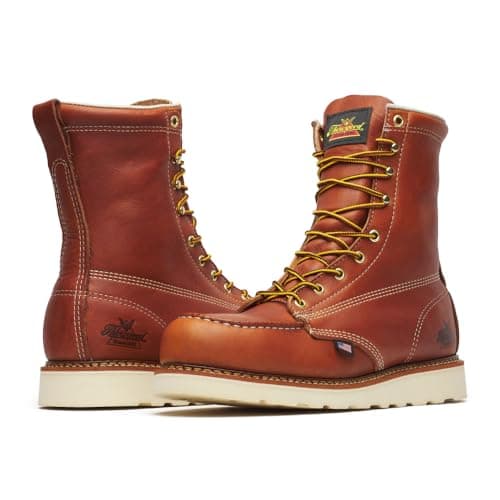
The bottom of a boot tells you three separate things, and they get conflated constantly: the geometry (where it will grip), the construction (whether you can keep the boot), and the compound and ratings (how it performs on a contaminated floor). Each is worth understanding because each decides a different part of the purchase.
Geometry: two grip mechanisms
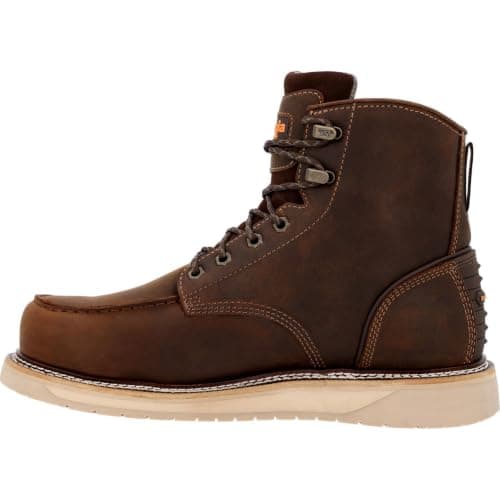
On hard surfaces - concrete, tile, shingle, decking, steel - grip comes from friction, which depends on the rubber compound and on how much rubber is actually in contact. Deep lugs remove rubber to create the lugs, so a flat wedge genuinely grips better on a hard floor or a shingle roof.
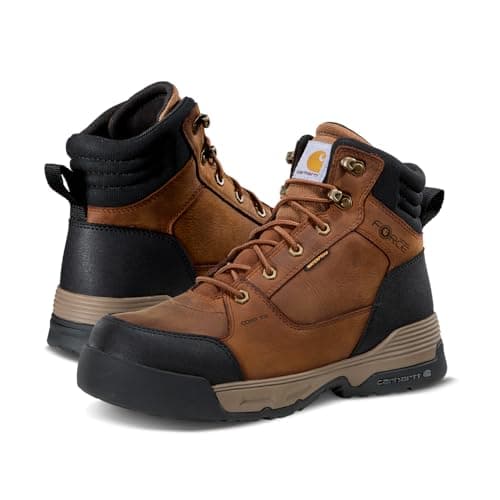
On soft surfaces - dirt, mud, wet grass, gravel, snow - grip comes from mechanical interlock: lugs sink in and push against the material. A flat sole has nothing to engage and slides.
That single distinction explains most sole choices across the trades, and wedge sole vs heel works through the practical cases. Two secondary geometry points: lug spacing matters as much as depth, because closely spaced lugs pack with mud and go smooth; and a heel breast - the vertical face at the front of a heel - is what catches a ladder rung, which a wedge does not have.
Construction: can you keep the boot?
| Construction | How it works | Resoleable? | Found on |
|---|---|---|---|
| Cemented | Outsole glued directly to the upper | No | Most mid-market and budget boots |
| Direct attach | Sole molded directly onto the upper | No | Waterproof boots - excellent seal, no stitching to leak |
| Goodyear welt | Sole stitched to a welt sewn to the upper | Yes | Thorogood, KEEN Pittsburgh, CAT Second Shift |
| Storm welt | Goodyear welt with a raised lip for water resistance | Yes | Thorogood American Heritage |
| Stitchdown | Upper turned outward and stitched to the midsole | Yes, extensively | Danner, some heritage brands |
The quick test in a shop: look for stitching running around the edge of the sole. If it is there, the boot can probably be resoled; if the sole meets the upper in a smooth glued joint, it cannot. Since the outsole is nearly always what ends a work boot's life, this decides whether a boot is an eighteen-month purchase or a five-year one: how long work boots last.
Quick picks
Ranked by our published scoring rubric. Tap any row for the full write-up.
| # | Product | Best for | Score | Price |
|---|---|---|---|---|
| 1 | 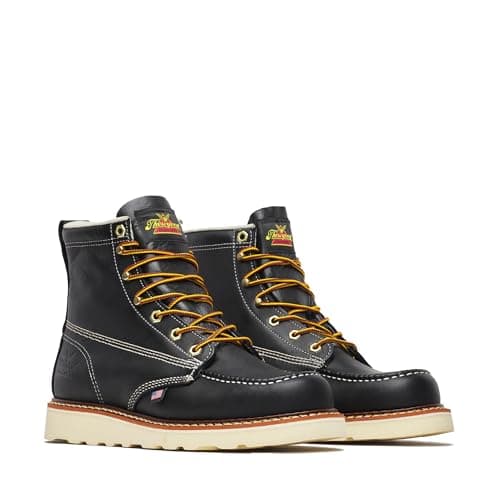 Thorogood American Heritage 6" Moc ToeThe textbook combination: flat wedge for hard floors, storm welt so it can be resoled. | Wedge geometry on a welted construction | 8.6 | |
| 2 | 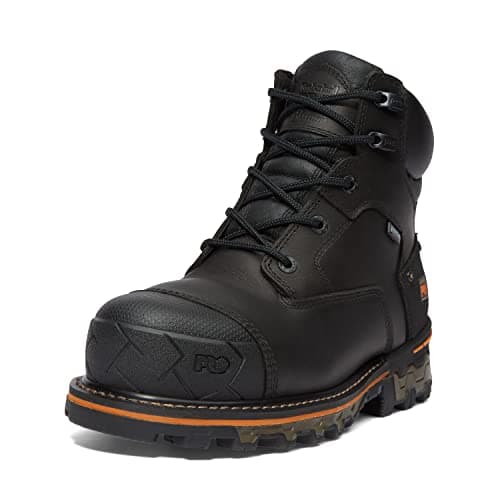 Timberland PRO Boondock 6" Composite Toe WaterproofThe other end: deep lugs that bite into soft ground, cemented so not rebuildable. | Aggressive lug geometry | 7.8 | |
| 3 | 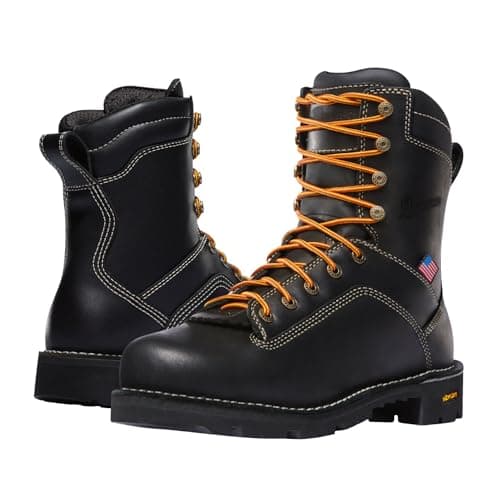 Danner Quarry 8" Waterproof Alloy ToeRecraftable rather than merely resoleable - the whole lower can be renewed. | Stitchdown, the most rebuildable construction | 8.4 |
#ad Prices pulled from Amazon and stamped as of October 6, 2026; they change, and we show no number we cannot verify. How we are funded.
Wedge + welt · Wedge geometry on a welted construction
Thorogood American Heritage 6" Moc Toe
The textbook combination: flat wedge for hard floors, storm welt so it can be resoled.
A worked example of both decisions going together well. The flat MAXwear wedge maximizes rubber contact on hard surfaces and spreads load; the Goodyear storm welt means the sole is stitched and replaceable, so the boot outlives its first outsole.
Soft toe on this model. The wedge's limitations are real: no heel breast for ladder rungs, and it slides on loose dirt.
Specs that matter
- Toe:
- Soft toe (no safety rating)
- Height:
- 6 inch
- Sole:
- MAXwear wedge, slip-resisting
- Build:
- Goodyear storm welt, resoleable
Our scoring
- Hard-surface grip
- 9.2
- Loose-ground grip
- 5.5
- Resoleable
- 9.4
- Floor manners
- 9.4
- Value
- 8.2
What works
- Welt construction means a cobbler can resole it instead of you rebuying
- Flat wedge does not pack mud and does not scuff finished floors
- Removable footbed, so an aftermarket insole drops straight in
What to know
- Soft toe only — not legal where a safety toe is required
- Wedge sole gives up grip on wet steel and ladder rungs
- Premium price for a boot with no safety rating
No. 2 · Aggressive lug geometry
Timberland PRO Boondock 6" Composite Toe Waterproof
The other end: deep lugs that bite into soft ground, cemented so not rebuildable.
Deep, widely spaced lugs work by mechanical interlock - they sink into dirt and mud and push against it, which a flat sole cannot do. The spacing matters as much as the depth, because closely spaced lugs pack with mud and go smooth.
The construction is not practically rebuildable, so this boot's life ends with its outsole. Lugs also track mud indoors and have less rubber contacting a hard floor.
Specs that matter
- Toe:
- Composite toe, ASTM F2413
- Height:
- 6 inch
- Waterproof:
- Yes, membrane lined
- Sole:
- Aggressive lug, slip and oil resisting
Our scoring
- Hard-surface grip
- 7.0
- Loose-ground grip
- 9.4
- Resoleable
- 2.0
- Floor manners
- 5.5
- Value
- 7.8
What works
- Composite toe is non-metallic, so it clears metal detectors and conducts less cold
- Waterproof membrane plus a gusseted tongue genuinely keeps water out
- Outsole bites on broken ground where a wedge slides
What to know
- Heavy and stiff — a hard boot to stand on concrete in all day
- Long break-in; the outsole stays rigid for weeks
- Lug pattern tracks mud indoors
No. 3 · Stitchdown, the most rebuildable construction
Danner Quarry 8" Waterproof Alloy Toe
Recraftable rather than merely resoleable - the whole lower can be renewed.
Stitchdown construction turns the upper outward and stitches it to the midsole, which makes the boot substantially rebuildable - and Danner operates a recrafting service for exactly that. It is the construction you choose if you intend to keep a boot for a decade.
Expensive, stiff and heavy, with a long break-in. The lugged Vibram outsole suits rough ground rather than flat concrete.
Specs that matter
- Toe:
- Alloy toe, ASTM F2413
- Height:
- 8 inch
- Waterproof:
- Gore-Tex lined
- Build:
- Stitchdown, recraftable
Our scoring
- Hard-surface grip
- 7.6
- Loose-ground grip
- 8.8
- Resoleable
- 9.6
- Floor manners
- 6.4
- Value
- 7.4
What works
- Danner will recraft it, so the price is spread over many years
- Gore-Tex is the most reliable waterproof lining in footwear
- Alloy toe is lighter than steel at the same rating
What to know
- Expensive up front
- Stiff and heavy for flat-concrete work
- Long break-in
Compound and slip resistance
Two claims get used interchangeably and mean different things. Oil resistant describes the rubber's ability to resist chemical degradation - an oil-resistant compound does not swell and soften when it sits in oil. Slip resistant describes the coefficient of friction on a contaminated surface. A sole can be one without the other, and a workshop needs both: boots for mechanics.
Slip resistance is measured by whole-shoe test methods such as ASTM F2913, which drags the shoe across a contaminated surface and records the friction coefficient. Two practical points from that: fine siping - small channels cut across the contact face - breaks a fluid film and matters far more than lug depth on a wet smooth floor; and a sole worn smooth has lost its slip resistance regardless of its original rating, which is why tread wear is a replacement trigger rather than a cosmetic issue.
Choosing, in one paragraph
Work out your dominant surface, pick the geometry for it, then decide whether resoleability is worth the premium to you. Flat hard floors: wedge, finely siped, and a welt if you keep boots. Broken or soft ground: lugged heel with wide spacing. Wet or chemical floors: a stated slip-resistant and oil-resistant compound with siping. The hub shortlists apply the same logic per trade: work boots.
Frequently asked
What is the difference between a wedge sole and a lug sole?
A wedge is flat and contacts the ground across its whole area, which maximizes friction on hard surfaces and spreads load. A lug sole has deep raised tread that sinks into soft ground and grips by mechanical interlock. Each is better on the surface the other is worse on.
How can I tell if work boots can be resoled?
Look for stitching running around the edge of the sole. Goodyear-welted and stitchdown boots have visible stitching and can be resoled; cemented and direct-attach boots have a smooth glued joint where the sole meets the upper and cannot.
What does oil-resistant mean on a boot sole?
That the rubber compound resists chemical degradation from oil - it will not swell, soften and break down. It is a different property from slip resistance, which is grip on a contaminated surface. A workshop boot needs both, and a spec sheet should state each separately.
What makes a boot sole slip resistant?
The rubber compound and the siping - the fine channels cut across the contact face that break a fluid film and let the rubber reach the surface. On wet smooth floors siping matters far more than lug depth, and a sole worn smooth has lost its slip resistance whatever its original rating.
Is a Goodyear welt better than a cemented sole?
For longevity, yes - the sole is stitched rather than glued, so it can be replaced when it wears out, which is nearly always what ends a work boot's life. Cemented construction is cheaper and can seal better against water, but the boot's life ends with its outsole.
Sources
Back to Guides, or see how we pick. Spotted something wrong? We publish corrections — see our editorial policy.