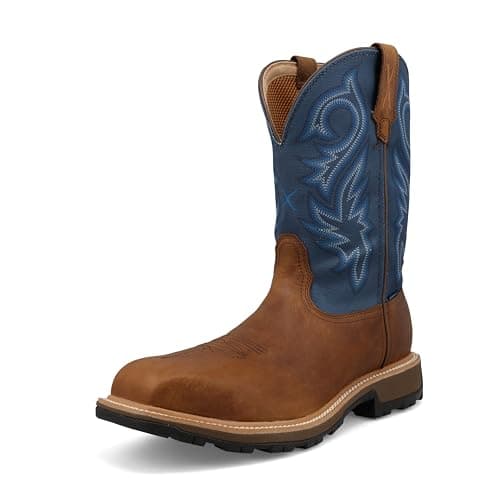
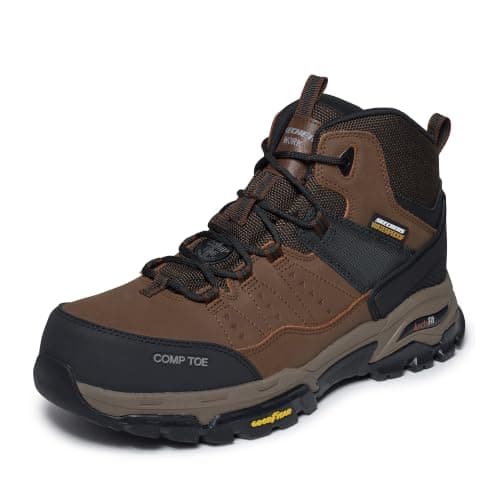
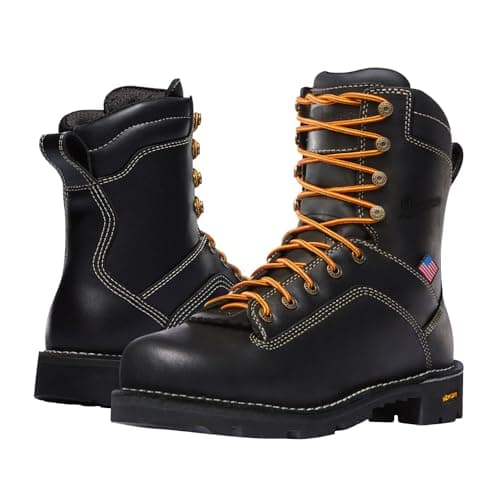
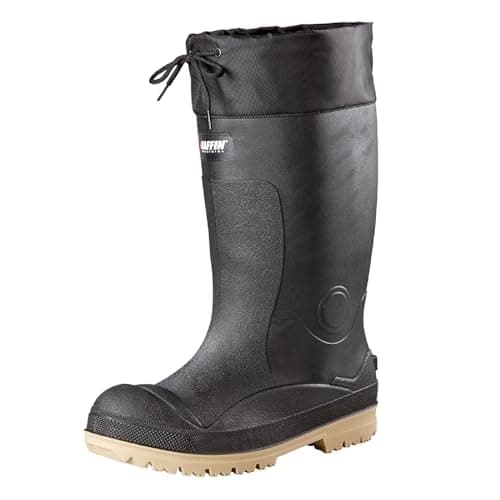
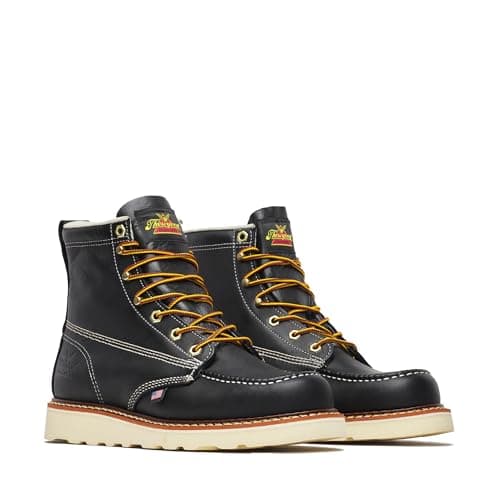
Best Carolina model
Carolina Work Boots, Model by Model
A logger brand first and an industrial brand second. Get that order right and Carolina is one of the best-value heavy boots in America; get it wrong and you spend a year on a logger heel you never needed.
The short answer: buy the 28 Series 8" composite toe if you want one waterproof rated boot for general work, the waterproof steel toe logger if your ground is sloped or loose, the Installer if you want 8 inches of waterproof height on flat ground, the insulated Elm logger if you stand outdoors through a real winter, and the Bruno Hi if you need waterproof plus a rating for the least money.
Carolina has built boots in the United States since 1961 and the brand's reputation comes almost entirely from one category: loggers. If you work in forestry, tree care, utilities or pipeline, you already know the name, and the waterproof steel-toe logger on this page is the boot you have seen on every crew. The industrial side of the line - the 28 Series, the Installer, the Bruno - is newer, less famous and, for most buyers reading a page like this one, more relevant. The single most common mistake we see with this brand is buying a logger because Carolina means logger, then wearing it on a concrete slab for a year.
Where Carolina competes hardest is value in heavy boots. A waterproof, EH-rated, 8-inch leather boot with a steel shank and a removable polyurethane footbed is normally a premium purchase, and here it sits at mid-market money. What you give up is the finish and the aftercare of the heritage brands: there is no published recrafting service, so the welt construction on the spec sheet is a cobbler question rather than a brand promise. If you want a boot you rebuild twice and keep for a decade, read Red Wing work boots or Thorogood work boots. The honest cross-shop for Carolina is Twisted X work boots on the farm side and Caterpillar work boots on the industrial side.
The specs on the listings, decoded
- SCUBALINER. Carolina's waterproof membrane. It is a real waterproof barrier rather than a water-repellent treatment, and it is fitted to most of the models here - which is the main reason this lineup is good value.
- AG7 footbed. A removable polyurethane footbed. The important word is removable: your own insole drops in at the same level instead of stacking on top of a glued-down one. Insole types explained covers which to buy.
- Triple-rib steel shank. A stiffening plate through the arch with three reinforcing ribs. It is what lets you stand on a ladder rung or a branch without your arch collapsing, and it is also why these boots feel rigid underfoot on flat ground.
- Kiltie. The removable leather flap over the lace throat on the loggers and the 28 Series. It keeps chips, dirt and sawdust out of the laces. Most people either love it or take it off in week one; either is fine.
- Logger heel vs flat heel. A logger heel is raised and defined so it catches on slopes, steps and spurs. A flat work heel spreads load and is better on concrete and rungs. This is the most consequential choice in the whole lineup: wedge sole vs heel and work boot sole types both cover it.
- Composite vs steel toe. Carolina sells both at the same ASTM F2413 rating. Composite is lighter, non-conducting and detector-safe; steel is thinner, so it leaves marginally more room inside the same boot. Neither is safer - composite toe vs steel toe has the detail.
Quick picks
Ranked by our published scoring rubric. Tap any row for the full write-up.
| # | Product | Best for | Score | Price |
|---|---|---|---|---|
| 1 | 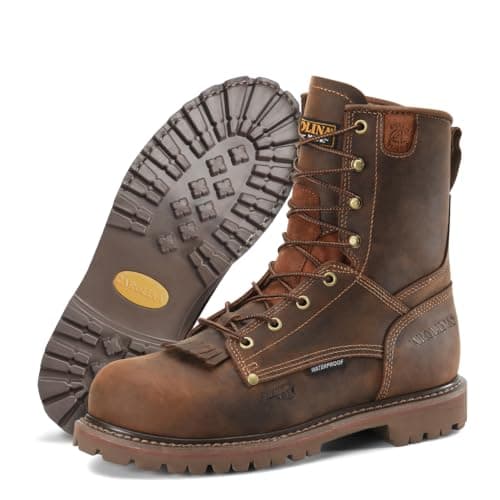 Carolina 28 Series 8" Composite Toe WaterproofThe best all-round Carolina: waterproof, non-metallic toe, removable polyurethane footbed, flat enough for daily work. | General industrial work, wet ground | 9.5 | |
| 2 | 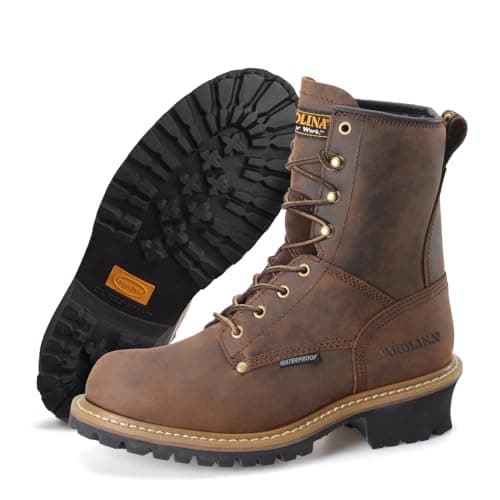 Carolina 8" Waterproof Steel Toe LoggerThe boot the brand is actually known for - a waterproof steel-toe logger on a deep lug outsole with a raised heel. | Slopes, mud, climbing, loose ground | 9.4 | |
| 3 | 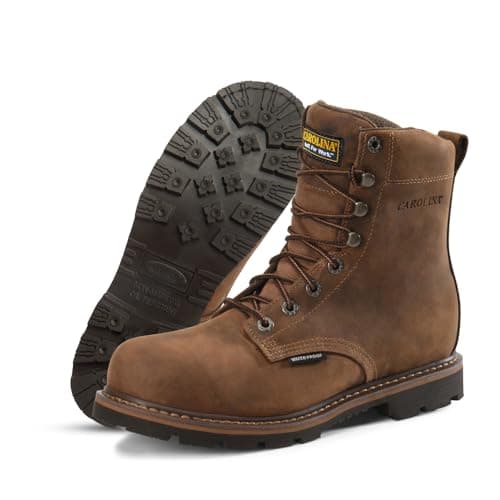 Carolina Installer 8" Steel Toe WaterproofThe Installer - waterproof, rated and 8 inches tall, without the logger heel you do not need. | 8 inches of height on flat ground | 9.3 | |
| 4 | 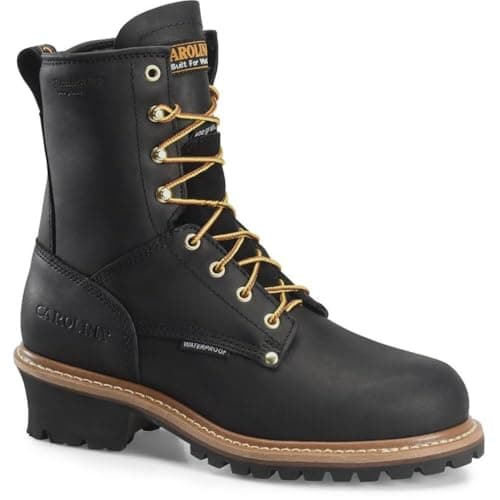 Carolina Elm 8" Insulated Waterproof Steel Toe LoggerThe Elm logger with 600g of Thinsulate - a real cold-weather boot rather than a mild-winter one. | Cold outdoor work, standing still | 9.3 | |
| 5 | 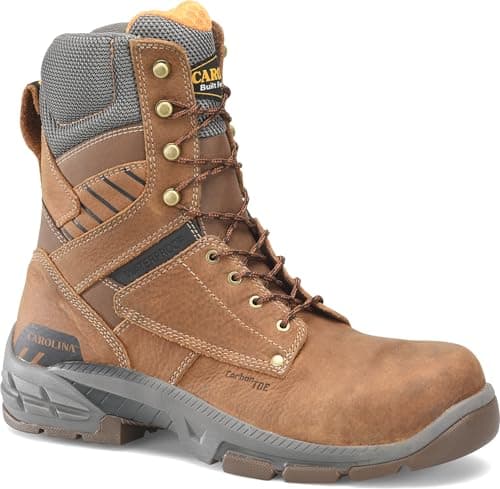 Carolina Bruno Hi 8" Carbon Composite Toe WaterproofThe Bruno Hi - a carbon composite toe and a waterproof membrane at the bottom of the range. | Waterproof and rated for the least money | 9.2 |
#ad Prices pulled from Amazon and stamped as of November 14, 2026; they change, and we show no number we cannot verify. How we are funded.
Top pick · General industrial work, wet ground
Carolina 28 Series 8" Composite Toe Waterproof
The best all-round Carolina: waterproof, non-metallic toe, removable polyurethane footbed, flat enough for daily work.
#ad Price as of November 14, 2026. How we are funded
- Our score
- 9.5/10
Category-defining
The 28 Series is the boot to buy if you want one Carolina and do not climb for a living. It is an 8-inch lace-up in cigar-finish leather with a composite safety toe rated to ASTM F2413 I/75 C/75, EH protection, a SCUBALINER waterproof membrane and a triple-rib steel shank underneath. The combination that makes it genuinely good value is non-metallic up front and steel where the stiffness has to be - you get a toe cap that does not conduct cold or trip detectors, over a shank that still supports your arch on uneven ground and ladder rungs.
Two details matter more than they sound. The AG7 polyurethane footbed is removable, which means your own insole drops straight in rather than stacking on top of a glued-down one - and for most people that insole is the difference between a tolerable boot and a comfortable one. The removable kiltie over the lace throat keeps dirt and chips out on trenching, landscaping and demolition work. Worth knowing: full 8-inch lacing is slow, the leather is stiff out of the box, and it is heavier than the composite-toe hikers the mid-market now sells. If weight is your priority, lightweight work boots is a better starting point.
Specs that matter
- Toe:
- Composite toe, ASTM F2413 I/75 C/75, EH
- Height:
- 8 inch, lace-up
- Waterproof:
- SCUBALINER membrane
- Footbed:
- Removable AG7 polyurethane
Rubric profile
Raw per-criterion marks out of 10, before weighting — this is the shape of the pick, not its published score. A low mark is a scope limit, not a fault: how we score.
- Comfort
- 7.8
- Durability
- 8.8
- Protection
- 8.8
- Weather
- 8.8
- Value
- 8.8
Why we picked it
- Non-metallic toe with a triple-rib steel shank underneath - light where it matters, stiff where it matters
- Removable AG7 footbed, so your own insole drops straight in
- Removable kiltie keeps debris out of the lace throat on dirt work
Good to know: Full 8-inch lacing is slow and the leather is stiff for the first week; the removable footbed means your own insole drops straight in.
Best for slopes · Slopes, mud, climbing, loose ground
Carolina 8" Waterproof Steel Toe Logger
The boot the brand is actually known for - a waterproof steel-toe logger on a deep lug outsole with a raised heel.
#ad Price as of November 14, 2026. How we are funded
- Our score
- 9.4/10
Outstanding
If your ground is not flat, this is the Carolina to buy and the reason the brand exists. A logger is a specific tool: a raised, defined heel that catches on a slope or a step instead of sliding off it, a deep lug outsole that bites into mud and loose dirt, and a triple-rib steel shank that holds your arch rigid so standing on a narrow edge does not collapse your foot. Add a waterproof membrane, an ASTM F2413 steel toe and EH protection and you have a boot that arborists, linemen, utility crews and pipeline workers buy repeatedly, at a price well below the heritage logger brands.
On flat concrete it is the wrong boot and it will tell you so by hour six. A logger heel concentrates load through a small area, so standing still on a slab in these is noticeably more tiring than standing still in the 28 Series. The lug sole packs mud and tracks it indoors, the boot is heavy, and a steel toe in a boot this often worn outdoors in winter conducts cold straight out of your toes. Buy it for the terrain, not for the height. Work boots for linemen covers the climbing requirement in detail, and wedge sole vs heel explains the trade you are making.
Specs that matter
- Toe:
- Steel toe, ASTM F2413 rated, EH
- Height:
- 8 inch, raised logger heel
- Waterproof:
- Yes, membrane lined
- Shank:
- Triple-rib steel
Rubric profile
Raw per-criterion marks out of 10, before weighting — this is the shape of the pick, not its published score. A low mark is a scope limit, not a fault: how we score.
- Comfort
- 6.8
- Durability
- 9.2
- Protection
- 8.8
- Weather
- 8.8
- Value
- 8.6
Why we picked it
- Deep lug outsole and a defined heel - the combination that holds on slopes, mud and loose dirt
- Triple-rib steel shank gives the arch support that climbing and ladder work needs
- Waterproof and EH rated at a price well under the heritage logger brands
Good to know: A logger heel is for slopes and climbing — on a flat slab it is noticeably more tiring, and the lugs track mud indoors.
Best for flat ground · 8 inches of height on flat ground
Carolina Installer 8" Steel Toe Waterproof
The Installer - waterproof, rated and 8 inches tall, without the logger heel you do not need.
#ad Price as of November 14, 2026. How we are funded
- Our score
- 9.3/10
Outstanding
This is the model most people searching for a Carolina logger should actually be buying. It has the same things people want from the logger - a tall waterproof shaft, a steel toe, leather you can condition - on a flat work outsole instead of a raised heel. On concrete, in a trench, on a ladder or up a scaffold, a flat sole is simply better: more contact area, more stable rung contact, less fatigue per hour. It sits in the middle of the range on price, which makes it the sensible default for install, utility and general construction work where the ground is level but wet.
The compromises are the usual mid-market ones. The stock footbed is thin enough that an insole is not optional if you stand all day - budget for it on day one. A steel toe in an uninsulated boot is cold in winter, and this boot has no insulation at all. And it gives up real grip to the logger on loose dirt and slopes, which is the whole point of the trade. Insole types explained covers which kind suits which complaint before you spend money twice.
Specs that matter
- Toe:
- Steel toe, ASTM F2413 rated
- Height:
- 8 inch, lace-up
- Waterproof:
- Yes, membrane lined
- Heel:
- Flat work heel, not a logger heel
Rubric profile
Raw per-criterion marks out of 10, before weighting — this is the shape of the pick, not its published score. A low mark is a scope limit, not a fault: how we score.
- Comfort
- 7.4
- Durability
- 8.4
- Protection
- 8.6
- Weather
- 8.6
- Value
- 8.6
Why we picked it
- Flat outsole is far easier on concrete and ladder rungs than the logger
- Mid-range price for a waterproof, rated 8-inch leather boot
- Tall shaft keeps debris and water out on trenching and install work
Good to know: The stock footbed is thin, so budget for an insole; uninsulated with a steel cap means cold toes in a hard winter.
Best for cold · Cold outdoor work, standing still
Carolina Elm 8" Insulated Waterproof Steel Toe Logger
The Elm logger with 600g of Thinsulate - a real cold-weather boot rather than a mild-winter one.
#ad Price as of November 14, 2026. How we are funded
- Our score
- 9.3/10
Outstanding
600 grams of Thinsulate is a serious amount of insulation, and that is the point. This is the logger platform built for people who stand outdoors in genuine cold - utility crews on a pole, arborists waiting on a chipper, anyone whose winter involves not moving much. It is waterproof, it is ASTM F2413 steel-toed with EH protection, and the lug sole and raised heel still work on frozen, uneven ground where a flat sole slides. For a northern winter spent outdoors, the specification is right and the price is well under what the specification normally costs.
Insulation you cannot escape is a liability, not a feature. At 600g this boot is far too warm for anything indoors or above roughly 40F, and wearing it in a heated space means sweating, which in winter is how you end up with cold feet anyway. The steel toe works directly against the insulation by conducting heat out of the part of your foot with the least blood flow - which is the single strongest argument for a non-metallic winter boot instead. And it is heavy even by logger standards. Boot insulation grams explained sets out what each gram rating is actually for, and winter work boots covers the whole decision.
Specs that matter
- Toe:
- Steel toe, ASTM F2413 rated, EH
- Insulation:
- 600g Thinsulate
- Height:
- 8 inch, logger heel
- Waterproof:
- Yes, membrane lined
Rubric profile
Raw per-criterion marks out of 10, before weighting — this is the shape of the pick, not its published score. A low mark is a scope limit, not a fault: how we score.
- Comfort
- 6.8
- Durability
- 8.8
- Protection
- 8.8
- Weather
- 9.4
- Value
- 8.4
Why we picked it
- 600g is the right weight for standing still outdoors in real cold
- Waterproof, insulated and rated in one boot at a mid-market price
- Lug sole and heel work on frozen, uneven ground
Good to know: 600g of insulation is for standing still outdoors in real cold — too warm indoors or above roughly 40F.
Best value · Waterproof and rated for the least money
Carolina Bruno Hi 8" Carbon Composite Toe Waterproof
The Bruno Hi - a carbon composite toe and a waterproof membrane at the bottom of the range.
#ad Price as of November 14, 2026. How we are funded
- Our score
- 9.2/10
Outstanding
The Bruno Hi is the cheapest honest route into this brand with both a waterproof membrane and a safety toe, and it is a better buy than it looks. The carbon composite cap is lighter than steel at the same ASTM F2413 rating, non-metallic so it clears detectors and does not conduct cold, and the SCUBALINER membrane means wet ground is not a problem. For an apprentice, a seasonal hire, or anyone who needs to meet a new site rule this week without rearranging a budget, this covers the requirement properly rather than cutting a corner on it.
It is a value-tier boot and it shows in the places value-tier boots always show. The footbed is the first thing you will replace. It is cement-constructed, so the sole cannot be replaced and the boot is finished when the outsole wears through. And there are fewer width options than on the loggers, which matters if your feet are wide. Cross-shop it against the rest of work boots under $150 before deciding - at this price the field is wider than people assume.
Specs that matter
- Toe:
- Carbon composite toe, ASTM F2413 rated
- Height:
- 8 inch, lace-up
- Waterproof:
- SCUBALINER membrane
- Metal content:
- Non-metallic toe
Rubric profile
Raw per-criterion marks out of 10, before weighting — this is the shape of the pick, not its published score. A low mark is a scope limit, not a fault: how we score.
- Comfort
- 7.2
- Durability
- 7.4
- Protection
- 8.4
- Weather
- 8.6
- Value
- 9.2
Why we picked it
- Cheapest honest route to waterproof plus a safety toe in this brand
- Carbon composite cap is lighter than steel and does not conduct cold
- Crazy Horse-style leather hides scuffs instead of showing every one
Good to know: The value model in the line: expect to replace the footbed, and note the sole cannot be replaced when it wears through.
The lineup at a glance
| If your day is | Buy | Because |
|---|---|---|
| Mixed industrial work on wet, level ground | 28 Series 8" Composite Toe Waterproof | Waterproof, non-metallic toe, removable footbed, steel shank |
| Slopes, mud, climbing, tree and utility work | 8" Waterproof Steel Toe Logger | Raised heel plus deep lugs is the only combination that holds on a grade |
| Install and trench work, flat ground, wet | Installer 8" Steel Toe Waterproof | The logger's height and waterproofing on a flat, less tiring outsole |
| Standing outdoors through a northern winter | Elm 8" Insulated Waterproof Steel Toe Logger | 600g Thinsulate plus a lug sole that works on frozen ground |
| A new site rule and a tight budget | Bruno Hi 8" Carbon Composite Toe Waterproof | Waterproof and ASTM-rated at the bottom of the range |
The logger question, answered properly
Three of the five boots on this page have a logger heel, and whether you need one is the only question that really matters when you shop this brand. A logger heel is a raised block with a sharp front edge. Its job is to catch: on a slope, on a rung, on a stump, on the edge of a step. If you spend your day on ground that is not level, that edge is doing continuous work and you feel the difference immediately - you stop sliding backwards on a grade and you stop fighting for purchase in mud. Combined with deep lugs and a rigid shank, it is a genuinely specialized tool and nothing else substitutes for it.
On a flat concrete slab, that same heel is a liability. It concentrates your weight through a smaller contact patch, raises your heel relative to your forefoot, and gives you less sole in contact with the ground than a flat boot does. The result is more fatigue per hour and more strain through the calf and the Achilles. If your day is a warehouse, a shop floor, a plant or a finished building, buy the Installer or the 28 Series and leave the logger to the people on a grade. Work boots for standing on concrete ranks the flat options against each other.
Sizing Carolina
Carolina runs close to true to size, and the loggers in particular are offered in a good range of widths - D, EE and wider on the mainstream models - which is one of the quieter reasons the brand keeps its customers. Order your measured length rather than sizing up for toe room. In a boot with a safety cap, extra length does not buy comfort: your foot slides forward with every step and your toenails find the underside of the cap. That is a fitting error rather than a defect, and it is behind nearly every black-toenail complaint we see. Work boot fit and sizing has the checks that catch it before you pay.
Two brand-specific notes. The triple-rib shank means these boots do not flex much through the arch when new, so judge the fit by heel hold and toe room rather than by how easily the sole bends - it is not going to bend for a while. And on the 28 Series and the loggers, try your intended insole in the boot rather than fitting the boot as sold: the AG7 footbed is thick enough that swapping it changes the internal volume noticeably. If your feet are wide, work boots for wide feet covers which brands build on a genuinely wider last.
What we would skip
Skip the insulated Elm logger unless your winter is genuinely spent outdoors standing still - 600g is a lot of insulation to carry indoors, and it is the fastest way to sweat your way into cold feet. Skip the logger entirely if your ground is flat, which is the single most expensive mistake available in this lineup. And skip the Bruno Hi if you need width options, because the loggers and the 28 Series are where Carolina's fitting range actually lives.
What Carolina does better than almost anyone at this price is build a heavy boot properly: a real waterproof membrane, a stiff shank that holds on bad ground, a removable footbed, and width options that mean the boot can actually fit. The brand's weakness is that its fame points buyers at the wrong model. Decide whether your ground is level before you decide anything else, and this becomes one of the best-value work boot lines in the country.
Frequently asked
Which Carolina work boot is the best?
The 28 Series 8-inch composite toe for most buyers - waterproof with a SCUBALINER membrane, ASTM F2413 I/75 C/75 rated, EH protected, with a removable AG7 footbed and a triple-rib steel shank, on a flat outsole that works on concrete. If your ground is sloped or you climb, buy the waterproof steel-toe logger instead.
Are Carolina work boots good quality?
Yes, particularly for the money. Carolina has made boots since 1961 and the line is built around heavy-duty specs that normally cost more: waterproof membranes, triple-rib steel shanks, removable polyurethane footbeds and real width options. What it does not offer is a published recrafting service, so treat the welt construction on the spec sheet as a cobbler question rather than a brand promise.
Are Carolina boots made in the USA?
Carolina was founded in the United States in 1961 and has American manufacturing history, but current production varies by model and the brand does not market a USA-made tier the way Red Wing and Thorogood do. If country of origin matters to your purchase, check the specific listing rather than assuming it from the brand.
Do I need a logger heel?
Only if your ground is not level. A raised logger heel catches on slopes, steps, rungs and stumps, which is why forestry, tree care, utility and pipeline crews buy them. On a flat concrete slab the same heel concentrates your weight through a smaller contact patch and is measurably more tiring. If you work on flat ground, buy the Installer or the 28 Series.
Are Carolina work boots waterproof?
Most of the models on this page are, using Carolina's SCUBALINER membrane - the 28 Series, the logger, the Installer, the insulated Elm and the Bruno Hi all carry it. Carolina also sells unlined and non-waterproof versions of similar-looking boots, including unlined loggers built for breathability, so read the specific listing.
Can Carolina work boots be resoled?
The loggers and the 28 Series are built with a welt, which means a competent cobbler can usually replace the outsole. Carolina does not publish a factory recrafting program, so this depends on your cobbler rather than on the brand. The value-tier models like the Bruno Hi are cement-constructed and cannot be resoled.
How much insulation do I need in a Carolina boot?
600g, as fitted to the insulated Elm logger, is for standing still outdoors in genuine cold - it is too warm for anything indoors or above roughly 40F. If you move continuously or go in and out of heated spaces, an uninsulated waterproof boot with a good sock is warmer in practice, because you are not sweating into your insulation.
Our recommendation
If you read nothing else on this page, these are the two to look at — the one we would buy, and the one to take instead if its trade-off suits you better.
Top pick · General industrial work, wet ground
Carolina 28 Series 8" Composite Toe Waterproof
The best all-round Carolina: waterproof, non-metallic toe, removable polyurethane footbed, flat enough for daily work.
#ad Price as of November 14, 2026. How we are funded
Runner-up · Slopes, mud, climbing, loose ground
Carolina 8" Waterproof Steel Toe Logger
The boot the brand is actually known for - a waterproof steel-toe logger on a deep lug outsole with a raised heel.
#ad Price as of November 14, 2026. How we are funded
Prices are read live from Amazon and stamped with the date. How we pick.
Sources
Back to Work Boots, or see how we pick. Spotted something wrong? We publish corrections — see our editorial policy.