Steel toes & feet
Are Steel Toe Boots Bad for Your Feet?
A steel toe does not damage a foot. A steel toe in the wrong size does, and that is a different problem with a different fix.
No - a steel toe is not inherently bad for your feet, and there is no evidence that wearing ASTM-rated safety footwear damages a healthy foot. What hurts people is a safety cap in the wrong size or shape: because the cap is rigid, it cannot stretch, flex or break in, so a fit error that would be harmless in a sneaker becomes a bruised toenail, a numb outer edge or a pressure sore. The fix is fit, toe-box shape and sometimes a composite cap instead of steel - not going without protection you need.
What a safety toe actually changes
A steel toe is a cup of metal sitting between the lining and the upper over the front of your foot, rated under ASTM F2413 to withstand a 75 ft-lb impact and 2,500 lb of compression. Three consequences follow. It sets a hard ceiling and side wall that cannot move, so there is no breaking it in. It adds mass at the far end of the lever your leg swings all day. And steel conducts heat away from your toes, which is a real problem below freezing and a non-issue indoors.
What it does not do is change how your foot moves, support your arch, or affect your gait meaningfully - the flex point of the boot sits behind the cap, where your foot bends anyway. A boot that fits and has the right insole does not become bad for you because there is metal over the toes.
The four complaints, and the fix for each
- Bruised big-toe nail, or pinching at the little toe. The boot is too short, or the toe box is the wrong shape. Go up in length first, then look for a square, round or asymmetrical toe box rather than a narrow one - and read work boots for wide feet if width is the issue.
- Numbness along the outside of the foot. Almost always a symmetrical cap pressing the little toe inward. An asymmetrical toe cap is the direct answer.
- Pressure or a sore across the top of the foot. The cap's rear edge is sitting on your instep because the boot is too short or you are lacing over the top of a high instep. Length first, lacing pattern second.
- Cold toes in winter. That is the steel, not the cap. A composite toe carries the same rating and conducts far less - see composite toe work boots.
Fitting a steel toe properly
Fit it with the sock you will actually wear, late in the day when your feet are at their largest, and check three things. First, length: you want roughly a thumb's width between your longest toe and the end, because your foot slides forward with every step and the cap will not give. Second, heel hold: your heel should lift no more than a few millimeters when you walk, since heel slip - not tightness - is what causes blisters. Third, the ball of your foot should sit at the boot's flex point, behind the cap.
One more thing people get wrong: a safety-toe boot that pinches when new will pinch forever. Leather stretches, a steel cap does not, so "it will break in" is not true of the only part that is hurting you. Work boot fit and sizing has the full checklist, and how to break in work boots covers what legitimately does soften.
Quick picks
Ranked by our published scoring rubric. Tap any row for the full write-up.
| # | Product | Best for | Score | Price |
|---|---|---|---|---|
| 1 | 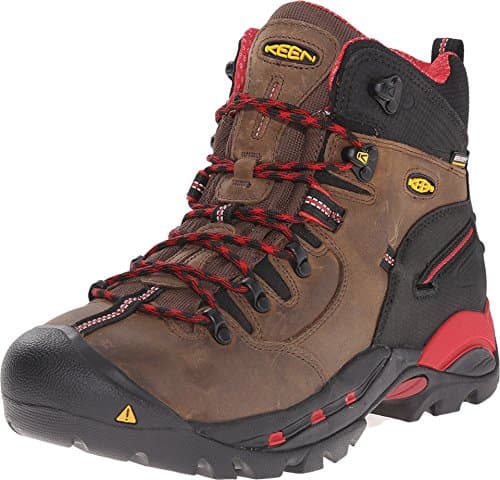 KEEN Utility Pittsburgh 6" Steel Toe WaterproofAn asymmetrical steel toe - shaped left and right specific, so the shell follows the foot. | Toes that have been pinched by a safety cap | 9.5 | |
| 2 | 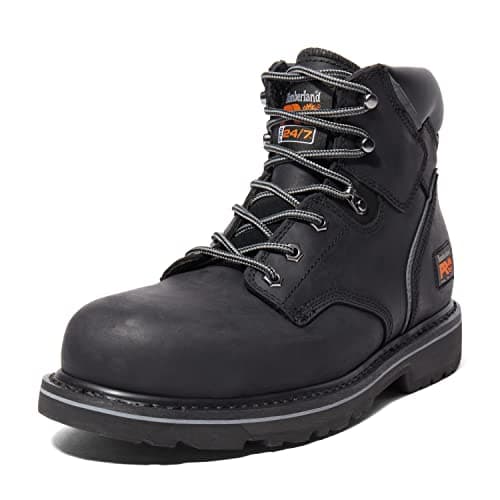 Timberland PRO Pit Boss 6" Steel ToeA genuinely EH-rated steel toe with the roomiest square toe box in its price band. | A roomy square toe box on a budget | 9.3 | |
| 3 | 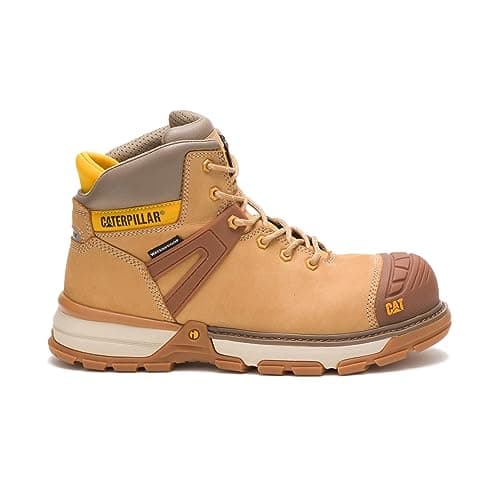 Caterpillar Excavator Superlite Waterproof Composite ToeA carbon composite toe instead of steel - same ASTM rating, less weight, far less cold. | Weight and cold, which steel makes worse | 9.4 |
#ad Prices pulled from Amazon and stamped as of November 14, 2026; they change, and we show no number we cannot verify. How we are funded.
Best toe room · Toes that have been pinched by a safety cap
KEEN Utility Pittsburgh 6" Steel Toe Waterproof
An asymmetrical steel toe - shaped left and right specific, so the shell follows the foot.
#ad Price as of November 14, 2026. How we are funded
- Our score
- 9.5/10
Category-defining
This is the direct fix for the most common complaint. A conventional safety cap is a symmetrical dome, widest in the middle; a foot is widest across the ball and tapers at the little toe. KEEN molds the cap left and right specific, so the shell sits above and in front of the toes rather than squeezing them from the side. If a steel toe has ever bruised a toenail or numbed the outside of your foot, start here.
It runs large - size down a half - and steel in a waterproof boot is heavy, which is the one complaint it does not solve. The toe box also looks bulky. It is Goodyear welted, so it can be resoled.
Specs that matter
- Toe:
- Asymmetrical steel toe, ASTM F2413
- Height:
- 6 inch
- Waterproof:
- Yes, KEEN.DRY membrane
- Build:
- Goodyear welt
Rubric profile
Raw per-criterion marks out of 10, before weighting — this is the shape of the pick, not its published score. A low mark is a scope limit, not a fault: how we score.
- Toe room
- 9.4
- Weight
- 6.4
- Cold transfer
- 5.6
- Comfort
- 8.8
- Value
- 8.0
Why we picked it
- Left and right specific toe caps, so the toe box is shaped like a foot
- Welted, so it can be resoled
- The go-to recommendation for wide feet in a safety toe
Good to know: Runs large: most buyers go down a half size. The toe box is genuinely roomy, which is the reason to pick KEEN.
No. 2 · A roomy square toe box on a budget
Timberland PRO Pit Boss 6" Steel Toe
A genuinely EH-rated steel toe with the roomiest square toe box in its price band.
#ad Price as of November 14, 2026. How we are funded
- Our score
- 9.3/10
Outstanding
The square toe box is the point. It is noticeably wider across the front than the athletic lasts in the same brand's range, which gives toes somewhere to go under the cap, and it comes with a real EH rating at a low price. For a lot of people whose steel-toe boots hurt, moving to a square or round toe box is the whole solution.
There is no waterproofing at all, and the stock footbed is a thin filler that wants replacing on day one - budget for an insole as part of the purchase. It cannot be resoled. Steel also conducts cold, so this is not the boot for an outdoor winter.
Specs that matter
- Toe:
- Steel toe, ASTM F2413
- Height:
- 6 inch
- Electrical hazard:
- EH rated
- Waterproof:
- No
Rubric profile
Raw per-criterion marks out of 10, before weighting — this is the shape of the pick, not its published score. A low mark is a scope limit, not a fault: how we score.
- Toe room
- 8.8
- Weight
- 6.6
- Cold transfer
- 5.4
- Comfort
- 7.4
- Value
- 9.4
Why we picked it
- Among the cheapest genuinely EH-rated steel-toe boots sold
- Wide, square toe box suits thick socks and swollen feet
- Oiled nubuck shrugs off the abuse that kills cheaper uppers
Good to know: Budget for an insole on day one — the stock footbed is the one thing holding this boot back, and it is a cheap fix.
Lightest and warmest · Weight and cold, which steel makes worse
Caterpillar Excavator Superlite Waterproof Composite Toe
A carbon composite toe instead of steel - same ASTM rating, less weight, far less cold.
#ad Price as of November 14, 2026. How we are funded
- Our score
- 9.4/10
Outstanding
Two of the four real complaints about steel toes - weight at the end of the foot and cold conducted straight to your toes - are properties of the metal rather than of safety caps in general. A composite toe carries the identical ASTM F2413 impact and compression rating while weighing less and conducting much less, and this is a light waterproof example at a sane price. It is also metal-free throughout, so it clears detectors.
A light build means the outsole wears sooner and there is less underfoot protection than a heavier boot, and it cannot be resoled. The full comparison is in composite toe vs steel toe.
Specs that matter
- Toe:
- Carbon composite toe, ASTM F2413
- Height:
- 6 inch
- Waterproof:
- Yes
- Weight:
- Lightweight construction
Rubric profile
Raw per-criterion marks out of 10, before weighting — this is the shape of the pick, not its published score. A low mark is a scope limit, not a fault: how we score.
- Toe room
- 8.0
- Weight
- 9.0
- Cold transfer
- 8.8
- Comfort
- 8.6
- Value
- 8.6
Why we picked it
- Genuinely light for a waterproof safety boot
- Non-metallic throughout — no metal detector problems
- Cheaper than most composite-toe waterproof boots
Good to know: Light for a waterproof safety boot, which the outsole pays for over time; less underfoot protection than a heavier build.
Steel, composite or alloy
| Material | Weight | Cold transfer | Metal detectors | Notes |
|---|---|---|---|---|
| Steel | Heaviest | High - conducts cold | Triggers them | Thinnest cap, so the least bulky profile; usually cheapest |
| Composite | Lightest | Low | Clears them | Slightly bulkier cap; non-conductive, which suits electrical work |
| Alloy | Between the two | Moderate | Triggers them | Thinner than composite and lighter than steel; costs more |
What is actually hurting your feet
In our experience with these complaints, the toe cap is the cause in a minority of cases. Far more often the problem is a flat, unsupportive stock footbed - almost every boot at every price ships with one - or a sole that is wrong for the surface, or plain fatigue from standing on concrete. Heel pain that is worst in the first steps of the morning is a plantar fascia problem, not a toe-cap problem: see boots for plantar fasciitis. Arch ache points to flat feet, and lower-back ache to boots for back pain.
Before you blame the cap, swap the insole. Insole types explained matches the type to the symptom, and it is the cheapest change available. If the pain is specifically at the front of the foot and starts within an hour, then it is the cap - and it is a fit problem with a fit fix. The exception is anyone who cannot reliably feel a pressure point forming: with neuropathy, comfort stops being evidence of anything, and work boots for diabetics sets out how to buy on measurable features instead.
Frequently asked
Are steel toe boots bad for your feet?
Not in themselves. There is no evidence that ASTM-rated safety footwear damages a healthy foot. The problems people report - bruised toenails, numbness, instep pressure - come from a rigid cap in a boot that is too short or the wrong shape, because unlike leather a steel cap cannot stretch or break in.
Why do steel toe boots hurt my toes?
Usually because the boot is too short, so your toes contact the cap as your foot slides forward with each step, or because a symmetrical cap is pressing your little toe inward. Going up in length and choosing a square, round or asymmetrical toe box fixes most cases. A cap that pinches when new will not improve.
Should I size up in steel toe boots?
Often, by a half size, and always fitted with the sock you will actually wear. You want roughly a thumb's width in front of your longest toe, because the cap cannot give when your foot moves forward. Do not size up so far that your heel lifts - heel slip causes blisters.
Is a composite toe better for your feet than steel?
It carries the same ASTM F2413 rating while weighing less and conducting far less cold, so for weight and winter comfort it is better. Steel caps are thinner, so a steel-toe boot can be less bulky over the toes. Neither is more protective at the same rating - choose on weight, cold and metal detectors.
Can steel toe boots cause nerve damage?
Persistent pressure from a badly fitted boot can irritate nerves and cause numbness or tingling, which is why numbness along the outside of the foot is a common complaint - but it is the fit doing it, not the fact of a safety toe. Numbness that does not resolve when you change footwear is worth taking to a podiatrist.
Our recommendation
If you read nothing else on this page, these are the two to look at — the one we would buy, and the one to take instead if its trade-off suits you better.
Best toe room · Toes that have been pinched by a safety cap
KEEN Utility Pittsburgh 6" Steel Toe Waterproof
An asymmetrical steel toe - shaped left and right specific, so the shell follows the foot.
#ad Price as of November 14, 2026. How we are funded
Runner-up · A roomy square toe box on a budget
Timberland PRO Pit Boss 6" Steel Toe
A genuinely EH-rated steel toe with the roomiest square toe box in its price band.
#ad Price as of November 14, 2026. How we are funded
Prices are read live from Amazon and stamped with the date. How we pick.
Sources
Back to Guides, or see how we pick. Spotted something wrong? We publish corrections — see our editorial policy.