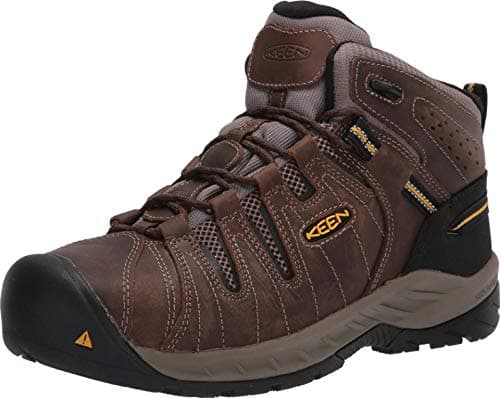
Best for diabetic feet
Best Work Boots for Diabetics
If you have reduced sensation in your feet, a boot that merely feels fine is not evidence of anything. Depth, seams and daily inspection are the whole game.
If you have diabetes and need a rated work boot, start with the KEEN Utility Pittsburgh: it has the deepest, widest toe box of any safety boot on this site, and its asymmetrical steel cap removes the usual small-toe pressure point. Choose the KEEN Detroit XT instead if your feet swell through the day, the Timberland PRO Hypercharge if you want the least weight and no metal next to your toes, and the Carhartt Rugged Flex if a stiff upper is what has hurt you before. None of these is a prescription device, and none replaces a conversation with the clinician who manages your feet.
Diabetes changes boot buying in two specific ways. Peripheral neuropathy blunts or removes the sensation that normally tells you a seam is rubbing or a toe is being squeezed, so a boot can be causing damage while feeling perfectly comfortable. And reduced circulation means that when skin does break, it heals slowly and is more likely to become infected. Those two facts together are why the footwear priorities invert: for most buyers the question is which boot feels best, and here the question is which boot cannot quietly do harm.
The five specifications that matter
- Toe-box depth and width. Toes should not touch the cap or the roof of the toe box at any point in your stride. A safety toe is rigid and will never give, so clearance has to exist on day one.
- A smooth, seamless interior. Run your hand inside before buying. Internal seams, stitched-down logos and the hard edge where a lining meets a tongue gusset are classic pressure points you may not feel.
- A removable footbed with real depth. If you wear a custom or prescribed insole, the boot has to give up its own footbed and still leave toe clearance. Shallow boots fail this test even when they are wide.
- Low weight and flexibility. Weight drives fatigue, and stiffness creates shear at the points where the boot refuses to follow the foot. Shear, not pressure alone, is what builds callus and then ulcerates underneath it.
- Composite or alloy over steel, if you have cold feet. All three meet the same ASTM F2413 rating. Steel is the one that conducts heat out of your toes, and poor circulation plus a cold conductor is a bad pairing. Composite toe vs steel toe covers the other differences.
How to fit a boot you cannot feel properly
- Get measured, late in the day. Both feet, length and width, standing with weight on them. Feet swell across a shift and you are buying for the swollen foot. Full method in work boot fit and sizing.
- Buy for the larger foot. Most people have a measurable difference between left and right. Size the boot to the bigger one and adjust the smaller with lacing or a thicker sock.
- Wear your actual work socks and your actual insole to the fitting. A prescribed insole can change the effective size by a half.
- Check the toe clearance by hand, not by feel. With your weight on the foot, there should be room to press down over the toes. If you cannot judge it, have someone else check it.
- Walk, then take the boot off and look at your foot. Redness that does not fade within about fifteen minutes is a pressure point, whether or not it hurt. That is the only reliable test available to you.
- Break them in in short sessions. An hour on day one, two on day two. Inspect after every session. Never break in a new boot across a full shift - the method and the reasoning are in how to break in work boots.
Quick picks
Ranked by our published scoring rubric. Tap any row for the full write-up.
| # | Product | Best for | Score | Price |
|---|---|---|---|---|
| 1 | 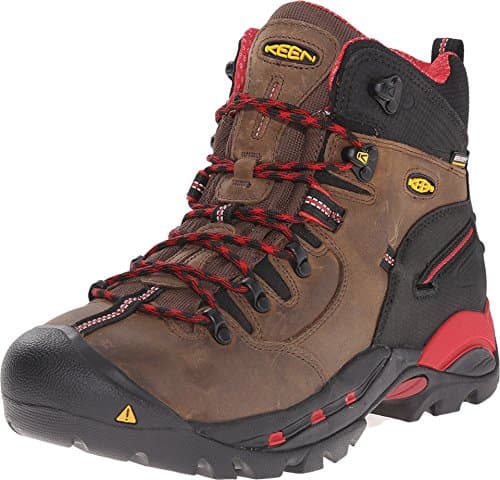 KEEN Utility Pittsburgh 6" Steel Toe WaterproofKEEN's roomy last with an asymmetrical steel toe - the most forefoot volume of any rated boot on this site. | The widest, deepest toe box here | 9.6 | |
| 2 | 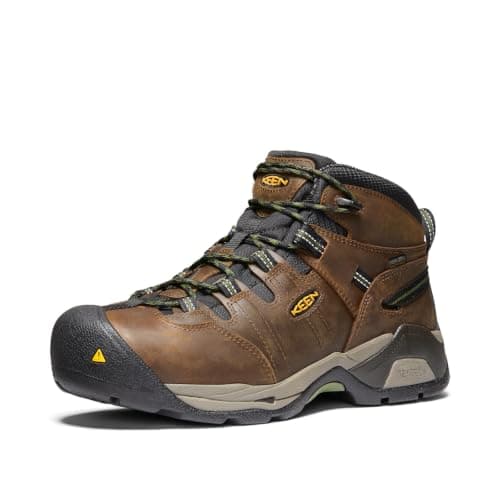 KEEN Utility Detroit XT Mid Steel Toe WaterproofThe same roomy last in a flexible mid - the pick when afternoon swelling is the actual problem. | Feet that swell through the shift | 9.5 | |
| 3 | 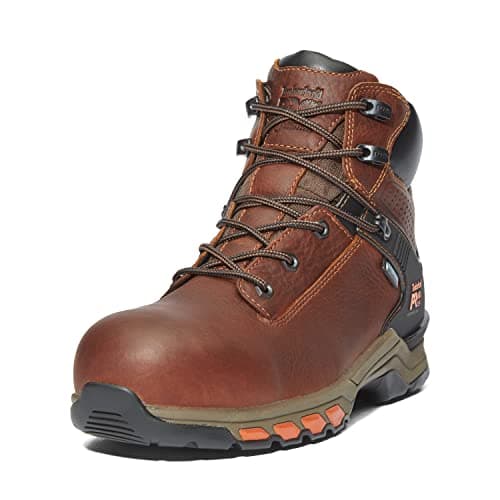 Timberland PRO Hypercharge 6" Composite Toe WaterproofA light composite-toe boot with real anti-fatigue cushioning - less weight to carry and no metal conducting cold. | Reducing total load on the foot | 9.3 | |
| 4 | 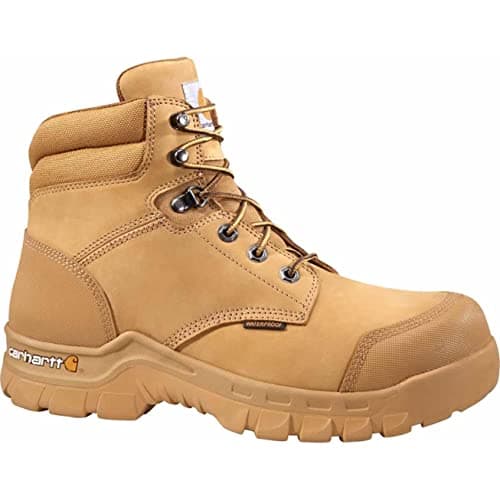 Carhartt Rugged Flex 6" Composite Toe WaterproofPliable leather over a composite toe - the least rigid rated boot here, with a plain lining and few internal seams. | A soft, forgiving leather upper | 9.2 |
#ad Prices pulled from Amazon and stamped as of November 14, 2026; they change, and we show no number we cannot verify. How we are funded.
Top pick · The widest, deepest toe box here
KEEN Utility Pittsburgh 6" Steel Toe Waterproof
KEEN's roomy last with an asymmetrical steel toe - the most forefoot volume of any rated boot on this site.
#ad Price as of November 14, 2026. How we are funded
- Our score
- 9.6/10
Category-defining
Toe-box volume is the first specification to get right, because the forefoot is where diabetic pressure injuries most often start and a safety toe is a rigid ceiling you cannot stretch. KEEN's work last is genuinely broader than a standard shape sold in a wide width - the foot-shaped toe box is the brand's whole design argument - and the asymmetrical steel cap follows the natural angle of the toes, so it meets the small toe later than a symmetrical cap does. That one detail removes the single most common pressure point in a safety boot.
It is also waterproof with a well-padded collar and tongue, and the footbed lifts out cleanly, which matters because many people with diabetes are wearing a prescribed or custom insole and need the depth to accommodate it without losing toe clearance.
The trade-offs are straightforward. Steel conducts cold, and cold feet are harder to monitor; a composite or alloy boot is warmer. A membrane keeps water out and sweat in, which is a drying problem rather than a trivial one when skin integrity matters. And a roomy last is actively wrong for a narrow foot - slide and friction cause blisters, and a blister is the thing you are trying hardest to avoid.
Specs that matter
- Toe:
- Asymmetrical steel toe, ASTM F2413
- Height:
- 6 inch
- Waterproof:
- Yes, KEEN.DRY membrane
- Build:
- Goodyear welt
Rubric profile
Raw per-criterion marks out of 10, before weighting — this is the shape of the pick, not its published score. A low mark is a scope limit, not a fault: how we score.
- Toe-box depth
- 9.6
- Seam smoothness
- 8.8
- Orthotic room
- 9.0
- Protection
- 8.4
- Value
- 8.2
Why we picked it
- Left and right specific toe caps, so the toe box is shaped like a foot
- Welted, so it can be resoled
- The go-to recommendation for wide feet in a safety toe
Good to know: Runs large: most buyers go down a half size. The toe box is genuinely roomy, which is the reason to pick KEEN.
Best for swelling · Feet that swell through the shift
KEEN Utility Detroit XT Mid Steel Toe Waterproof
The same roomy last in a flexible mid - the pick when afternoon swelling is the actual problem.
#ad Price as of November 14, 2026. How we are funded
- Our score
- 9.5/10
Category-defining
Edema is common with diabetes and it is the reason so many people own boots that fit in the morning and hurt by four o'clock. A boot that accommodates a changing foot is worth more than one that fits a measurement perfectly. This is the most forgiving option here: the same wide KEEN platform, a flexible forefoot that moves with the foot rather than against it, and a mid-height padded collar that does not bite into a swollen ankle the way a stiff 8-inch shaft does.
The flexibility is a real clinical point, not a comfort one. A stiff boot creates shear at the points where it refuses to follow the foot, and shear - not pressure alone - is what produces callus and then ulceration. A boot that bends where your foot bends generates less of it.
Same trade-offs as the Pittsburgh on heat and width, plus one more: a flexible forefoot gives up some underfoot puncture protection, so this is the wrong boot for walking over debris and rebar. It is also a steel toe, which is the cold option.
Specs that matter
- Toe:
- Steel toe, ASTM F2413
- Height:
- Mid / 6 inch
- Waterproof:
- Yes
- Widths:
- D and EE
Rubric profile
Raw per-criterion marks out of 10, before weighting — this is the shape of the pick, not its published score. A low mark is a scope limit, not a fault: how we score.
- Toe-box depth
- 9.2
- Seam smoothness
- 8.6
- Orthotic room
- 8.6
- Protection
- 8.0
- Value
- 8.0
Why we picked it
- Actually stocked in EE wide, not just a roomy D
- Flexes out of the box rather than demanding a break-in
- Lighter than the Pittsburgh at the same protection
Good to know: A softer, more flexible upper than a traditional work boot, so it creases early; the mid cut is coverage rather than full ankle support.
Lightest option · Reducing total load on the foot
Timberland PRO Hypercharge 6" Composite Toe Waterproof
A light composite-toe boot with real anti-fatigue cushioning - less weight to carry and no metal conducting cold.
#ad Price as of November 14, 2026. How we are funded
- Our score
- 9.3/10
Outstanding
Two things on this page reduce risk by subtraction rather than addition: weight and metal. A lighter boot means less work per step and less fatigue, and fatigue is what makes people stop checking their feet at the end of a shift. The composite toe satisfies ASTM F2413 while being warmer than steel - meaningful if you have poor circulation - and non-metallic, so nothing in the boot pulls heat out of your toes.
The Anti-Fatigue midsole is the other reason it is here. It is a geometric cone structure rather than a slab of foam, so it keeps returning energy late in a shift instead of bottoming out - and once a midsole has bottomed out, the peak pressures under the heel and forefoot go up sharply, which is exactly what you do not want.
Be clear about the limits: the forefoot is narrower than the KEEN boots, so if width is your binding constraint this is not your boot. An athletic-style upper has more panels and therefore more internal seams than a plain leather boot, which needs checking by hand before you commit. And it is not resoleable, so when the midsole packs down the boot is finished.
Specs that matter
- Toe:
- Composite toe, ASTM F2413
- Height:
- 6 inch
- Waterproof:
- Yes
- Midsole:
- Anti-Fatigue Technology cushioning
Rubric profile
Raw per-criterion marks out of 10, before weighting — this is the shape of the pick, not its published score. A low mark is a scope limit, not a fault: how we score.
- Toe-box depth
- 7.6
- Seam smoothness
- 7.8
- Orthotic room
- 8.2
- Protection
- 8.4
- Value
- 8.4
Why we picked it
- Much lighter on the foot than the Boondock at the same protection level
- Anti-Fatigue midsole is a real difference on long standing shifts
- Waterproof without feeling like a rubber boot
Good to know: Runs slightly narrow in the forefoot compared with the Pit Boss, and the membrane makes it warm in high summer.
Softest upper · A soft, forgiving leather upper
Carhartt Rugged Flex 6" Composite Toe Waterproof
Pliable leather over a composite toe - the least rigid rated boot here, with a plain lining and few internal seams.
#ad Price as of November 14, 2026. How we are funded
- Our score
- 9.2/10
Outstanding
The quieter risk in a work boot is not the sole, it is the upper. Stiff leather creases into a hard ridge at the flex point and that ridge presses on the top of the foot for the whole life of the boot. A pliable, pre-flexed leather upper like this one creases softly and spreads the pressure, and its lining is a plain panel rather than a patchwork, so there are fewer internal seams sitting against skin.
A composite toe keeps the metal out, the boot is waterproof for wet work, and the construction is flexible enough that it does not need a long painful break-in - which matters a great deal if you cannot reliably feel the break-in happening.
Trade-offs: a soft upper gives less lateral support on uneven ground, so this is a floors-and-shop boot rather than an excavation boot. Softer leather also abrades sooner. And the stock footbed is thin filler - plan on replacing it, which is true of nearly every boot at this price and is covered in insole types explained.
Specs that matter
- Toe:
- Composite toe, ASTM F2413
- Height:
- 6 inch
- Waterproof:
- Yes
- Midsole:
- Cushioned EVA
Rubric profile
Raw per-criterion marks out of 10, before weighting — this is the shape of the pick, not its published score. A low mark is a scope limit, not a fault: how we score.
- Toe-box depth
- 8.0
- Seam smoothness
- 9.0
- Orthotic room
- 8.4
- Protection
- 7.8
- Value
- 8.6
Why we picked it
- Flexes immediately — close to no break-in
- Lighter than the Force HD with the same toe protection
- Cushioned midsole helps on hard floors
Good to know: The softest Carhartt here out of the box, which also means the EVA midsole settles over a year of daily wear.
The four picks side by side
| If your binding constraint is | Buy | Because |
|---|---|---|
| Forefoot width and toe-box depth | KEEN Pittsburgh 6" Steel Toe | The roomiest rated last here, asymmetrical cap |
| Swelling across the shift | KEEN Detroit XT Mid | Same wide last, flexible forefoot, forgiving collar |
| Weight, fatigue and cold toes | Timberland PRO Hypercharge | Light build, composite toe, cushioning that lasts the shift |
| A stiff upper creasing into your foot | Carhartt Rugged Flex 6" | Pliable leather, plain lining, few internal seams |
The daily habits that matter more than the boot
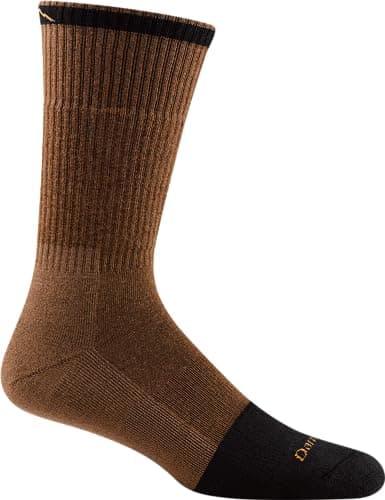
Every clinical guideline on diabetic foot care comes back to the same two habits, and they are worth more than any purchase on this page. Look at your feet every day - tops, soles, between the toes, using a mirror or a phone camera for the parts you cannot see - and shake out your boots before putting them on, because a stone or a curled sock you cannot feel will do real damage over a shift. Change socks when they are damp rather than at the end of the day, and choose a seamless or flat-toe-seam sock in merino or a merino blend; wool manages moisture better and is less hospitable to bacteria. Best work socks covers the options, and work boots for sweaty feet covers the drying problem.
Replace boots earlier than you would otherwise. A midsole that has packed down raises peak pressure under the heel and forefoot, and a worn outsole raises slip risk - and neither change announces itself if you cannot feel much. Twelve months of daily wear is a reasonable review point rather than waiting for visible failure; how long work boots last sets out the wear indicators to look for. Never try to stretch, cut or modify a safety boot to relieve a pressure point - a modified safety toe no longer protects you, and the pressure will simply move.
What we would skip
Skip pull-on boots: they cannot be adjusted, so they cannot accommodate a foot that changes volume across the day, and the entry friction of pulling them on is itself a skin hazard. Skip steel-toe boots if your feet run cold - composite and alloy carry the same rating without conducting heat away. Skip aggressive arch-support insoles bought off a shelf on the assumption that more support is better; with reduced sensation you will not feel the new pressure point it creates, and this is precisely what a clinician should specify. And skip insulated boots indoors - sweat that cannot escape softens skin and softened skin tears, which is the argument made in boot insulation grams explained.
Frequently asked
What are the best work boots for diabetics?
The KEEN Utility Pittsburgh is the best starting point for most people who need a rated boot: it has the deepest and widest toe box of any safety boot here, and its asymmetrical steel cap avoids the usual small-toe pressure point. Choose the KEEN Detroit XT if your feet swell, or the Timberland PRO Hypercharge for the lightest build with no metal near your toes. Any choice should be reviewed with the clinician who manages your feet.
Can you wear steel toe boots with diabetes?
Yes, there is no rule against it, but two things need checking. Steel conducts heat away from your toes, which is unhelpful with poor circulation, so composite or alloy - both meeting the same ASTM F2413 standard - is usually the better choice. And because a safety cap is rigid and cannot be stretched, the toe-box clearance has to be right when you buy the boot.
What should I look for in a work boot if I have neuropathy?
Depth and width over the toes, a smooth interior with no internal seams or stitched-down logos against the skin, a removable footbed deep enough to take a prescribed insole, and low weight. Because you cannot rely on comfort as feedback, buy on those measurable features and verify fit by inspecting your skin after wearing - redness that has not faded in fifteen minutes is a pressure point.
Are diabetic shoes the same as work boots?
No. Therapeutic diabetic footwear is a prescribed medical device, fitted by a qualified professional, and in the United States it is covered under Medicare Part B for people who meet the criteria. A work boot is PPE. If you need both protection and a therapeutic fit, that is a conversation with your clinician - some manufacturers make extra-depth safety boots specifically to take custom inserts.
How often should I replace work boots if I have diabetes?
Sooner than most people, and on a schedule rather than on symptoms. A packed-down midsole raises peak pressure under the heel and forefoot and a smooth outsole raises slip risk, and with reduced sensation neither will announce itself. Reviewing the boots at twelve months of daily wear is reasonable, and replacing the insole more often than that is cheap insurance.
Our recommendation
If you read nothing else on this page, these are the two to look at — the one we would buy, and the one to take instead if its trade-off suits you better.
Top pick · The widest, deepest toe box here
KEEN Utility Pittsburgh 6" Steel Toe Waterproof
KEEN's roomy last with an asymmetrical steel toe - the most forefoot volume of any rated boot on this site.
#ad Price as of November 14, 2026. How we are funded
Runner-up · Feet that swell through the shift
KEEN Utility Detroit XT Mid Steel Toe Waterproof
The same roomy last in a flexible mid - the pick when afternoon swelling is the actual problem.
#ad Price as of November 14, 2026. How we are funded
Prices are read live from Amazon and stamped with the date. How we pick.
Sources
Back to Work Boots, or see how we pick. Spotted something wrong? We publish corrections — see our editorial policy.