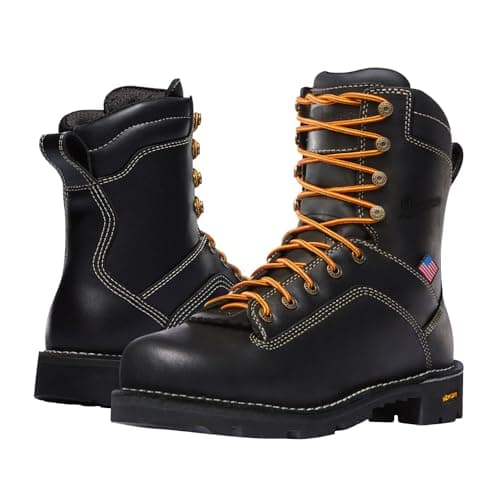
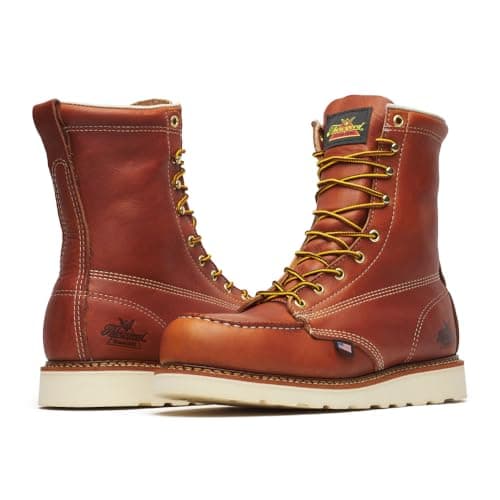
Waterproofing at home
How to Waterproof Work Boots at Home
You can make leather shed water for weeks at a time. What you cannot do is turn a water-resistant boot into a waterproof one - and the difference matters.
To waterproof work boots at home: clean them, let them dry fully, then apply the right treatment for the material. Smooth full-grain leather takes a wax or a cream dressing worked in with a cloth and buffed off. Nubuck and suede take a spray made for napped leather and nothing oily. Membrane-lined boots take a light spray or a thin cream only - a heavy grease can clog the membrane's breathability. Pay special attention to the welt line and the tongue gusset, which is where water actually gets in. And be clear about the limit: treatment makes a boot shed water better. It cannot make a non-waterproof boot waterproof.
Leather resists water because of its structure and its oils, and it loses that resistance as it is worn: the oils migrate out, the surface abrades, and the fibers start to absorb instead of shedding. A treatment replaces the surface barrier. Wax and silicone sit on and just below the surface, raising the angle at which water meets the leather so droplets bead and roll rather than spreading and soaking. Creams and oils work differently, feeding the leather itself so it stays supple and naturally less absorbent.
What none of them do is seal a boot. Water does not mainly enter through the middle of a leather panel; it enters through the stitching, the welt channel, the tongue gusset, the eyelets and the seam where the upper meets the sole. A waterproof boot deals with those by putting a continuous membrane inside the whole upper. A treated boot deals with them by slowing them down. That is a genuine improvement and it is not the same thing.
Identify your leather first
- Smooth full-grain. Shiny or matte but smooth to the touch, with a visible grain. Takes wax, cream and oil. The most forgiving material and the one that benefits most from treatment.
- Oiled or pull-up leather. Smooth but visibly oily, and it lightens where you bend it. Takes a conditioner or a wax; already partly treated, so it needs less.
- Nubuck. Lightly napped, velvety, usually matte. Needs a spray formulated for nubuck. Wax and oil will mat the nap and darken it permanently.
- Suede. Softer, longer nap, no grain. Same rule as nubuck, and more fragile. Never oil it.
- Synthetic and mesh panels. Found on athletic-style work boots. A spray-on DWR treatment is the only option, and it washes off faster than on leather.
- Rubber. Needs nothing. Treatment does not adhere and does not help.
The method, step by step
- Pull the laces out and remove the insoles. You cannot treat under a lace and the insole needs to dry separately anyway.
- Clean the boots properly. A stiff brush for dried mud, then a damp cloth with a little saddle soap for smooth leather or a nubuck brush and eraser for napped leather. Treatment applied over grit seals the grit in.
- Let them dry completely - 24 hours, in moving air, away from heat. Wax applied to damp leather traps the moisture inside, which is how boots go moldy and how leather rots from the inside.
- Apply thinly, with a cloth or your fingers. Warmth from your hand helps wax penetrate. Work it in small circles rather than wiping it on.
- Work the welt line and the tongue gusset deliberately. Use an old toothbrush to push product into the stitching channel around the welt and into the gusset folds. This is the step that actually changes how wet your socks get.
- Let it absorb for 20 to 30 minutes, then buff off the excess with a clean cloth. Excess wax does nothing on the surface except collect dust and crack.
- Repeat once if the boots are heavily worn, then leave them overnight before wearing.
Quick picks
Ranked by our published scoring rubric. Tap any row for the full write-up.
| # | Product | Best for | Score | Price |
|---|---|---|---|---|
| 1 | 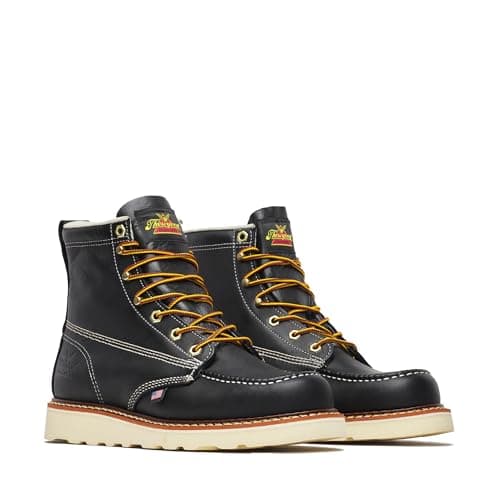 Thorogood American Heritage 6" Moc ToeUnlined full-grain leather with no membrane - the case where wax genuinely changes how the boot performs. | The boot treatment helps most | 9.5 | |
| 2 | 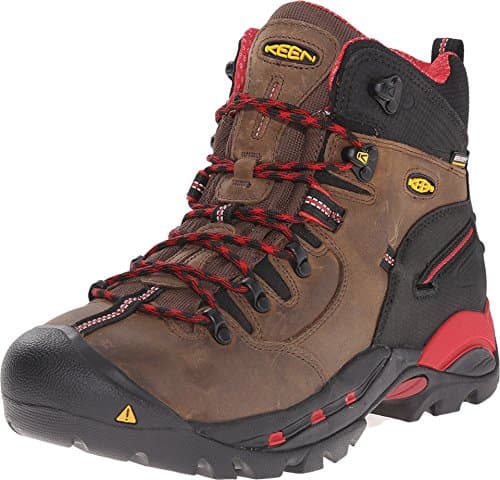 KEEN Utility Pittsburgh 6" Steel Toe WaterproofA membrane-lined waterproof boot - already waterproof inside, and still worth treating outside. | A boot where you treat the outside only | 9.4 | |
| 3 | 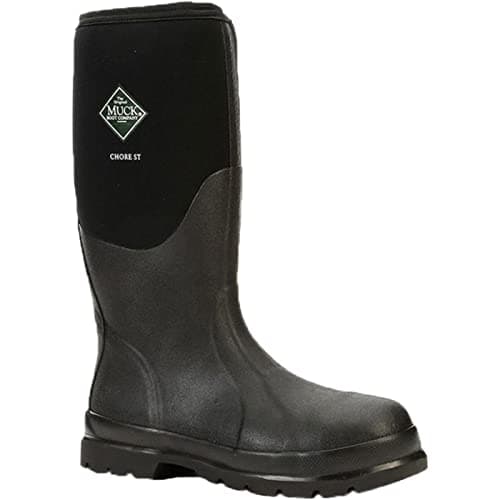 Muck Boot Chore Classic Tall Steel ToeVulcanized rubber over neoprene - nothing to treat, nothing to fail, and no amount of wax gets you here. | When treatment is not the answer at all | 9.3 |
#ad Prices pulled from Amazon and stamped as of November 14, 2026; they change, and we show no number we cannot verify. How we are funded.
Best treated by wax · The boot treatment helps most
Thorogood American Heritage 6" Moc Toe
Unlined full-grain leather with no membrane - the case where wax genuinely changes how the boot performs.
#ad Price as of November 14, 2026. How we are funded
- Our score
- 9.5/10
Category-defining
Treatment matters most on a boot like this: full-grain leather, no waterproof membrane, no lining to worry about clogging. Here a wax or a cream dressing fills the surface pores and raises the contact angle of water on the leather, so rain beads and rolls off instead of soaking in. Reapplied every few weeks in a wet season, it turns a boot that wets through in an hour into one that handles a working day in the damp.
The welted construction is the other reason this boot rewards care. The stitching channel around the welt is a wicking path, and working wax into the welt line is the single highest-value thing you can do for a boot like this - far more useful than coating the vamp again.
What treatment cannot do here is make this a waterproof boot. There is no membrane, the leather is breathable by design, and standing in water will get your feet wet regardless of how much wax you apply. It is also a soft-toe boot with no rating, so it is not eligible on a PPE-gated site.
Specs that matter
- Toe:
- Soft toe (no safety rating)
- Height:
- 6 inch
- Sole:
- MAXwear wedge, slip-resisting
- Build:
- Goodyear storm welt, resoleable
Rubric profile
Raw per-criterion marks out of 10, before weighting — this is the shape of the pick, not its published score. A low mark is a scope limit, not a fault: how we score.
- Treatment benefit
- 9.6
- Base resistance
- 5.6
- Breathability
- 8.8
- Durability
- 9.0
- Value
- 7.8
Why we picked it
- Welt construction means a cobbler can resole it instead of you rebuying
- Flat wedge does not pack mud and does not scuff finished floors
- Removable footbed, so an aftermarket insole drops straight in
Good to know: Soft toe, so confirm your site's PPE rule before ordering; the wedge is at its best on flat shop floors rather than ladders.
Treat lightly only · A boot where you treat the outside only
KEEN Utility Pittsburgh 6" Steel Toe Waterproof
A membrane-lined waterproof boot - already waterproof inside, and still worth treating outside.
#ad Price as of November 14, 2026. How we are funded
- Our score
- 9.4/10
Outstanding
A membrane boot like this is waterproof because of a laminate inside the upper, not because of the leather. The treatment question changes completely: you are no longer trying to keep water out, you are trying to stop the leather itself wetting out and getting heavy, cold and stiff. A light spray or a thin cream does that, and it keeps the leather supple so it does not crack at the flex point and compromise the membrane underneath.
The important restraint is quantity. A heavy oil or a thick grease applied to a membrane boot soaks into the leather and can block the pores the membrane needs to pass vapor outward - which turns a breathable waterproof boot into a non-breathable one. Thin coats, worked in and buffed off, are the rule.
The honest limits: this is a steel toe, so it conducts cold; the membrane makes it warm in summer because it is also a vapor barrier; and a membrane is a consumable that will eventually fail at the flex crease. No treatment repairs a failed membrane - that is the end of the boot's waterproofing, as explained in waterproof vs water resistant.
Specs that matter
- Toe:
- Asymmetrical steel toe, ASTM F2413
- Height:
- 6 inch
- Waterproof:
- Yes, KEEN.DRY membrane
- Build:
- Goodyear welt
Rubric profile
Raw per-criterion marks out of 10, before weighting — this is the shape of the pick, not its published score. A low mark is a scope limit, not a fault: how we score.
- Treatment benefit
- 7.0
- Base resistance
- 9.2
- Breathability
- 5.6
- Durability
- 8.4
- Value
- 8.2
Why we picked it
- Left and right specific toe caps, so the toe box is shaped like a foot
- Welted, so it can be resoled
- The go-to recommendation for wide feet in a safety toe
Good to know: Runs large: most buyers go down a half size. The toe box is genuinely roomy, which is the reason to pick KEEN.
Needs no treatment · When treatment is not the answer at all
Muck Boot Chore Classic Tall Steel Toe
Vulcanized rubber over neoprene - nothing to treat, nothing to fail, and no amount of wax gets you here.
#ad Price as of November 14, 2026. How we are funded
- Our score
- 9.3/10
Outstanding
There is a point at which waterproofing a leather boot is the wrong project. If you stand in water, slurry or wet concrete, you need a boot with no seams to wick and no membrane to fail, and that means rubber. This one adds a steel toe so it also satisfies a site PPE rule, and a neoprene bootie so it fits and flexes like a boot rather than hanging loose like a plain wellington.
It is included here as the honest end point of the question. People spend a lot of money on treatments trying to make a leather boot do a rubber boot's job, and it never works - the leather, the stitching and the tongue gusset are all water paths that no dressing closes.
Rubber does not breathe at all, so your feet will be damp from sweat by the end of a shift whatever the weather. The soft sole wears faster on concrete than a leather boot's outsole, and there is no ankle support to speak of. More options and the heights they suit are in best rubber work boots.
Specs that matter
- Toe:
- Steel toe, ASTM F2413
- Material:
- Rubber over neoprene
- Waterproof:
- Fully waterproof, not just resistant
- Height:
- Tall shaft
Rubric profile
Raw per-criterion marks out of 10, before weighting — this is the shape of the pick, not its published score. A low mark is a scope limit, not a fault: how we score.
- Treatment benefit
- 2.0
- Base resistance
- 9.8
- Breathability
- 2.0
- Durability
- 7.8
- Value
- 8.4
Why we picked it
- Genuinely waterproof in a way no membrane boot matches
- Neoprene lining insulates and flexes
- Rinses clean with a hose
Good to know: Rubber does not breathe, so your sock choice matters more than usual here; the outsole wears quickly on abrasive concrete.
How often, and what it costs you
| Boot type | Product | How often |
|---|---|---|
| Smooth full-grain, no membrane | Wax or cream dressing | Every 2-4 weeks in a wet season |
| Oiled or pull-up leather | Boot oil or conditioner, sparingly | Every 4-6 weeks |
| Nubuck or suede | Spray made for napped leather | Every 2-3 weeks; after every soaking |
| Membrane-lined boot | Light spray or thin cream only | Every 6-8 weeks, thinly |
| Synthetic or mesh panels | Spray-on DWR | Every 2 weeks; it wears off fast |
| Rubber boots | Nothing | Never - rinse and dry instead |
There is a trade-off worth naming. Every waterproofing treatment reduces breathability to some degree, because the mechanism - filling surface pores, raising the water contact angle - also slows vapor moving the other way. On an unlined leather boot in winter that is a good trade. On a membrane boot in summer it is a bad one, which is why the advice for those boots is 'thinly and rarely' rather than 'generously and often'. And over-oiling any boot softens the leather past the point where it supports your foot, which is covered in boot care and conditioning.
What does not work
- Mink oil on nubuck or suede. It mats the nap permanently and turns the boot dark and blotchy. This is the single most common irreversible mistake.
- Heavy grease on membrane boots. It soaks in and blocks vapor transmission, so the boot keeps water out and keeps sweat in. Your feet end up wet either way.
- Silicone spray as a substitute for conditioning. It adds surface repellency and feeds the leather nothing, so the leather still hardens and cracks underneath a water-repellent surface.
- Spray-on treatments on heavily soiled boots. They bond to the dirt, not the leather, and flake off within days.
- Candle wax, WD-40, cooking oil and petroleum jelly. All circulate as home remedies. All either sit on the surface doing nothing useful or break down the leather's structure over time.
- Anything applied to a wet boot. You are sealing moisture inside the leather, which is worse than no treatment at all.
When the boot is the problem, not the treatment
If your boots are soaking through in under an hour, no amount of wax will fix it, and it is worth working out why. The common causes are a failed membrane - usually cracked at the flex crease behind the ball of the foot, which you can sometimes find by filling the boot with water in a sink - a split in the leather, a separated sole bond letting water in at the welt, or simply leather that has worn so thin it has no resistance left. None of those is repairable with a dressing.
At that point the question is whether the boot is worth repairing. A welted boot can be resoled and the welt resealed by a cobbler, which is the whole argument for welted construction - Goodyear welt vs direct attach explains how to tell what you have. A cemented boot with a failed membrane is finished. And if the real issue is that the boot was never intended for wet work, the answer is a different boot: waterproof work boots for leather options and best rubber work boots for standing in water.
What to skip
Skip treating a brand-new boot before you have worn it; most arrive with a factory finish and you cannot tell what the leather needs until you have seen how it behaves in rain. Skip applying any product to a wet boot. Skip oil-based products on anything napped. Skip the heat - a radiator or a heat gun will cost you the boot. And skip the hope that a treatment turns a water-resistant boot into a waterproof one: if you are standing in water rather than walking through it, you need a membrane or rubber, and the distinction is set out in waterproof vs water resistant.
Frequently asked
How do you waterproof work boots at home?
Clean them, let them dry fully for about 24 hours away from heat, then apply the right product for the material - wax or cream on smooth leather, a nubuck-specific spray on napped leather, and only a thin coat on membrane-lined boots. Work the product into the welt stitching and the tongue gusset with an old toothbrush, let it absorb for half an hour, then buff off the excess.
Can you make non-waterproof boots waterproof?
No. Treatment makes leather shed water much better and will get you through a wet working day, but water enters a boot through the stitching, welt channel, tongue gusset and eyelets, and no dressing seals those. A genuinely waterproof boot has a continuous membrane inside the upper or is made of rubber.
What is the best waterproofing for work boots?
It depends on the leather. A wax or cream dressing for smooth full-grain, a spray formulated for napped leather on nubuck and suede, and a light spray or thin cream on membrane-lined boots. Never use an oil-based product on nubuck or suede, and never apply a heavy grease to a membrane boot.
Does mink oil waterproof boots?
On smooth full-grain leather it adds water repellency and conditions the leather, so yes, within limits. On nubuck or suede it is a mistake you cannot undo - it mats the nap and darkens the boot permanently. It is also easy to over-apply on any boot, which softens the leather past the point where it supports your foot.
How often should I waterproof my work boots?
Every two to four weeks for untreated smooth leather in a wet season, and after every real soaking. Nubuck sprays wear off faster and need reapplying every two to three weeks. Membrane-lined boots need treating far less often - every six to eight weeks, thinly - because the waterproofing is already inside and heavy treatment reduces breathability.
Can you waterproof Gore-Tex boots?
You should treat the outer leather, but only lightly. The membrane inside already provides the waterproofing; the reason to treat the leather is to stop it wetting out and becoming heavy, cold and stiff. Use a thin cream or a spray and avoid heavy greases, which soak in and reduce the boot's ability to pass vapor outward.
Our recommendation
If you read nothing else on this page, these are the two to look at — the one we would buy, and the one to take instead if its trade-off suits you better.
Best treated by wax · The boot treatment helps most
Thorogood American Heritage 6" Moc Toe
Unlined full-grain leather with no membrane - the case where wax genuinely changes how the boot performs.
#ad Price as of November 14, 2026. How we are funded
Runner-up · A boot where you treat the outside only
KEEN Utility Pittsburgh 6" Steel Toe Waterproof
A membrane-lined waterproof boot - already waterproof inside, and still worth treating outside.
#ad Price as of November 14, 2026. How we are funded
Prices are read live from Amazon and stamped with the date. How we pick.
Sources
Back to Guides, or see how we pick. Spotted something wrong? We publish corrections — see our editorial policy.