Price vs value
Are Expensive Work Boots Worth It?
Only if you will use the thing you are paying for. Most of the premium is construction, and construction you never renew is wasted money.
Expensive work boots are worth it when you will actually use what the money buys - which is almost always construction you can renew. A welted or stitchdown boot can be resoled two or three times, so the upper decides when it is finished rather than the tread; done that way, a $300 boot genuinely can cost less per year than a $90 one. If you would never visit a cobbler, the premium buys you better leather and a longer break-in and little else, and buying mid-market more often is the smarter plan.
What more money actually buys
- Resoleable construction. A Goodyear welt or stitchdown sole can be replaced. This is the single biggest driver of price and the only one that can make an expensive boot cheap - the mechanics are in Goodyear welt vs direct attach.
- Better leather. Full-grain from a known tannery takes conditioner, creases rather than cracks, and survives two sole changes. Corrected-grain and split leather at the bottom of the market does not.
- A better waterproof system. Gore-Tex and comparable membranes last longer before wetting out than generic linings, and the sole joint on a well-made boot leaks later.
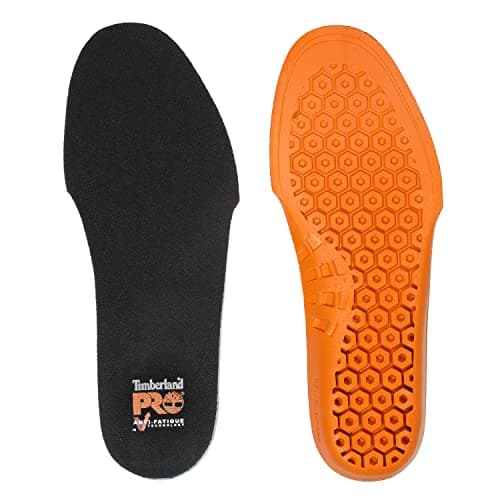
- A footbed worth keeping. Most boots at every price ship with thin filler, but premium boots more often include a removable, structured insole.
- Width and size depth. Expensive brands stock real EE and EEE widths rather than a single generous D, which for a lot of feet is the whole purchase - see work boots for wide feet.
What it does not buy
Protection. A safety toe is a pass or fail test: ASTM F2413 impact and compression ratings are the same whether the boot cost ninety dollars or three hundred, and so are EH ratings and puncture plates. Paying more does not get you a more protective toe cap - it gets you a toe cap in a better boot. ASTM F2413 safety ratings explained is worth reading before you spend anything.
It also does not buy comfort, which surprises people. Premium welted boots are stiff, heavy and need weeks of break-in; cheap athletic-construction safety boots are comfortable in the first hour. Comfort tracks fit, sole geometry and cushioning, not price - and if your feet hurt now, why work boots hurt will help more than a bigger budget. Nor does it buy you a longer life if the thing that kills your boots is chemical exposure, abrasion or a fit problem rather than sole wear.
The arithmetic, done honestly
Work in cost per year. A cemented mid-market boot at around $140 lasting 18 months of daily wear is roughly $93 a year. A welted boot at $300 with two resoles at $100 each, lasting six years, is about $83 a year - better, but not dramatically, and only if all three of those numbers hold. A $90 boot that lasts nine months is $120 a year, which is the real reason the cheapest option is not usually the cheapest.
Two things break the premium case. If your boots die from something other than sole wear - solvent exposure, cuts, heat, or a fit problem you keep buying around - the resole never happens and you have paid for an option you cannot exercise. And if you do not actually go to a cobbler, the welt was decoration. We lay out replacement timing by usage band in how long work boots last.
Quick picks
Ranked by our published scoring rubric. Tap any row for the full write-up.
| # | Product | Best for | Score | Price |
|---|---|---|---|---|
| 1 | 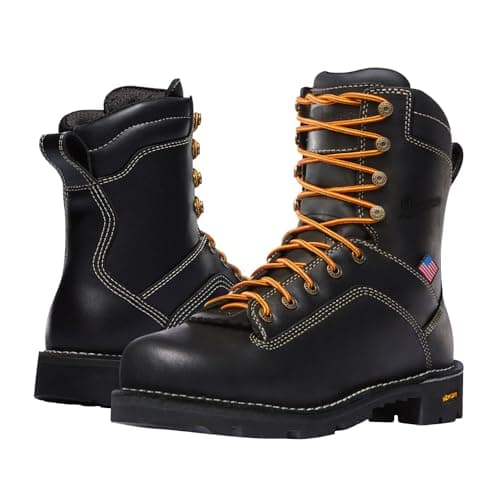 Danner Quarry 8" Waterproof Alloy ToeStitchdown, Gore-Tex-lined and recraftable - a boot whose price is meant to be spread over many years. | The case for spending the most | 9.5 | |
| 2 | 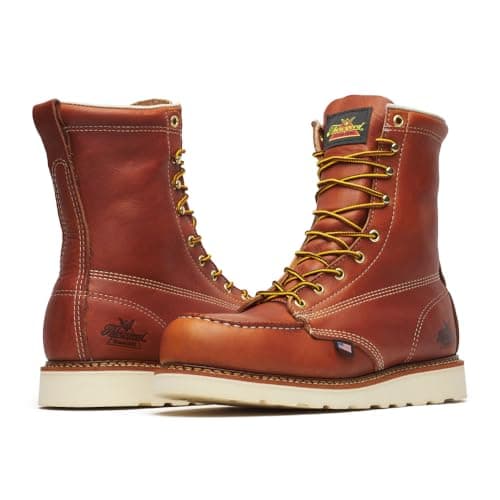 Thorogood American Heritage 8" Steel ToeA welted, American-made safety boot - most of the longevity argument at less than top-of-market money. | The sensible middle of the premium market | 9.5 | |
| 3 | 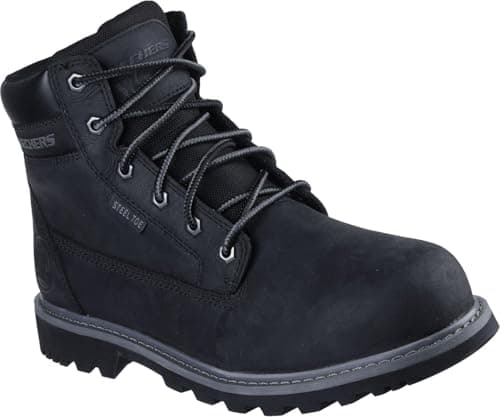 Skechers Work Longrider 6" Steel ToeAn EH-rated steel toe with no break-in, for a fraction of the money - and a defensible choice. | The case for spending the least | 9.2 |
#ad Prices pulled from Amazon and stamped as of November 14, 2026; they change, and we show no number we cannot verify. How we are funded.
Best if you resole · The case for spending the most
Danner Quarry 8" Waterproof Alloy Toe
Stitchdown, Gore-Tex-lined and recraftable - a boot whose price is meant to be spread over many years.
#ad Price as of November 14, 2026. How we are funded
- Our score
- 9.5/10
Category-defining
This is what the top of the market is actually selling: a boot built to be rebuilt. Stitchdown construction means Danner will recraft it, Gore-Tex is the most reliable waterproof lining in footwear, and the alloy toe gives you the ASTM rating at less weight than steel. If you work hard, wet, outdoor hours and you will send boots back to be rebuilt, the cost per year can come out below a cheaper boot replaced annually - and Danner work boots model by model shows which models in that range are actually recraftable and which are not.
If you will not do that, almost none of this premium pays. It is expensive up front, stiff and heavy for flat-concrete work, and the break-in is long. A premium boot used like a disposable boot is simply an expensive disposable boot.
Specs that matter
- Toe:
- Alloy toe, ASTM F2413
- Height:
- 8 inch
- Waterproof:
- Gore-Tex lined
- Build:
- Stitchdown, recraftable
Rubric profile
Raw per-criterion marks out of 10, before weighting — this is the shape of the pick, not its published score. A low mark is a scope limit, not a fault: how we score.
- Cost per year
- 8.6
- Durability
- 9.4
- Comfort
- 7.0
- Weather
- 9.4
- Repairability
- 9.6
Why we picked it
- Danner will recraft it, so the price is spread over many years
- Gore-Tex is the most reliable waterproof lining in footwear
- Alloy toe is lighter than steel at the same rating
Good to know: A premium up-front price that pays back through recrafting; stiff and heavy at first, and best on rough ground rather than slab.
No. 2 · The sensible middle of the premium market
Thorogood American Heritage 8" Steel Toe
A welted, American-made safety boot - most of the longevity argument at less than top-of-market money.
#ad Price as of November 14, 2026. How we are funded
- Our score
- 9.5/10
Category-defining
The Goodyear storm welt is the part worth paying for, and here you get it with an ASTM F2413 steel toe, full-grain leather and an eight-inch shaft. Two or three resoles later the upper decides when the boot is finished, which is the only mechanism by which an expensive boot becomes cheap. For most people considering spending real money, this is the sensible place to do it.
It is heavier than composite-toe rivals, steel conducts cold in winter, and the eight-inch shaft takes a week or two to settle. And the same caveat applies: the value depends entirely on getting the resole done.
Specs that matter
- Toe:
- Steel toe, ASTM F2413 rated
- Height:
- 8 inch
- Sole:
- MAXwear wedge
- Build:
- Goodyear storm welt
Rubric profile
Raw per-criterion marks out of 10, before weighting — this is the shape of the pick, not its published score. A low mark is a scope limit, not a fault: how we score.
- Cost per year
- 8.8
- Durability
- 9.2
- Comfort
- 7.6
- Weather
- 6.6
- Repairability
- 9.2
Why we picked it
- Safety toe plus resoleable welt construction in one boot
- Taller shaft keeps debris out on demolition and dirt work
- Full-grain leather that takes conditioner and keeps going
Good to know: Order your measured length, not a size up — and expect the 8-inch shaft to need about two weeks before it stops feeling stiff across the ankle.
Best cheap · The case for spending the least
Skechers Work Longrider 6" Steel Toe
An EH-rated steel toe with no break-in, for a fraction of the money - and a defensible choice.
#ad Price as of November 14, 2026. How we are funded
- Our score
- 9.2/10
Outstanding
The cheap option is not automatically the wrong one. If your site is dry, your hazards are modest and you do not yet know what your feet want, a comfortable EH-rated steel-toe boot at this price lets you find out without a two-hundred-dollar guess. The comfort last comes in medium and wide so it suits wide and swollen feet, and there is no break-in worth mentioning.
It is not waterproof, and the cemented sole cannot be resoled, so the outsole's life is the boot's life. Treat it as a one-season boot - and note that one season is exactly what a lot of trades get out of a mid-market boot anyway, which is the whole point this page is making.
Specs that matter
- Toe:
- Steel toe, ASTM F2413 rated
- Height:
- 6 inch, lace-up
- Fit:
- Skechers comfort last, cushioned collar
- Upper:
- Leather
Rubric profile
Raw per-criterion marks out of 10, before weighting — this is the shape of the pick, not its published score. A low mark is a scope limit, not a fault: how we score.
- Cost per year
- 7.8
- Durability
- 6.8
- Comfort
- 8.4
- Weather
- 5.0
- Repairability
- 1.0
Why we picked it
- Looks and laces like a normal work boot rather than a safety sneaker
- Little to no break-in, which is the whole reason to buy this brand
- Leather upper holds up better than the mesh models in the line
Good to know: Almost no break-in, which is the reason to buy Skechers; not waterproof, and the glued sole means you replace rather than resole.
Three price tiers, side by side
| Tier | Typical construction | Expect | Right for |
|---|---|---|---|
| Budget | Cemented, synthetic or corrected leather | 6-12 months of daily wear | A first safety boot, dry sites, finding out what you need |
| Mid market | Direct attach, full-grain upper | 12-24 months, no resole | Most trades; the default sensible buy |
| Premium | Goodyear welt or stitchdown | Years, with resoles | Hard hours, wet work, and people who will use a cobbler |
Where to spend the money instead
If you have a hundred dollars to improve your feet, do not put it into the boot's price tier. Put twenty into decent socks and forty into the right insole, and keep the rest. Stock footbeds are thin filler at nearly every price, and replacing one is the cheapest change that affects how you feel at 4 p.m. - insole types explained matches the type to the symptom, and best work socks covers the rest.
The second-best use of money is a second pair. Alternating boots lets each dry fully, which does more for the life of a leather boot than any conditioner, and it means one soaking does not cost you a working day. Two mid-market pairs will usually outlast one premium pair worn every day.
Frequently asked
Are expensive work boots worth the money?
They are if you will have them resoled, because resoleable construction is most of what the premium buys and it is the only mechanism that makes an expensive boot cheap per year. If you will not use a cobbler, a mid-market boot replaced more often delivers the same protection and comfort for less.
How much should I spend on work boots?
For most trades the mid market - roughly the price band where you get a full-grain upper and a direct-attach waterproof sole - is the sensible default, because it gives you 12 to 24 months of daily wear without paying for construction you will not renew. Spend more only if you work hard wet hours and will have the boots rebuilt.
Do more expensive work boots last longer?
Usually, but the reason is construction rather than price: a boot whose sole can be replaced outlives one whose sole cannot. If your boots die from chemical exposure, cuts or abrasion rather than tread wear, a premium boot will not last meaningfully longer than a mid-market one.
Are cheap work boots bad for your feet?
Not inherently. What is bad for your feet is a poor fit and a flat, unsupportive footbed - and almost every boot at every price ships with a thin filler insole. A cheap boot with a good aftermarket insole in the right size will treat your feet better than an expensive boot that does not fit.
Is it better to buy one expensive pair or two cheaper pairs?
Two pairs is usually the better plan if your work is wet, because alternating lets each pair dry fully, which extends leather life more than any care routine. One premium pair makes sense when you need a specific hard-to-find specification or you intend to have the boots rebuilt over years.
Our recommendation
If you read nothing else on this page, these are the two to look at — the one we would buy, and the one to take instead if its trade-off suits you better.
Best if you resole · The case for spending the most
Danner Quarry 8" Waterproof Alloy Toe
Stitchdown, Gore-Tex-lined and recraftable - a boot whose price is meant to be spread over many years.
#ad Price as of November 14, 2026. How we are funded
Runner-up · The sensible middle of the premium market
Thorogood American Heritage 8" Steel Toe
A welted, American-made safety boot - most of the longevity argument at less than top-of-market money.
#ad Price as of November 14, 2026. How we are funded
Prices are read live from Amazon and stamped with the date. How we pick.
Sources
Back to Guides, or see how we pick. Spotted something wrong? We publish corrections — see our editorial policy.