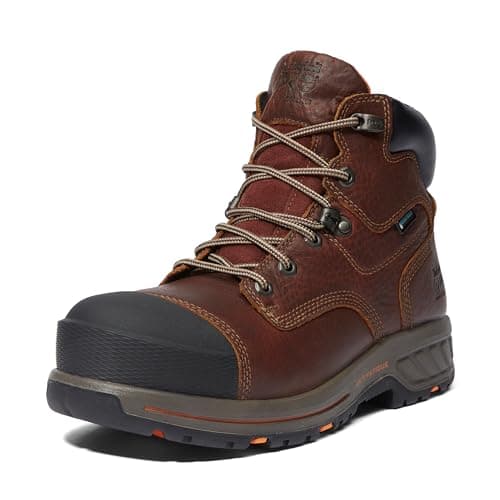
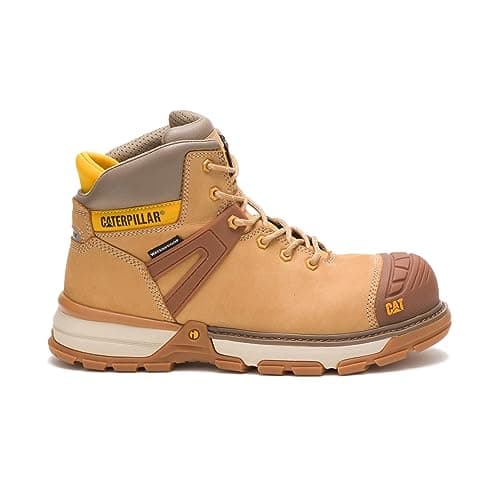
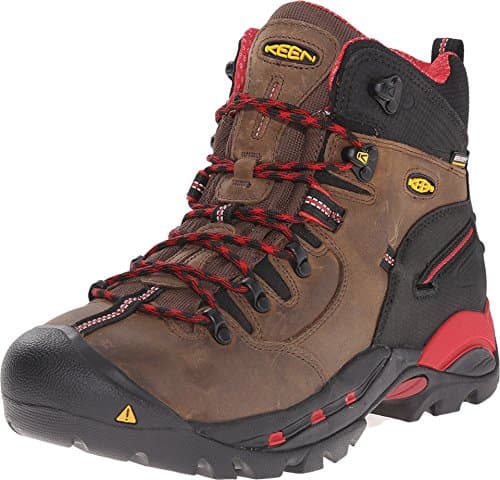
Steel vs alloy toe
Steel Toe vs Alloy Toe Work Boots
They pass the same test, so the rating tells you nothing. The difference is weight, thickness, temperature and price.
Steel and alloy safety toes meet the identical ASTM F2413 impact and compression requirement, so neither is 'safer' in any way the standard recognises. Alloy - usually aluminum or titanium - weighs roughly half as much as steel and sits in a thinner profile, so it is the pick if weight or toe-box room is your problem and you will pay for it. Steel is cheaper, slightly tougher under repeated impact, and lets a manufacturer spend the savings on the rest of the boot, which is why it remains the better buy for most people. If the real goal is light and warm, composite beats both.
Safety toes come in three materials, and the marketing around them is worse than almost anything else in work footwear. The important fact is the one that gets buried: a safety toe is either ASTM F2413 rated or it is not, and a rated cap has passed the same test regardless of what it is made from. There is no 'stronger rating' available to steel, and no safety penalty for choosing alloy. The decision is entirely about the secondary properties - weight, thickness, thermal behavior, detectability and price.
What alloy actually is
An alloy toe cap is a metal cap made from aluminum or, less commonly, titanium rather than steel. Because those metals have a better strength-to-weight ratio than steel, the cap can be made thinner and lighter while still passing the impact and compression tests. In practice that means roughly 40 to 50 percent less cap weight and a profile a couple of millimeters slimmer - which translates into marginally more room over your toes for the same external boot size.
That slimmer profile is the underrated benefit. Toe-box height is the specification that causes the most unexplained discomfort in safety footwear, because a cap is a rigid ceiling you cannot stretch or break in. If your toes have rubbed on the underside of a steel cap, an alloy boot in the same size may solve it where going up a size will not - a size increase adds length, not height. The measuring approach is in work boot fit and sizing.
Where steel still wins
- Price. Steel is the cheapest cap to make by a wide margin. On a boot at any given price, choosing steel means more of your money went into leather, welt and outsole.
- Repeated impact. Both pass the single-impact test, but steel deforms more predictably and tolerates accumulated knocks better. Aluminum work-hardens and can crack rather than bend.
- Thinness for its strength. Steel is slimmer than composite for the same protection, so a steel boot has a less bulbous toe than a composite one. Alloy is slimmer still.
- Availability. Far more models, widths and price points are made with steel than with alloy, so you have more chance of finding a boot that fits.
Where alloy wins
- Weight at the end of the boot. An ounce at the toe costs more effort than an ounce at the heel because of how far it travels each step. Over thousands of steps, people genuinely notice.
- Toe-box clearance. A thinner cap gives measurably more vertical room, which is the fix for the most common safety-toe fit complaint.
- It is available on better boots. Manufacturers tend to put alloy toes in their upper-tier models, so an alloy boot is often a better boot overall - as much a correlation as a cause.
Head to head
Ranked by our published scoring rubric. Tap any row for the full write-up.
| # | Product | Best for | Score | Price |
|---|---|---|---|---|
| 1 | 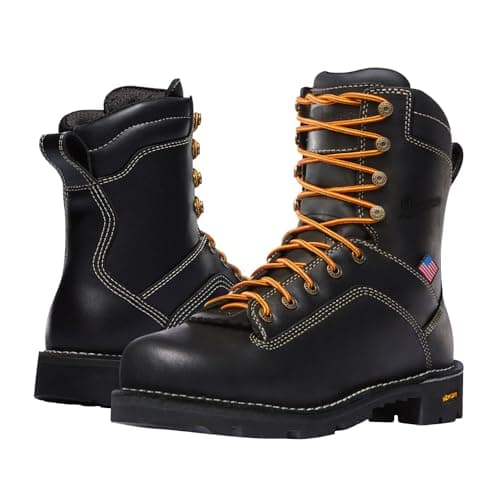 Danner Quarry 8" Waterproof Alloy ToeAn aluminum-alloy toe in a USA-made recraftable GORE-TEX boot - lighter and roomier than steel without giving up the rating. | The alloy case, done properly | 9.5 | |
| 2 | 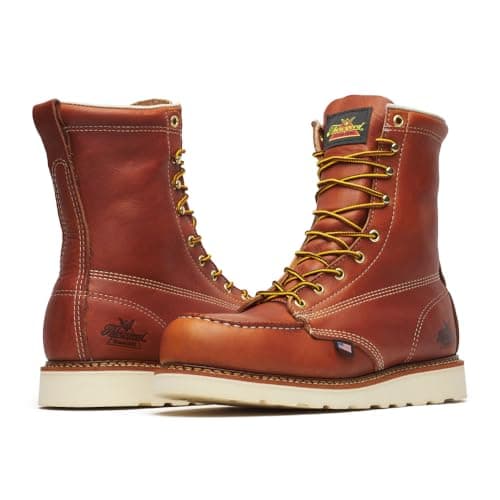 Thorogood American Heritage 8" Steel ToeA steel toe in a Goodyear-welted resoleable boot - the toughest, cheapest cap in the most repairable build. | The steel case, done properly | 9.4 | |
| 3 | 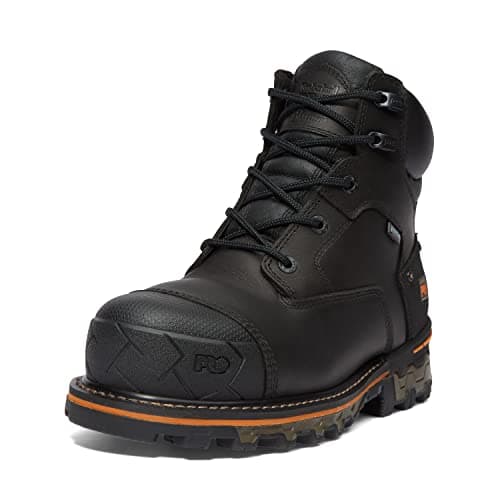 Timberland PRO Boondock 6" Composite Toe WaterproofA composite toe - the non-metallic third option that is warmer than both and clears a detector. | When neither metal is the answer | 9.4 |
#ad Prices pulled from Amazon and stamped as of November 14, 2026; they change, and we show no number we cannot verify. How we are funded.
Best alloy toe · The alloy case, done properly
Danner Quarry 8" Waterproof Alloy Toe
An aluminum-alloy toe in a USA-made recraftable GORE-TEX boot - lighter and roomier than steel without giving up the rating.
#ad Price as of November 14, 2026. How we are funded
- Our score
- 9.5/10
Category-defining
This is the boot that makes the alloy argument concrete. The toe cap is aluminum alloy, which means it meets the same ASTM F2413 impact and compression requirements as steel while weighing roughly half as much and sitting in a thinner profile - so there is more room over your toes for the same external boot size. In an 8-inch stitchdown boot that already weighs a lot, taking weight out of the very front of the shoe is where it is felt most, because that is the end you swing.
The rest of the boot justifies the price independently: GORE-TEX lining, a Vibram outsole, and stitchdown construction Danner will recraft onto a new sole rather than you buying a replacement. For wet ground, utilities, dirt work and oilfield, it is the boot on this site we would point to first.
The costs are real. Alloy conducts heat and cold as readily as steel, so this is not the warm option; the price is the highest here by a wide margin; and the 8-inch stitchdown chassis is stiff and heavy for anyone standing on a flat slab all day. If that is your work, boots for standing on concrete is the better page.
Specs that matter
- Toe:
- Alloy toe, ASTM F2413
- Height:
- 8 inch
- Waterproof:
- Gore-Tex lined
- Build:
- Stitchdown, recraftable
Rubric profile
Raw per-criterion marks out of 10, before weighting — this is the shape of the pick, not its published score. A low mark is a scope limit, not a fault: how we score.
- Weight
- 8.8
- Toe room
- 9.0
- Protection
- 9.0
- Cold behavior
- 4.0
- Value
- 7.4
Why we picked it
- Danner will recraft it, so the price is spread over many years
- Gore-Tex is the most reliable waterproof lining in footwear
- Alloy toe is lighter than steel at the same rating
Good to know: A premium up-front price that pays back through recrafting; stiff and heavy at first, and best on rough ground rather than slab.
Best steel toe · The steel case, done properly
Thorogood American Heritage 8" Steel Toe
A steel toe in a Goodyear-welted resoleable boot - the toughest, cheapest cap in the most repairable build.
#ad Price as of November 14, 2026. How we are funded
- Our score
- 9.4/10
Outstanding
Steel is the default for a reason, and this boot shows why. The cap is thin for its strength, it shrugs off repeated impact without deforming in a way that aluminum does not quite match, and it costs the manufacturer almost nothing - so the money goes into the rest of the boot. Here that means full-grain leather, a Goodyear storm welt a cobbler can resole, and an 8-inch shaft that keeps debris out on demolition and dirt work.
For most buyers the honest comparison is not steel against alloy but this boot against an alloy boot costing significantly more. Spend the difference on construction rather than on the cap and you usually get a boot that lasts longer.
What steel costs you: weight at the far end of the boot, where it is most noticeable over a day of walking; cold conduction, which matters genuinely below freezing; and a thicker cap profile that eats a little toe-box room. It is also the option that sets off a metal detector. Steel toe boots and foot health covers the claims made about long-term harm, most of which do not survive scrutiny.
Specs that matter
- Toe:
- Steel toe, ASTM F2413 rated
- Height:
- 8 inch
- Sole:
- MAXwear wedge
- Build:
- Goodyear storm welt
Rubric profile
Raw per-criterion marks out of 10, before weighting — this is the shape of the pick, not its published score. A low mark is a scope limit, not a fault: how we score.
- Weight
- 6.6
- Toe room
- 7.6
- Protection
- 9.4
- Cold behavior
- 3.6
- Value
- 8.8
Why we picked it
- Safety toe plus resoleable welt construction in one boot
- Taller shaft keeps debris out on demolition and dirt work
- Full-grain leather that takes conditioner and keeps going
Good to know: Order your measured length, not a size up — and expect the 8-inch shaft to need about two weeks before it stops feeling stiff across the ankle.
Best non-metallic · When neither metal is the answer
Timberland PRO Boondock 6" Composite Toe Waterproof
A composite toe - the non-metallic third option that is warmer than both and clears a detector.
#ad Price as of November 14, 2026. How we are funded
- Our score
- 9.4/10
Outstanding
Most people comparing steel and alloy are really asking 'how do I get a lighter safety toe', and once that is the question, composite deserves to be in the conversation. A composite cap is made from non-metallic materials - usually carbon fiber, Kevlar or a glass-fiber composite - so it carries the same ASTM F2413 rating, weighs about what alloy does, conducts almost no heat, and sets off no metal detector.
This boot pairs it with a waterproof membrane, a notably aggressive outsole and real underfoot support, which makes it the all-round site boot of the three. For electricians, anyone working in cold, and anyone who gets screened at a gate, composite is simply the better cap.
The trade-off is bulk: a composite cap has to be thicker than steel to achieve the same protection, so the toe box is visibly larger and you lose a little room inside for the same external size. Composite also cannot be relied on after a severe impact in the way steel can - it is designed to absorb and may be compromised without looking it. And it costs more than steel. The full comparison is in composite toe vs steel toe.
Specs that matter
- Toe:
- Composite toe, ASTM F2413
- Height:
- 6 inch
- Waterproof:
- Yes, membrane lined
- Sole:
- Aggressive lug, slip and oil resisting
Rubric profile
Raw per-criterion marks out of 10, before weighting — this is the shape of the pick, not its published score. A low mark is a scope limit, not a fault: how we score.
- Weight
- 8.6
- Toe room
- 7.0
- Protection
- 8.4
- Cold behavior
- 9.2
- Value
- 8.2
Why we picked it
- Composite toe is non-metallic, so it clears metal detectors and conducts less cold
- Waterproof membrane plus a gusseted tongue genuinely keeps water out
- Outsole bites on broken ground where a wedge slides
Good to know: A deliberately stiff, protective chassis: superb on rough ground, more boot than you want for a flat slab. Allow a few weeks of break-in.
Head to head
| Steel | Alloy | Composite | |
|---|---|---|---|
| ASTM F2413 rated | Yes | Yes | Yes |
| Relative cap weight | Heaviest | About half of steel | Similar to alloy |
| Cap thickness | Thin | Thinnest | Thickest |
| Conducts heat and cold | Yes | Yes | Barely |
| Sets off a metal detector | Yes | Yes | No |
| Electrically conductive | Yes | Yes | No |
| Repeated impact tolerance | Best | Good | Should be replaced after a severe hit |
| Typical price position | Lowest | Highest | Middle to high |
Metal detectors and electrical work
Alloy is metal, so it does everything metal does. It sets off a walk-through detector exactly as steel does, which matters if you work at an airport, a courthouse, a secure facility, a mine with detection at the gate, or a plant with metal-detection on a food line. People sometimes buy alloy expecting it to be 'non-metallic' because it is marketed alongside composite - it is not.
The electrical question is more subtle. An EH-rated boot is tested as a whole boot, and both steel-toe and alloy-toe boots can carry an EH rating - the sole and heel assembly provide the resistance, not the cap. But for anyone working live, the sensible default remains a non-metallic boot, because EH protection is a secondary defense and introducing a conductor at the front of your foot is an unnecessary variable. Work boots for electricians and electrical hazard boots cover that properly, and a lineman should be in dielectric footwear specified for the work rather than any boot on this page.
What we would skip
Skip paying an alloy premium on a 6-inch boot you wear on a flat floor; the weight saving is not worth it and you would get more from a better insole. Skip alloy if you work somewhere caps take repeated knocks - drop-forge work, demolition, anywhere things fall - where steel's tolerance for accumulated impact is a real advantage. Skip the idea that any of these is 'stronger': they pass the same test, and a boot's actual protection depends far more on whether it also has a puncture-resistant plate and a met guard, which is covered in metatarsal guard work boots. And skip any boot whose listing claims a safety toe without naming the ASTM standard - ASTM F2413 safety ratings explained shows you the marking to look for inside the shaft.
Frequently asked
Is a steel toe or alloy toe better?
Neither is safer - both meet the same ASTM F2413 impact and compression requirement. Alloy is roughly half the cap weight and slightly thinner, so it suits long walking shifts and people who need more toe-box clearance. Steel is cheaper and tolerates repeated impact better, which makes it the better value for most buyers.
Is an alloy toe as strong as a steel toe?
For the purpose of the standard, yes: a rated alloy cap passes the same 75 foot-pound impact and 2,500 pound compression tests as a steel one. The practical difference is in repeated impact, where steel deforms predictably and aluminum can work-harden and crack, so steel is preferable where caps take regular knocks.
Will alloy toe boots set off a metal detector?
Yes. Alloy is metal - usually aluminum - and it triggers a walk-through detector just as steel does. If you need footwear that clears a detector, you need a composite or other non-metallic safety toe, not alloy.
Are alloy toe boots warmer than steel toe boots?
No, not meaningfully. Both aluminum and steel conduct heat readily, so both pull warmth out of your toes in the cold. If cold toes are your problem, a composite toe is the answer, because non-metallic caps conduct very little heat.
Why are alloy toe boots more expensive?
Partly the material and manufacturing cost, and partly where manufacturers choose to use it: alloy caps tend to appear in upper-tier models with better leather, membranes and outsoles. Much of the price difference you see is the rest of the boot rather than the cap itself.
Our recommendation
If you read nothing else on this page, these are the two to look at — the one we would buy, and the one to take instead if its trade-off suits you better.
Best alloy toe · The alloy case, done properly
Danner Quarry 8" Waterproof Alloy Toe
An aluminum-alloy toe in a USA-made recraftable GORE-TEX boot - lighter and roomier than steel without giving up the rating.
#ad Price as of November 14, 2026. How we are funded
Runner-up · The steel case, done properly
Thorogood American Heritage 8" Steel Toe
A steel toe in a Goodyear-welted resoleable boot - the toughest, cheapest cap in the most repairable build.
#ad Price as of November 14, 2026. How we are funded
Prices are read live from Amazon and stamped with the date. How we pick.
Sources
Back to Comparisons, or see how we pick. Spotted something wrong? We publish corrections — see our editorial policy.