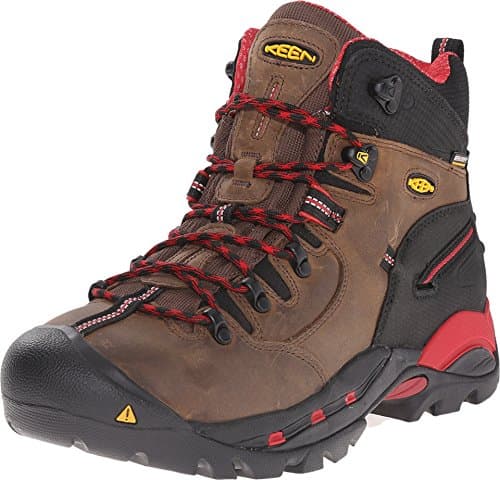
Work vs cowboy boots
Work Boots vs Cowboy Boots
In a stirrup, the cowboy boot wins. On a slab or around machinery, it is not close.
In agriculture, ranching and oilfield this is a genuine daily question rather than a style debate - plenty of people wear cowboy boots to work and have done for generations. The honest answer is that a traditional cowboy boot is excellent at one thing, poor at several others, and that an entire product category now exists to split the difference.
What a cowboy boot is designed for
A riding boot, specifically. The tall heel stops your foot sliding forward through a stirrup, the smooth sole lets your foot slip out quickly if you come off a horse, the pointed or tapered toe helps find the stirrup, and the pull-on shaft protects your lower leg and comes off easily. Every one of those is a solution to a riding problem.
If you spend real time in the saddle, those features are genuinely valuable and a work boot does not replicate them. That is the strongest case for wearing them to work, and it is a legitimate one.
What that costs on the ground
- No safety toe. Traditional cowboy boots have none, which rules them out on most sites and offers nothing against a dropped implement or being stood on by livestock.
- A narrow toe box. The single biggest comfort problem - a tapered toe compresses the forefoot, and all-day standing in one is genuinely painful for most people: boots for wide feet.
- A smooth sole with a tall heel. Designed to slip out of a stirrup, which means poor traction on wet concrete and shop floors, and the heel concentrates load badly on a slab.
- No EH rating or oil resistance, both of which matter around equipment and electrical work.
Head to head
Ranked by our published scoring rubric. Tap any row for the full write-up.
| # | Product | Best for | Score | Price |
|---|---|---|---|---|
| 1 | 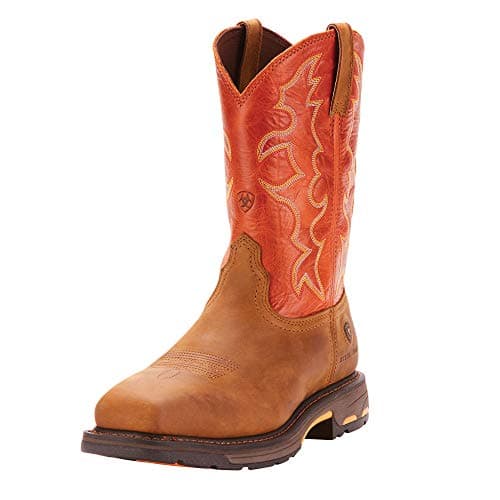 Ariat WorkHog Wide Square Toe Steel ToeWinner for most people asking - a cowboy-style boot that is actually site-legal. | Wanting both: western build with a safety toe | 8.4 | |
| 2 | 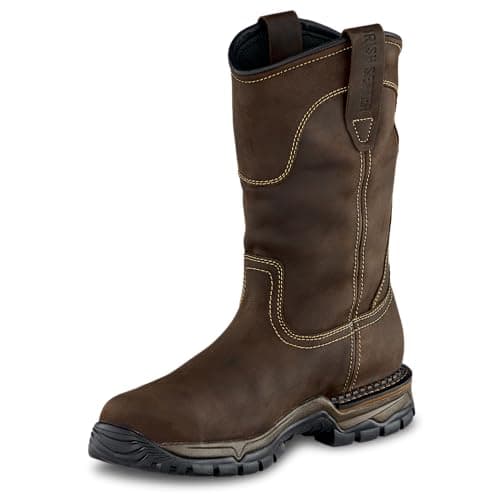 Irish Setter Two Harbors 11" Steel ToeA tall pull-on work boot - the practical alternative if you do not ride. | Height and protection without the western sole | 7.6 | |
| 3 | 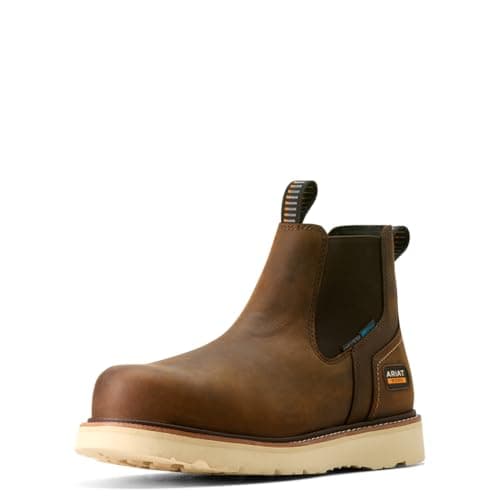 Ariat Rebar Wedge Chelsea Waterproof Composite ToeThe flat-soled Ariat - pull-on ease without the heel penalty indoors. | Pull-on with concrete comfort | 7.6 |
#ad Prices pulled from Amazon and stamped as of October 6, 2026; they change, and we show no number we cannot verify. How we are funded.
The answer for most people · Wanting both: western build with a safety toe
Ariat WorkHog Wide Square Toe Steel Toe
Winner for most people asking - a cowboy-style boot that is actually site-legal.
This is the category that resolves the question. A western work boot keeps what a cowboy boot is good at - the shank, the heel for a stirrup, the pull-on convenience - and adds a steel toe, an EH rating and a wide square toe box that gives your toes far more room than a traditional pointed boot.
So for anyone in agriculture or oilfield who wants a western boot and needs compliance, this is simply the answer. Expensive, and the heeled sole is still poor on flat concrete.
Specs that matter
- Toe:
- Steel toe, ASTM F2413
- Style:
- Pull-on, wide square toe
- Footbed:
- 4LR shank and footbed
- Electrical hazard:
- EH rated
Our scoring
- Stirrup suitability
- 9.0
- Safety rating
- 9.0
- Flat-floor comfort
- 6.4
- Toe room
- 8.6
- Value
- 7.2
What works
- Supportive shank genuinely helps on uneven ground and in stirrups
- Wide square toe gives the toes room a cowboy boot usually does not
- Durable enough for livestock and oilfield work
What to know
- Heeled western sole is poor on flat concrete
- Expensive
- Pull-on fit is unforgiving if your calf or instep is unusual
No. 2 · Height and protection without the western sole
Irish Setter Two Harbors 11" Steel Toe
A tall pull-on work boot - the practical alternative if you do not ride.
If what you liked about cowboy boots was the pull-on convenience and the height rather than the riding geometry, a tall work wellington gives you both with better flat-ground manners and a flatter, more stable sole.
Eleven inches of full-grain leather, steel toe, EH rated. Hot, heavy and demanding about calf fit. Not suitable for stirrups the way a western heel is.
Specs that matter
- Toe:
- Steel toe, ASTM F2413
- Height:
- 11 inch pull-on
- Electrical hazard:
- EH rated
- Upper:
- Full-grain leather
Our scoring
- Stirrup suitability
- 5.0
- Safety rating
- 8.8
- Flat-floor comfort
- 7.4
- Toe room
- 7.6
- Value
- 7.8
What works
- 11 inches of leather is real protection against spatter and debris
- No laces to burn through when welding
- Red Wing-family leather quality
What to know
- Hot — that much leather does not breathe
- Heavy
- Hard to size when your calf is large or small
No. 3 · Pull-on with concrete comfort
Ariat Rebar Wedge Chelsea Waterproof Composite Toe
The flat-soled Ariat - pull-on ease without the heel penalty indoors.
For people whose work has moved from pasture to shop floor but who still want to step into their boots, this keeps the elastic-gore pull-on and puts it on a flat wedge, with a composite toe and waterproofing.
Much better on concrete than a heeled western boot. Not a riding boot, the low shaft lets debris in, and the elastic gores are the first thing to fail.
Specs that matter
- Toe:
- Composite toe, ASTM F2413
- Style:
- Chelsea pull-on
- Waterproof:
- Yes
- Sole:
- Flat wedge
Our scoring
- Stirrup suitability
- 3.0
- Safety rating
- 8.6
- Flat-floor comfort
- 8.6
- Toe room
- 7.8
- Value
- 7.8
What works
- Wedge plus pull-on is a genuinely rare and useful combination
- Elastic gores make it the fastest boot here to get on
- Non-metallic toe and waterproof
What to know
- Low shaft means debris can get in over the top
- Elastic gores are the first thing to fail
- Wedge sole slips on wet rungs
The western work boot resolves it
This category exists because the problem is real and widespread. A western work boot keeps the shank, the heel geometry and the pull-on shaft, and adds a safety toe, an EH rating, a slip-resistant outsole and - crucially - a wide square toe instead of a tapered one. That last change is what makes the boots wearable for a full standing day.
For agriculture and oilfield workers who need compliance and want a western boot, this is simply the answer rather than a compromise: boots for farming and boots for oilfield. Thorogood vs Ariat covers the wider western-versus-industrial question.
Machinery, which is worth stating separately
Agriculture has one of the highest occupational fatality rates of any US industry, and a traditional cowboy boot offers nothing against the common foot hazards - dropped implements, being stood on by livestock, machinery contact. A safety toe is justified on hazard grounds alone, regardless of what your site requires on paper.
The verdict, plainly
Real time in the saddle: cowboy boots have a genuine case, ideally a western work boot with a safety toe. Mostly on the ground, around machinery or on a site: a work boot, and the western work boot category means you do not have to give up the style or the pull-on. Mostly on concrete: a flat sole, western or not, per wedge sole vs heel.
Frequently asked
Can you wear cowboy boots for work?
Where there is no safety-footwear requirement and you spend real time in the saddle, they have a genuine case. On a site requiring protective footwear, or around machinery and dropped loads, a traditional cowboy boot offers no toe protection and is a poor choice.
Are cowboy boots bad for your feet?
The tapered toe box is the real issue - it compresses the forefoot, and standing in one all day is genuinely uncomfortable for most people. Western work boots with a wide square toe solve that while keeping the rest of the geometry.
What is a western work boot?
A boot built on western lines - pull-on shaft, supportive shank, heeled sole - with work features added: an ASTM safety toe, an EH rating, a slip-resistant outsole and usually a wide square toe instead of a tapered one. It is the answer for people who want both.
Are cowboy boots good on concrete?
No. The tall heel concentrates your weight on two small areas rather than spreading it, and the smooth sole is designed to slip out of a stirrup rather than grip a wet floor. For standing on a slab, a flat wedge sole is substantially better.
Sources
Back to Comparisons, or see how we pick. Spotted something wrong? We publish corrections — see our editorial policy.