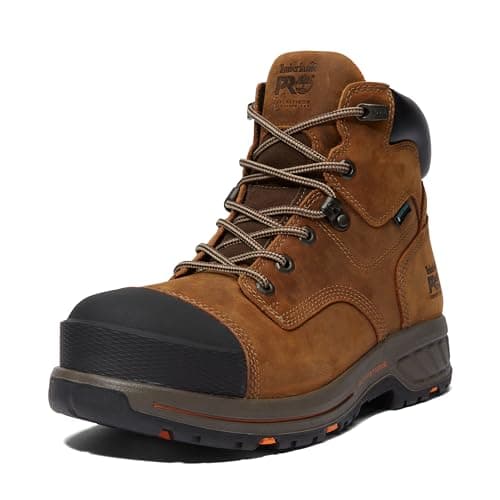
Timberland PRO vs Wolverine
Timberland PRO vs Wolverine
Timberland protects more. Wolverine moves better. Your job decides which you need.
These are the two brands most people are actually choosing between in a work-boot aisle, and the marketing makes them sound identical - both industrial, both waterproof options, both safety rated. The useful distinction is a design philosophy difference that runs through both lines, and once you see it the choice becomes straightforward.
Stiff or flexible: pick by what is under your feet
Timberland PRO's flagship boots are built stiff. The midsole resists flexing, which does two things: it stops rebar, nails and broken block telegraphing through to your foot, and it provides a stable platform on uneven ground. The cost is that a stiff boot fights you every time you bend your foot - on a ladder rung, kneeling, or crouching at a panel.
Wolverine's Contour Welt approach is the opposite: deliberately flexible at the forefoot so the boot bends where your foot bends. That makes climbing and kneeling feel natural, at the cost of less protection from what you are standing on.
So the question is simply what your day involves. Debris, rubble and broken ground: stiff, per boots for construction. Ladders, crawlspaces, kneeling and service work: flexible, as recommended on boots for HVAC techs and boots for plumbers.
Head to head
Ranked by our published scoring rubric. Tap any row for the full write-up.
| # | Product | Best for | Score | Price |
|---|---|---|---|---|
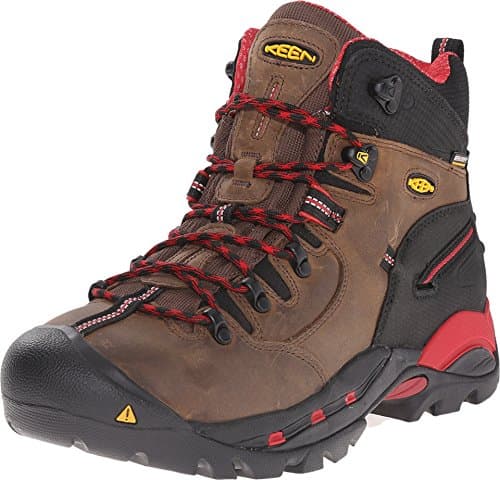
| 1 | 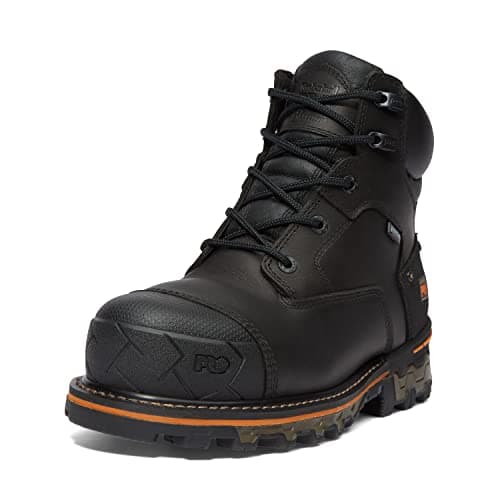 Timberland PRO Boondock 6" Composite Toe WaterproofWinner where protection matters: the stiffest, most protective boot of the two lines. | Rough ground, debris and demolition | 8.3 | |
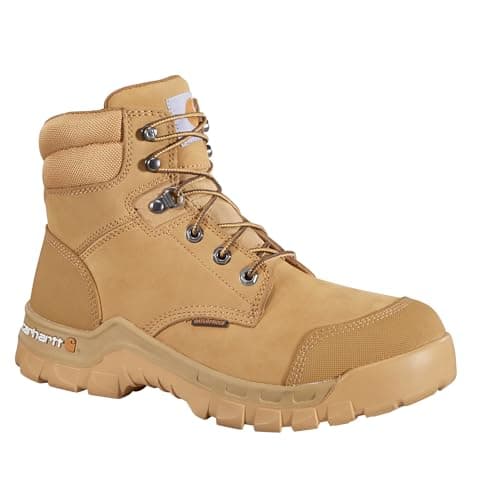
| 2 | 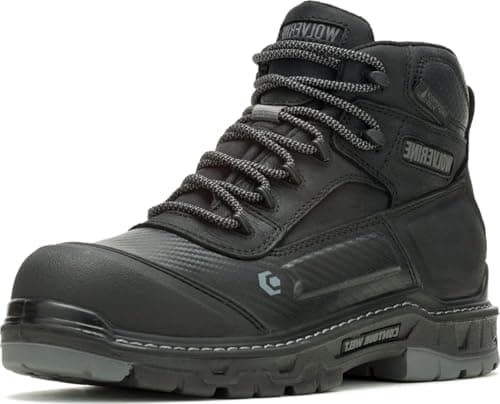 Wolverine Overpass 6" Composite Toe WaterproofWinner for mobility: a welt that lets the forefoot flex, which changes how the boot feels. | Climbing, kneeling and moving all day | 8.4 | |
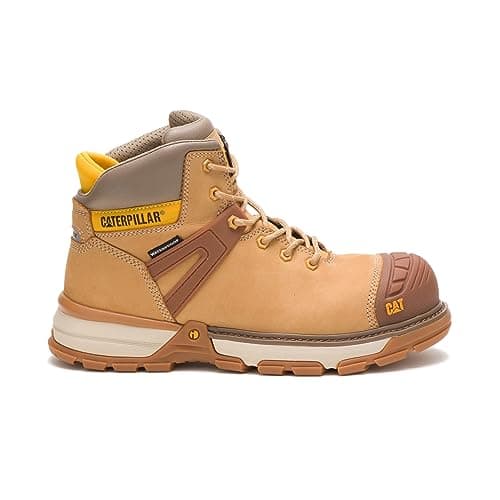
| 3 | 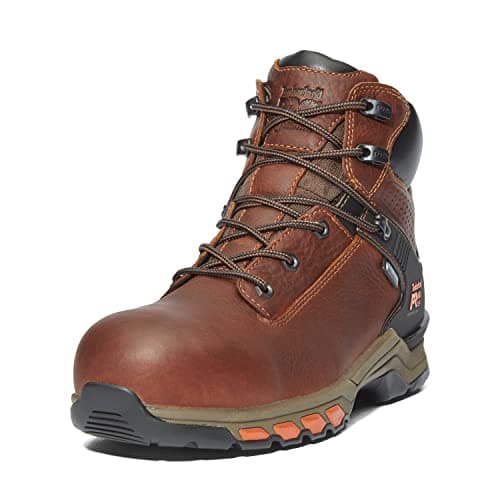 Timberland PRO Hypercharge 6" Composite Toe WaterproofThe middle option: Timberland's Anti-Fatigue midsole in a lighter build. | Standing and walking on hard floors | 8.1 |
#ad Prices pulled from Amazon and stamped as of October 6, 2026; they change, and we show no number we cannot verify. How we are funded.
Winner for protection · Rough ground, debris and demolition
Timberland PRO Boondock 6" Composite Toe Waterproof
Winner where protection matters: the stiffest, most protective boot of the two lines.
A toe cap does nothing about rebar, broken block and nails underfoot - what protects you there is a genuinely stiff midsole, and the Boondock has the stiffest of any boot in this comparison. Waterproof, composite toe, aggressive lug for broken ground.
That stiffness is also its cost: it is heavy, takes weeks to break in, and is a hard boot to stand on flat concrete in all day. Buy it for site chaos, not for a shop floor.
Specs that matter
- Toe:
- Composite toe, ASTM F2413
- Height:
- 6 inch
- Waterproof:
- Yes, membrane lined
- Sole:
- Aggressive lug, slip and oil resisting
Our scoring
- Underfoot protection
- 9.4
- Flexibility
- 4.5
- Weight
- 5.5
- Durability
- 9.0
- Value
- 7.8
What works
- Composite toe is non-metallic, so it clears metal detectors and conducts less cold
- Waterproof membrane plus a gusseted tongue genuinely keeps water out
- Outsole bites on broken ground where a wedge slides
What to know
- Heavy and stiff — a hard boot to stand on concrete in all day
- Long break-in; the outsole stays rigid for weeks
- Lug pattern tracks mud indoors
Winner for mobility · Climbing, kneeling and moving all day
Wolverine Overpass 6" Composite Toe Waterproof
Winner for mobility: a welt that lets the forefoot flex, which changes how the boot feels.
Wolverine's Contour Welt deliberately allows the boot to bend at the ball of the foot, which is unusual in a safety boot and transforms ladder work, kneeling and crouching. For mechanical trades, service work and anything vertical, it is a noticeably better experience.
The flexibility costs underfoot protection, so it is the wrong boot for walking a demolition floor, and the outsole wears faster than a stiffer boot's. Lighter and better ventilated than the Boondock.
Specs that matter
- Toe:
- Composite toe, ASTM F2413
- Height:
- 6 inch
- Waterproof:
- Yes
- Build:
- Contour Welt, flexible forefoot
Our scoring
- Underfoot protection
- 7.6
- Flexibility
- 9.2
- Weight
- 8.0
- Durability
- 8.2
- Value
- 8.4
What works
- Flexes at the forefoot, so climbing and kneeling feel natural
- Light for a waterproof composite-toe boot
- Good ankle hold without an 8-inch shaft
What to know
- Flexibility costs some underfoot protection on rebar and rubble
- Outsole wears faster than a stiffer boot's
- Not a cold-weather boot
No. 3 · Standing and walking on hard floors
Timberland PRO Hypercharge 6" Composite Toe Waterproof
The middle option: Timberland's Anti-Fatigue midsole in a lighter build.
If neither extreme suits - you are not on rubble and not climbing constantly, just on your feet on hard floors all day - this is the sensible pick. The Anti-Fatigue midsole is designed for static standing rather than for impact, which is the right target for shop, warehouse and plant work.
Lighter than the Boondock at the same protection level, with an athletic upper that wears faster than thick full-grain and a membrane that runs warm indoors.
Specs that matter
- Toe:
- Composite toe, ASTM F2413
- Height:
- 6 inch
- Waterproof:
- Yes
- Midsole:
- Anti-Fatigue Technology cushioning
Our scoring
- Underfoot protection
- 7.8
- Flexibility
- 7.4
- Weight
- 8.8
- Durability
- 7.6
- Value
- 7.8
What works
- Much lighter on the foot than the Boondock at the same protection level
- Anti-Fatigue midsole is a real difference on long standing shifts
- Waterproof without feeling like a rubber boot
What to know
- Athletic-style uppers wear out faster than thick full-grain
- Not resoleable
- Breathes poorly in genuine heat
What else differs
| Factor | Timberland PRO | Wolverine |
|---|---|---|
| Midsole stiffness | Stiffer - more underfoot protection | More flexible - easier to move in |
| Range depth | Broader: Boondock, Hypercharge, Helix, Pit Boss | Narrower but well targeted |
| Cushioning technology | Anti-Fatigue midsole, aimed at static standing | DuraShocks, aimed at impact |
| Entry price | Pit Boss is among the cheapest EH steel toes sold | Floorhand is similarly cheap and waterproof |
| Resoleable | No | No |
| Pull-on options | Limited | Raider CarbonMax wellington |
Timberland's range depth is a genuine advantage - the Pit Boss at the budget end and the Boondock at the heavy end cover a wide span, and boots under $100 leans on that. Wolverine's advantage is that its boots tend to be comfortable sooner.
The verdict, plainly
Timberland PRO for sites with debris, rubble and broken ground, and for anyone who wants the widest range of price points. Wolverine for trades that climb, kneel and crouch - mechanical, service, HVAC, plumbing. Neither if you want a resoleable boot, in which case see Red Wing vs Thorogood. See also Timberland PRO vs KEEN if fit is your issue.
Frequently asked
Is Timberland PRO or Wolverine better?
Timberland PRO's flagship boots are stiffer and more protective underfoot, which suits rubble and broken ground. Wolverine's Contour Welt boots are more flexible, which suits ladders, kneeling and service work. The right one depends on what is under your feet, not on brand quality.
Are Timberland PRO boots good for standing all day?
The Hypercharge and Helix are, because the Anti-Fatigue midsole is designed for static standing rather than impact. The Boondock is not - it is deliberately stiff for protection on rough ground, which makes it a hard boot to stand on flat concrete in.
Can Timberland PRO or Wolverine boots be resoled?
Generally no. Both use constructions that are not practically rebuildable, so the boot's life ends when the outsole does. If resoleability matters to you, look at Goodyear-welted boots from Thorogood, Danner or KEEN's welted models instead.
What is a Contour Welt?
Wolverine's construction that deliberately allows the boot to flex at the ball of the foot, unlike most safety boots which are stiff through the forefoot. It makes climbing, kneeling and crouching feel considerably more natural, at the cost of less underfoot protection.
Sources
Back to Comparisons, or see how we pick. Spotted something wrong? We publish corrections — see our editorial policy.