BRUNT vs KEEN
BRUNT vs KEEN Utility
Cheaper, or shaped like a foot? If your forefoot is wide, price is not the deciding factor.
This comparison sets a price advantage against a fit advantage, and the honest answer depends entirely on your feet. That sounds like an evasion but it is not: one of these is a permanent property of the boot you cannot change, and the other is money.
Why toe-box geometry is the one thing you cannot fix
Almost every fit problem in a boot has a workaround. Too much volume - add an insole or a thicker sock. Heel slip - heel-lock lacing. A tight leather upper - a cobbler can stretch it. But a safety toe cap is rigid steel or composite, and nothing stretches it. Whatever shape and width the cap is on the day you buy it, that is permanent for the life of the boot.
So if safety boots have historically pinched across your forefoot, that is the problem to solve first, and KEEN's asymmetrical caps are the mainstream answer: boots for wide feet and work boot fit and sizing.
Head to head
Ranked by our published scoring rubric. Tap any row for the full write-up.
| # | Product | Best for | Score | Price |
|---|---|---|---|---|
| 1 | 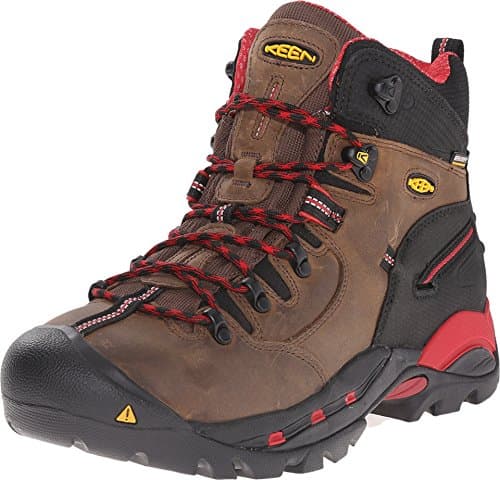 KEEN Utility Pittsburgh 6" Steel Toe WaterproofWinner if safety toes pinch you: asymmetrical caps, a wide last, and a resoleable welt. | Wide feet, and keeping the boot for years | 8.4 | |
| 2 | 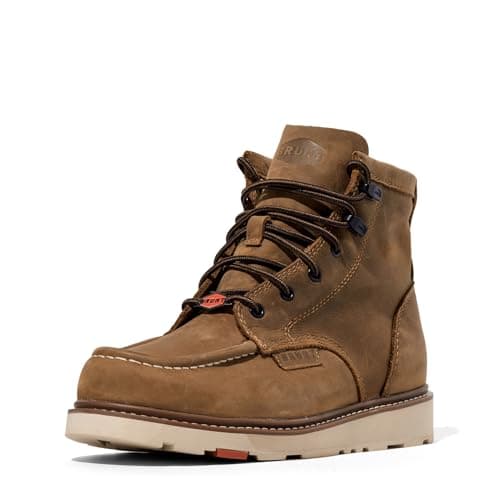 BRUNT Marin Composite Toe WedgeWinner on price: a composite-toe wedge for well under the KEEN. | Average-width feet on a budget | 8.0 | |
| 3 | 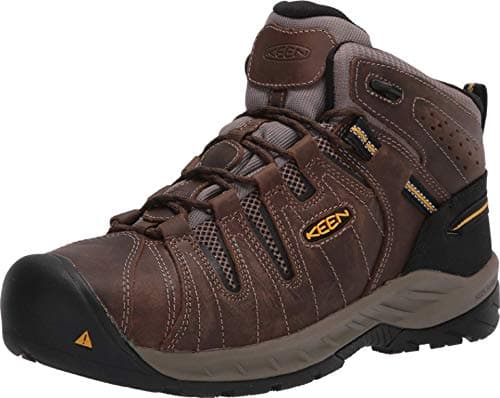 KEEN Utility Flint II Mid Steel ToeThe cheaper KEEN - the wide toe box without the waterproof weight penalty. | KEEN fit at a lower price, unlined | 8.2 |
#ad Prices pulled from Amazon and stamped as of October 6, 2026; they change, and we show no number we cannot verify. How we are funded.
Winner on fit · Wide feet, and keeping the boot for years
KEEN Utility Pittsburgh 6" Steel Toe Waterproof
Winner if safety toes pinch you: asymmetrical caps, a wide last, and a resoleable welt.
KEEN's asymmetrical caps are shaped left-and-right rather than as symmetrical domes, which means the toe box follows the shape of a foot. If a safety cap has ever pressed on the inside of your forefoot, that is the problem this solves - and because a cap cannot be stretched, no cheaper boot can fix it later.
It is also Goodyear welted, so it can be resoled. Considerably more expensive than the BRUNT, heavy in this waterproof steel-toe configuration, and it runs large - size down a half.
Specs that matter
- Toe:
- Asymmetrical steel toe, ASTM F2413
- Height:
- 6 inch
- Waterproof:
- Yes, KEEN.DRY membrane
- Build:
- Goodyear welt
Our scoring
- Toe box fit
- 9.6
- Resoleability
- 9.0
- Price
- 6.0
- Weight
- 6.0
- Breathability
- 6.6
What works
- Left and right specific toe caps, so the toe box is shaped like a foot
- Welted, so it can be resoled
- The go-to recommendation for wide feet in a safety toe
What to know
- Runs large — most buyers size down a half
- Steel toe in a waterproof boot is heavy
- Toe box looks bulky if that bothers you
Winner on price · Average-width feet on a budget
BRUNT Marin Composite Toe Wedge
Winner on price: a composite-toe wedge for well under the KEEN.
If KEEN's main advantage does not apply to your feet, this is a lot of boot for the money: an ASTM-rated composite toe, a flat wedge that suits finished floors and flat sites, unlined so it breathes, and very little break-in.
Cemented, so no resoling, and unlined means zero water resistance. Young brand with a shorter durability record. For a first compliant boot or a flat-site worker on a budget, it is hard to argue with.
Specs that matter
- Toe:
- Composite toe, ASTM F2413
- Height:
- 6 inch
- Sole:
- Flat wedge
- Weight:
- Lightweight, unlined
Our scoring
- Toe box fit
- 7.4
- Resoleability
- 2.0
- Price
- 9.2
- Weight
- 8.8
- Breathability
- 8.8
What works
- Composite-toe wedge at an entry-level price
- Unlined, so it breathes better than membrane boots
- Very little break-in
What to know
- Unlined means no waterproofing at all
- Young brand with a shorter durability record than the incumbents
- Wedge sole limits it on ladders and loose ground
No. 3 · KEEN fit at a lower price, unlined
KEEN Utility Flint II Mid Steel Toe
The cheaper KEEN - the wide toe box without the waterproof weight penalty.
A useful middle option that narrows the price gap considerably. You get KEEN's roomy toe box in an unlined, light, EH-rated steel-toe boot that breathes genuinely well - closer to the BRUNT's price and philosophy while keeping the fit advantage.
No water resistance at all, a low shaft with limited ankle support, and a thin stock footbed. Cemented rather than welted.
Specs that matter
- Toe:
- Steel toe, ASTM F2413
- Height:
- Mid
- Waterproof:
- No — unlined for airflow
- Electrical hazard:
- EH rated
Our scoring
- Toe box fit
- 9.0
- Resoleability
- 2.0
- Price
- 7.8
- Weight
- 8.6
- Breathability
- 9.4
What works
- No membrane, so it genuinely breathes in summer
- One of the lighter steel-toe boots on the market
- KEEN's wide toe box without the waterproof weight penalty
What to know
- Zero water resistance beyond the leather itself
- Low shaft offers little ankle protection
- Thin stock footbed
If your feet are average width
Then KEEN's defining feature is not buying you anything, and the comparison becomes a straightforward value question - where BRUNT wins clearly on price, weight and breathability, giving up resoleability and water resistance.
Both are composite or steel safety toes meeting the same ASTM ratings, so neither is safer. Both are reasonable boots. At that point, buy the cheaper one and spend the difference on a decent insole, which will do more for your comfort than the brand difference.
The unlined option that splits the difference
Worth highlighting because it resolves the dilemma for a lot of people: KEEN's unlined models cost considerably less than the waterproof welted ones while keeping the toe-box geometry. If you want KEEN's fit and BRUNT's price and breathability, that is where to look - and unlined is the better choice anyway for hot weather and sweaty feet.
The verdict, plainly
Safety toes have pinched you before: KEEN, and the price difference is secondary because the alternative does not fit. Average-width feet on a budget: BRUNT. Want KEEN's fit without the premium: an unlined KEEN model. See also Thorogood vs BRUNT for the welt question and Timberland PRO vs KEEN for the range one.
Frequently asked
Are BRUNT or KEEN boots better?
KEEN if safety toes have pinched your forefoot before, because its asymmetrical caps are shaped like a foot and a rigid cap cannot be stretched later. BRUNT if your feet are average width, because it is substantially cheaper, lighter and more breathable at the same ASTM rating.
Can a safety toe cap be stretched?
No. The cap is rigid steel or composite and will not change shape, however long you wear the boot or whatever a cobbler does to the leather. That is why toe-box geometry is the one fit property worth prioritizing at purchase.
Is KEEN worth the extra money over BRUNT?
If you have wide feet, yes - a boot that fits is worth more than a cheaper boot that does not, and no later fix exists. If your feet are average, the extra mostly buys resoleability and waterproofing, which may or may not matter to you.
Do BRUNT boots have composite toes?
Yes - the Marin and much of BRUNT's safety line use composite toes, which meet the same ASTM impact rating as steel while being lighter, warmer in cold weather and non-metallic for metal-detector environments.
Sources
Back to Comparisons, or see how we pick. Spotted something wrong? We publish corrections — see our editorial policy.