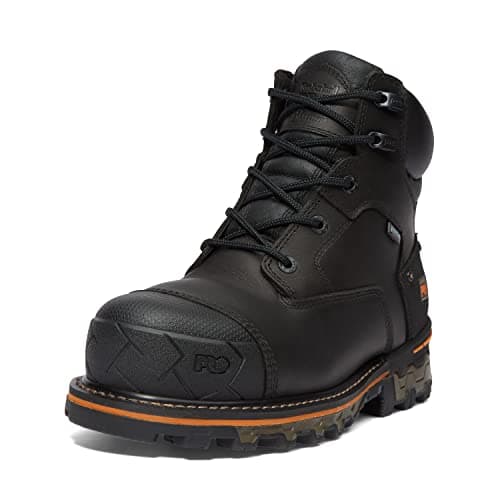
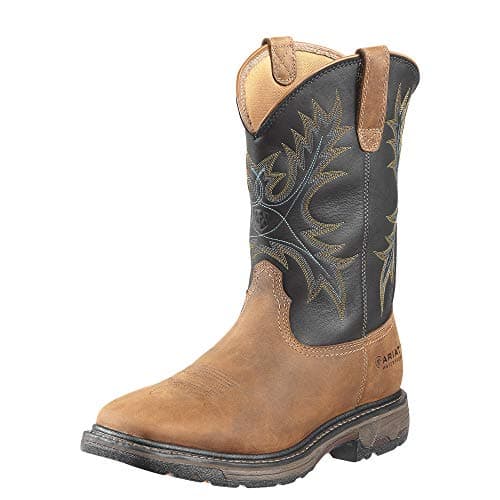
Ankle support, honestly
Do Work Boots Need Ankle Support?
A tall boot feels supportive, which is not the same as being supportive. What limits an ankle roll is stiffness and sole geometry, not inches of leather.
Most work does not need a high-support boot, and shaft height is a poor measure of support in any case. What actually limits an ankle roll is torsional stiffness - how much the sole resists twisting - combined with a lacing system that locks the heel and a stiff enough shaft to resist sideways movement. A tall boot with a soft shaft and a flexible sole offers very little. Genuine ankle support is worth having if you work on broken ground, in trenches, on rubble, or carrying heavy loads over uneven surfaces. On flat floors it mostly costs you comfort and mobility for no benefit.
The phrase 'ankle support' does a lot of work in boot marketing and very little of it is defined. An ankle roll - an inversion sprain, where the foot turns inward under the leg - happens fast and with a lot of force, and whether a boot prevents it depends on whether the boot's structure can absorb that force before your ligaments do. That is a question about stiffness and geometry, not about how far up your leg the leather goes.
The three things that actually provide support
- Torsional stiffness of the sole. Hold a boot by the toe and the heel and try to twist it. If it twists easily, the sole will follow your foot as it rolls and the boot contributes nothing. A shank, a stiff midsole or a welted construction is what resists this - and it is the single most important factor.
- A lacing system that locks the heel. Eyelets and hooks that run high enough up the shaft, pulled tight through the top two, stop the ankle pivoting inside the boot. A tall boot you cannot cinch at the top is a tall boot your ankle moves freely inside.
- Shaft stiffness, not shaft height. A stiff 6-inch shaft resists lateral movement better than a soft 8-inch one. Height helps only in combination with stiffness, and its main benefit is actually keeping debris out.
And the two that do not
Shaft height on its own is the first. The reason it feels supportive is that it restricts the sensation of movement, and plenty of people read that feeling as protection - but a soft-shafted 8-inch boot allows nearly as much inversion as a 6-inch one. The second is the padded collar. It is a comfort feature that stops the top edge of the shaft digging into the ankle bones, which matters a great deal for all-day wear and not at all for preventing a sprain.
The useful test when you are holding a boot in a shop takes ten seconds: twist the sole, then flex the shaft sideways with your hand, then look at how high the lacing goes. A boot that resists all three is supportive. A tall boot that fails all three is a tall boot. The height trade-off in general is covered in 6 inch vs 8 inch work boots.
Quick picks
Ranked by our published scoring rubric. Tap any row for the full write-up.
| # | Product | Best for | Score | Price |
|---|---|---|---|---|
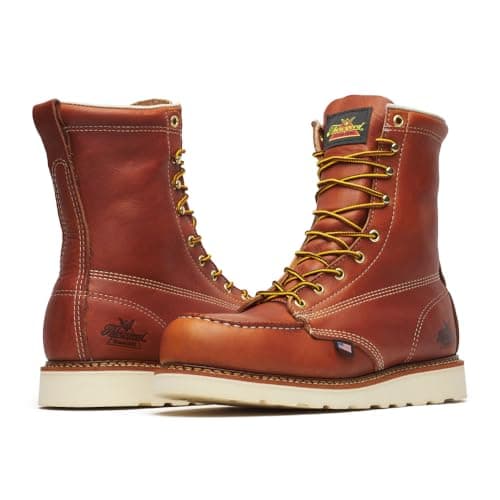
| 1 | 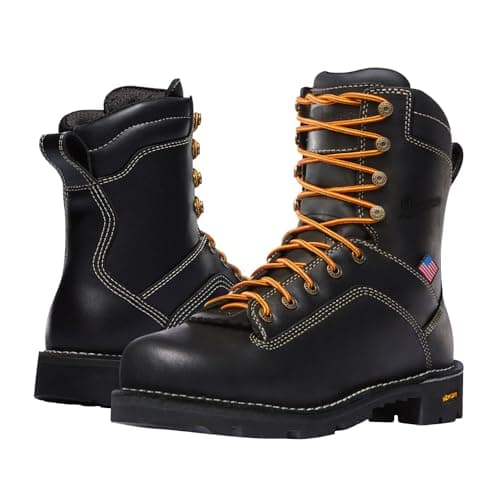 Danner Quarry 8" Waterproof Alloy ToeAn 8-inch stitchdown boot with a stiff midsole and a shank - the combination that actually resists a roll. | Genuine ankle support on broken ground | 9.5 | |
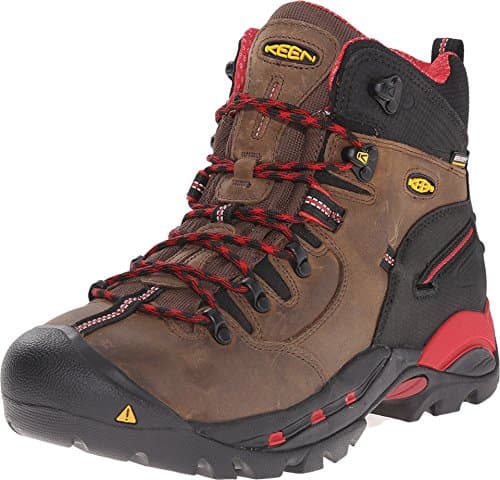
| 2 | 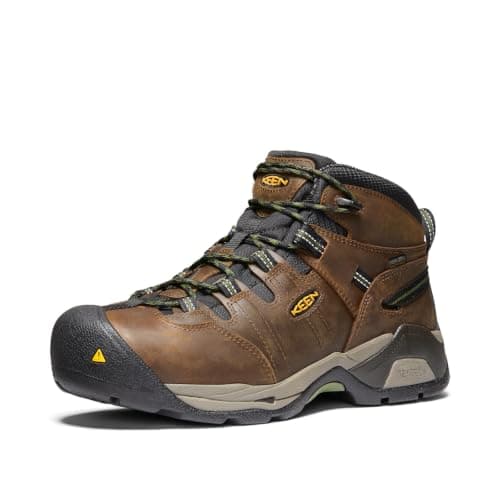 KEEN Utility Detroit XT Mid Steel Toe WaterproofA flexible mid-height boot with a padded collar - coverage and comfort without locking the joint. | The sensible middle | 9.4 | |
| 3 | 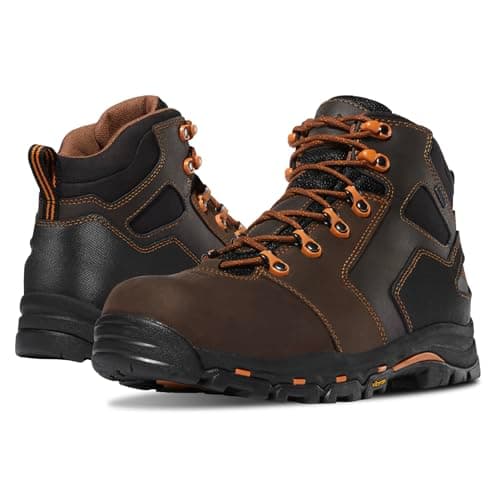 Danner Vicious 4.5" Composite ToeA 4.5-inch boot with a TPU shank - deliberately low, and it compensates underfoot instead. | When ankle mobility is the priority | 9.3 |
#ad Prices pulled from Amazon and stamped as of November 14, 2026; they change, and we show no number we cannot verify. How we are funded.
Most support · Genuine ankle support on broken ground
Danner Quarry 8" Waterproof Alloy Toe
An 8-inch stitchdown boot with a stiff midsole and a shank - the combination that actually resists a roll.
#ad Price as of November 14, 2026. How we are funded
- Our score
- 9.5/10
Category-defining
If you want real ankle support, this is what it looks like, and notice that the shaft height is only one part of it. The boot is 8 inches tall, but what limits ankle movement is the stitchdown construction over a stiff midsole and a supportive shank: the sole platform resists twisting, so the forces that would roll your ankle are absorbed by the boot's structure rather than by your ligaments. A tall soft-shafted boot on a flexible sole offers far less, however supportive it feels when laced.
The lacing system matters too. Enough eyelets and hooks up the shaft to genuinely lock the heel and ankle, rather than two token hooks at the top, is what turns height into restraint. Tighten the top two and the ankle stops being able to pivot inside the boot.
The costs of this much support are real and worth stating. The boot is heavy, it is stiff underfoot - which is uncomfortable on a flat slab all day - and the break-in is long. A stiff ankle also transfers force up the leg rather than absorbing it at the joint, which is one reason tall stiff boots can leave your knees and lower back aching if your work does not require them. If you stand on concrete all day, boots for standing on concrete is the better page.
Specs that matter
- Toe:
- Alloy toe, ASTM F2413
- Height:
- 8 inch
- Waterproof:
- Gore-Tex lined
- Build:
- Stitchdown, recraftable
Rubric profile
Raw per-criterion marks out of 10, before weighting — this is the shape of the pick, not its published score. A low mark is a scope limit, not a fault: how we score.
- Ankle restraint
- 9.4
- Torsional stiffness
- 9.2
- Mobility
- 5.6
- Comfort
- 7.6
- Value
- 7.4
Why we picked it
- Danner will recraft it, so the price is spread over many years
- Gore-Tex is the most reliable waterproof lining in footwear
- Alloy toe is lighter than steel at the same rating
Good to know: A premium up-front price that pays back through recrafting; stiff and heavy at first, and best on rough ground rather than slab.
Best balance · The sensible middle
KEEN Utility Detroit XT Mid Steel Toe Waterproof
A flexible mid-height boot with a padded collar - coverage and comfort without locking the joint.
#ad Price as of November 14, 2026. How we are funded
- Our score
- 9.4/10
Outstanding
This is where most people should actually be. A mid-height boot covers the ankle, keeps debris out and gives a sense of security, while a flexible forefoot and a padded collar let the joint move through its natural range. For warehouse floors, shop work, service calls and general trades on reasonably even ground, that is the right amount of boot - and the ankle itself does the stabilizing, which is how it stays strong.
The padded collar deserves a mention because it is the part people feel and mistake for support. It is comfort, not restraint: it stops the shaft edge biting into the ankle bones. That is genuinely valuable for all-day wear, and it is not the same thing as limiting a roll.
It will not stop an ankle roll on broken ground. The flexible construction that makes it comfortable is the same thing that lets the joint move, and if your work is on rubble, trenches or rock you need the stiffer boot above. It is also a steel toe, which conducts cold, and the membrane runs warm in summer.
Specs that matter
- Toe:
- Steel toe, ASTM F2413
- Height:
- Mid / 6 inch
- Waterproof:
- Yes
- Widths:
- D and EE
Rubric profile
Raw per-criterion marks out of 10, before weighting — this is the shape of the pick, not its published score. A low mark is a scope limit, not a fault: how we score.
- Ankle restraint
- 6.6
- Torsional stiffness
- 7.0
- Mobility
- 8.8
- Comfort
- 9.0
- Value
- 8.2
Why we picked it
- Actually stocked in EE wide, not just a roomy D
- Flexes out of the box rather than demanding a break-in
- Lighter than the Pittsburgh at the same protection
Good to know: A softer, more flexible upper than a traditional work boot, so it creases early; the mid cut is coverage rather than full ankle support.
Most mobility · When ankle mobility is the priority
Danner Vicious 4.5" Composite Toe
A 4.5-inch boot with a TPU shank - deliberately low, and it compensates underfoot instead.
#ad Price as of November 14, 2026. How we are funded
- Our score
- 9.3/10
Outstanding
Some trades are made worse by a tall boot. If your day is spent getting in and out of vehicles, kneeling in crawlspaces, climbing ladders and crouching into cabinets, an 8-inch shaft fights every one of those movements and the fatigue is cumulative. This boot takes the opposite approach: a deliberately low 4.5-inch cut for maximum ankle mobility, with a Trailguard TPU shank restoring the underfoot torsional stiffness and puncture protection that a low boot would otherwise lose.
That is the useful lesson in this boot. Torsional stiffness - how much the sole resists twisting along its length - does more to prevent a roll than shaft height does, and you can engineer it into a low boot. It is also GORE-TEX lined with a composite toe, so you are not trading away weather or protection to get the mobility.
A 4.5-inch shaft gives almost no ankle coverage and lets debris straight in, so it is the wrong boot for demolition, tear-offs and rubble. It is a premium price for less leather than any other boot here. And if you have a history of ankle instability, this is not the boot to be experimenting with.
Specs that matter
- Toe:
- Composite toe, ASTM F2413
- Height:
- 4.5 inch
- Waterproof:
- Yes, GORE-TEX lining
- Sole:
- Vibram, slip-resisting
Rubric profile
Raw per-criterion marks out of 10, before weighting — this is the shape of the pick, not its published score. A low mark is a scope limit, not a fault: how we score.
- Ankle restraint
- 4.4
- Torsional stiffness
- 8.0
- Mobility
- 9.6
- Comfort
- 8.8
- Value
- 7.6
Why we picked it
- GORE-TEX in a low-cut boot, which is a rare combination
- Trailguard TPU shank adds underfoot protection without stiffness
- Non-metallic toe and EH rating, so it clears metal detectors
Good to know: A 4.5-inch shaft is a deliberate choice for mobility — lovely on a ladder, too low for rubble and tear-offs.
Who actually needs it
| Work | Support needed | Why |
|---|---|---|
| Excavation, trenching, rubble, demolition | High - 8 inch, stiff sole | Uneven, shifting ground is where rolls happen |
| Carrying heavy loads over rough ground | High | Load raises the force an ankle has to resist |
| Roofing and ladder work | Moderate to high | Slopes and rungs, plus a need for a defined heel |
| General construction on prepared sites | Moderate - 6 inch, firm sole | Mixed ground, but mostly even underfoot |
| Warehouse, factory, shop floors | Low | Flat even ground; mobility and cushioning matter more |
| Service work, crawlspaces, vehicles | Low - deliberately | Constant crouching and climbing; a tall shaft fights you |
The case against over-booting
There is a real cost to wearing more boot than the work requires, and it is not just comfort. A stiff ankle changes how force travels up your leg: instead of being absorbed and dissipated at the ankle joint, more of it is transferred to the knee and the hip. People who move from a flexible boot to a rigid tall one on flat ground frequently report new knee or lower-back aching, and the boot is usually the cause.
There is also a conditioning argument. The muscles and tendons around the ankle stabilise the joint, and like any muscle they respond to being used. A boot that immobilises the ankle all day removes that stimulus, which is why a permanently braced ankle is not a stronger one. Neither of these is a reason to avoid support where the work demands it - a trench is a trench - but both are reasons not to buy the stiffest tallest boot available by default. If your ache is lower down, why work boots hurt separates fit problems from support problems, and work boots for back pain deals with the up-the-chain version.
If you have had an ankle injury
Previous sprains are the single biggest risk factor for another one, because the ligaments heal longer and the joint's position sense is reduced. If that is you, the honest advice is that a boot is the wrong primary tool. A boot is not a brace: a properly specified ankle brace or taping provides far more restraint than any work boot, and it can be worn inside a boot with enough volume to take it.
Alongside that, balance and proprioception training is the intervention with the strongest evidence behind it for preventing recurrence - and it is the thing a boot cannot do for you. This is worth a conversation with a physiotherapist or your doctor rather than a purchase. What a boot can usefully contribute is a stiff sole, a lacing system that locks the heel and enough internal volume to accommodate a brace.
What to skip
Skip buying height as a proxy for support - twist the sole and check the lacing instead. Skip an 8-inch stiff boot for flat-floor work, where it costs you mobility and can push aching up into your knees and back for no benefit. Skip relying on any work boot as treatment for a recurrent ankle injury, because a brace does that job properly and a boot does not. And skip pull-on boots if ankle restraint is genuinely your concern: a boot you cannot tighten cannot lock your heel, which is why the pull-on picks in pull-on work boots are chosen for convenience rather than for support.
Frequently asked
Do work boots need ankle support?
Only some work does. If you work on broken ground, in trenches, on rubble, or carry heavy loads over uneven surfaces, a stiff tall boot with a proper lacing system genuinely reduces the chance of an ankle roll. On flat floors it mostly costs you mobility and comfort without adding safety, and can transfer more force up to your knees and back.
Do 8-inch boots give more ankle support than 6-inch boots?
Only if the shaft and sole are stiff. Height on its own does very little - a soft-shafted 8-inch boot on a flexible sole allows nearly as much ankle inversion as a 6-inch one. What limits a roll is torsional stiffness in the sole plus lacing high enough to lock the heel. The main practical advantage of 8 inches is keeping debris out.
Is a padded collar the same as ankle support?
No. A padded collar is a comfort feature that stops the top edge of the shaft digging into your ankle bones, which matters for all-day wear. It does not restrain the joint. People often read the feeling of padding as support, and the two are unrelated.
Can work boots prevent ankle sprains?
They can reduce the risk on uneven ground if they are stiff enough and laced properly, but they are not a substitute for a brace. If you have had repeated sprains, a properly specified ankle brace provides far more restraint than any boot, and balance training has the strongest evidence for preventing recurrence. That is a conversation with a clinician rather than a purchase.
Are stiff work boots bad for your knees?
They can be if the work does not need them. A rigid ankle transfers more force up the leg instead of absorbing it at the joint, so people who switch to a tall stiff boot for flat-floor work often develop new knee or lower-back aching. Match the stiffness to the ground you actually work on.
How do I know if a boot has real ankle support?
Three quick checks in the shop. Hold the boot at the toe and heel and twist it - if it twists easily, the sole will follow your foot as it rolls. Flex the shaft sideways with your hand to feel whether it resists. And look at how high the lacing goes, because a boot you cannot cinch at the top lets your ankle pivot inside it.
Our recommendation
If you read nothing else on this page, these are the two to look at — the one we would buy, and the one to take instead if its trade-off suits you better.
Most support · Genuine ankle support on broken ground
Danner Quarry 8" Waterproof Alloy Toe
An 8-inch stitchdown boot with a stiff midsole and a shank - the combination that actually resists a roll.
#ad Price as of November 14, 2026. How we are funded
Runner-up · The sensible middle
KEEN Utility Detroit XT Mid Steel Toe Waterproof
A flexible mid-height boot with a padded collar - coverage and comfort without locking the joint.
#ad Price as of November 14, 2026. How we are funded
Prices are read live from Amazon and stamped with the date. How we pick.
Sources
Back to Guides, or see how we pick. Spotted something wrong? We publish corrections — see our editorial policy.