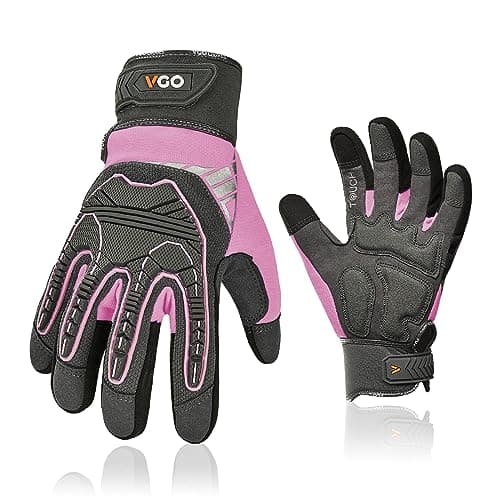
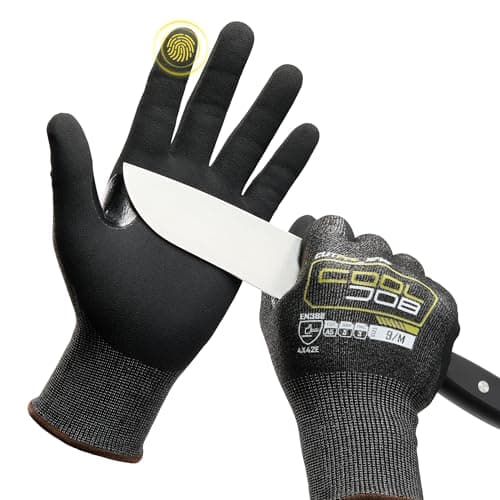
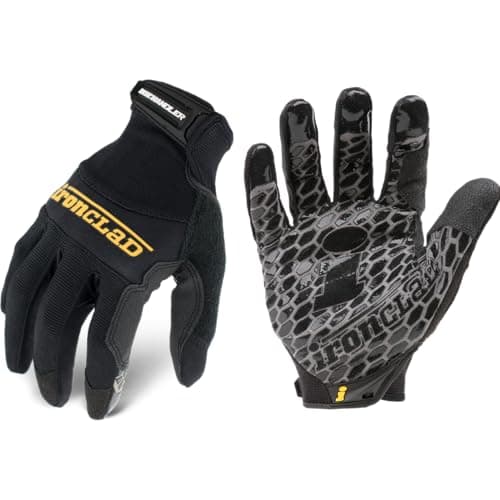
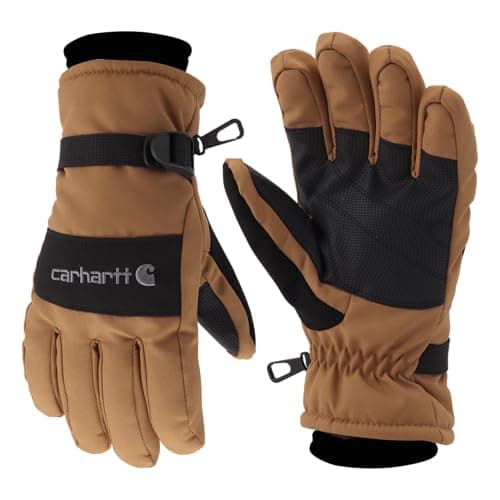
Glove sizing
What Size Work Gloves Do You Need?
Glove sizing is one measurement and two conventions. Get it right and a cheap glove works; get it wrong and no glove does.
To size work gloves, measure the circumference of your dominant hand around the knuckles, excluding the thumb, with your hand flat. That measurement in inches is your numeric glove size: 8 inches is a size 8, which most brands label medium. Then measure from the base of your palm to the tip of your middle finger and check it against the brand's length column, because two hands with the same circumference can need different finger lengths. If your two measurements point to different sizes, go with the circumference and accept slightly long fingers - a glove that is tight across the knuckles will never be comfortable.
Glove sizing confuses people because two conventions are in use at once. Numeric sizes - 7, 8, 9, 10, 11 - come from the glove trade and correspond directly to hand circumference in inches, which makes them genuinely useful. Letter sizes - S, M, L, XL - were layered on top for consumer convenience, and because every brand maps them slightly differently, they are much less reliable. The fix is to know your number and treat the letter as an approximation.
How to measure your hand
- Use a soft tape measure or a strip of paper and a ruler. A rigid tape will not follow the curve of your hand.
- Measure your dominant hand. Lay it flat, palm up, fingers together and thumb relaxed out of the way.
- Wrap the tape around the widest part of your palm - across the knuckles at the base of the fingers, not including the thumb. Snug, not tight. Read it in inches.
- Measure the length too. From the crease at the base of your palm to the tip of your middle finger. Note it in inches.
- Round the circumference up to the nearest half inch. That is your numeric size. An 8.75-inch hand is a size 9.
- Check both numbers against the brand's own chart, because the letter equivalents differ. If the two measurements disagree, size by circumference.
What the numbers mean
| Hand circumference | Numeric size | Usually labeled |
|---|---|---|
| 6.5 - 7 inches | 7 | Small (often women's medium) |
| 7.5 - 8 inches | 8 | Medium |
| 8.5 - 9 inches | 9 | Large |
| 9.5 - 10 inches | 10 | X-Large |
| 10.5 - 11 inches | 11 | XX-Large |
Two caveats on that table. First, the letter column is the typical mapping and not a standard - some brands run a full size small, and work-glove sizing in general runs tighter than fashion-glove sizing. Second, women's hands are frequently narrower across the palm and shorter in the finger for the same circumference, which is why a men's small is often the wrong answer rather than merely a small one; gloves cut on a women's pattern fit differently rather than just smaller, and women's work gloves covers the options.
Quick picks
Ranked by our published scoring rubric. Tap any row for the full write-up.
| # | Product | Best for | Score | Price |
|---|---|---|---|---|
| 1 | 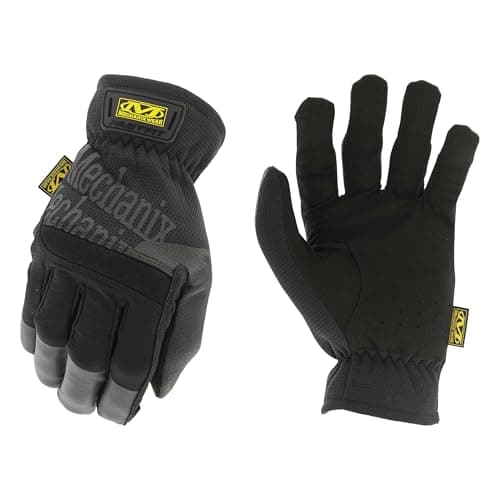 Mechanix Wear FastFit Work GlovesA snug synthetic-leather glove with an elastic cuff and a genuinely consistent size run - the easiest glove to buy by measurement. | A glove that is easy to size right | 9.5 | |
| 2 | 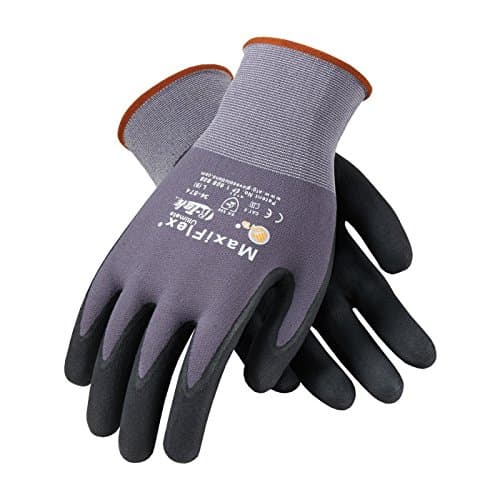 MaxiFlex Ultimate 34-874 Nitrile-Coated GlovesA 15-gauge knit that stretches to fit - the category where getting within one size is good enough. | Knit gloves, where size is more forgiving | 9.4 | |
| 3 | 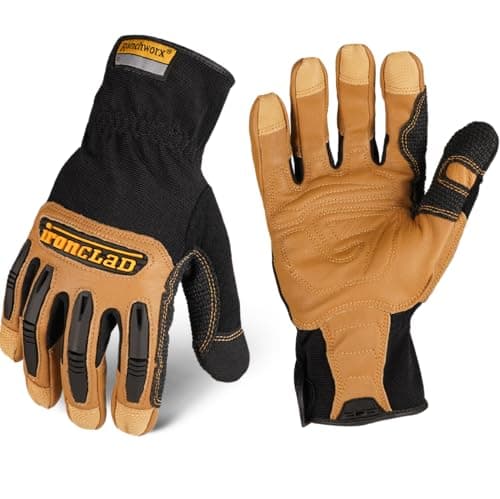 Ironclad Ranchworx Leather Work GlovesHeavy goatskin that will not stretch to rescue a wrong size - measure before buying this one. | Leather, where sizing is least forgiving | 9.3 |
#ad Prices pulled from Amazon and stamped as of November 14, 2026; they change, and we show no number we cannot verify. How we are funded.
Top pick · A glove that is easy to size right
Mechanix Wear FastFit Work Gloves
A snug synthetic-leather glove with an elastic cuff and a genuinely consistent size run - the easiest glove to buy by measurement.
#ad Price as of November 14, 2026. How we are funded
- Our score
- 9.5/10
Category-defining
Some gloves fit the way the chart says and some do not, and this one is among the more predictable. It runs true to a measured hand circumference, the synthetic-leather palm has very little stretch so the size you order is the size you get, and the elastic pull-on cuff holds the glove against your hand without a strap to adjust. If you have measured your hand and want to buy online without a fitting, this is a sensible place to start.
The close fit is the point. A glove with no slack at the fingertips keeps real feel for small parts and fasteners, and it does not bunch in your palm when you grip - which is what causes blisters in a loose glove.
It is not a protective glove in any rated sense: no cut rating, no impact armor, no puncture resistance. The synthetic palm wears through at the fingertips with heavy use. And an elastic cuff cannot be loosened, so if your hand is wide across the knuckles relative to its circumference, getting it on is a struggle.
Specs that matter
- Cuff:
- Elastic, no closure
- Palm:
- Synthetic leather
- Cut rating:
- None
- Touchscreen:
- Yes
Rubric profile
Raw per-criterion marks out of 10, before weighting — this is the shape of the pick, not its published score. A low mark is a scope limit, not a fault: how we score.
- Size accuracy
- 9.2
- Dexterity
- 9.0
- Grip
- 8.0
- Durability
- 7.4
- Value
- 8.8
Why we picked it
- Fastest glove here to put on and take off
- Low profile under a jacket cuff
- Cheapest Mechanix model
Good to know: An elastic cuff instead of a closure, so the fit is take-it-or-leave-it; order a size down if you want it snug.
Most forgiving fit · Knit gloves, where size is more forgiving
MaxiFlex Ultimate 34-874 Nitrile-Coated Gloves
A 15-gauge knit that stretches to fit - the category where getting within one size is good enough.
#ad Price as of November 14, 2026. How we are funded
- Our score
- 9.4/10
Outstanding
Coated knits are the forgiving end of glove sizing, and that is a real advantage if you are buying for several people or you are between sizes. A 15-gauge nylon liner stretches to conform to the hand, so a size that would be wrong in a leather glove is merely snug or slightly loose here. That is also why these are sold in numeric sizes - typically 7 through 11 - which map directly onto a measured hand circumference in inches.
The 15-gauge construction is what makes the fit feel good rather than just acceptable. A finer gauge means a thinner, more elastic liner that follows the hand closely, and a thinner glove keeps the fingertip feel that makes you willing to wear it all day.
Stretch is not a substitute for the right size. A knit two sizes too large still bunches in the palm, and one too small restricts circulation and tires your hand. There is no cut rating and the coating wears out at the fingertips in weeks under heavy use - treat them as consumables.
Specs that matter
- Coating:
- Micro-foam nitrile, palm and fingers
- Liner:
- 15-gauge seamless knit
- Pack:
- Sold as 12 pairs
- Cut rating:
- ANSI A1 — minimal
Rubric profile
Raw per-criterion marks out of 10, before weighting — this is the shape of the pick, not its published score. A low mark is a scope limit, not a fault: how we score.
- Size accuracy
- 8.4
- Dexterity
- 9.6
- Grip
- 8.8
- Durability
- 6.6
- Value
- 9.4
Why we picked it
- Dexterity close to bare hands — you can pick up a washer
- Breathable back, so hands do not swim in sweat
- Buying by the dozen drops the per-pair cost dramatically
Good to know: The best bare-hand feel of any glove here, with essentially no cut protection — buy them by the box and treat them as consumable.
Hardest to size · Leather, where sizing is least forgiving
Ironclad Ranchworx Leather Work Gloves
Heavy goatskin that will not stretch to rescue a wrong size - measure before buying this one.
#ad Price as of November 14, 2026. How we are funded
- Our score
- 9.3/10
Outstanding
Thick leather gloves are the hardest category to size and the most important to get right. Goatskin at this weight has very little give, so a glove that is tight across the knuckles will stay tight, and one that is long in the fingers will never shorten. The flip side is that a correctly sized heavy leather glove is the most protective thing you can wear against thorns, splinters and abrasion - so the measurement is worth taking properly.
The adjustable wrist closure is what makes it workable. Unlike an elastic cuff, a strap lets you tune the fit at the wrist independently of the hand, which matters because wrist circumference and hand circumference vary independently between people.
Leather does break in and conform somewhat, but far less than people hope, and a tight glove will restrict your grip for its whole life rather than becoming comfortable. It is hot, it is the least dexterous option here, and wet goatskin stiffens as it dries. Condition it like a boot - the restraint required is set out in boot care and conditioning.
Specs that matter
- Palm:
- Reinforced leather with double stitching
- Protection:
- Padded knuckle and impact zones
- Cut rating:
- None published
- Care:
- Machine washable
Rubric profile
Raw per-criterion marks out of 10, before weighting — this is the shape of the pick, not its published score. A low mark is a scope limit, not a fault: how we score.
- Size accuracy
- 7.6
- Dexterity
- 6.4
- Grip
- 8.6
- Durability
- 9.4
- Value
- 8.0
Why we picked it
- Survives barbed wire and sharp sheet stock that destroy nitrile gloves
- Reinforced fingertips are where cheap gloves blow out first
- Washable, unusually for a leather glove
Good to know: A heavyweight leather glove: stiff until broken in and bulky for fine work, with no published cut rating despite the heft.
Why gauge matters as much as size
On coated knit gloves you will see a gauge number - 10, 13, 15, 18 - and it describes how fine the knit liner is. Higher gauge means finer yarn and more stitches per inch, which produces a thinner, stretchier, more form-fitting glove. An 18-gauge glove feels almost like a second skin; a 10-gauge glove feels like a work glove. Gauge is not a protection rating in itself, but it changes the fit experience more than one size step does.
The practical rule: for fine work and all-day wear, choose a higher gauge (15 or 18) and you will tolerate the glove for longer. For heavy handling and abrasion, a lower gauge gives you more material to wear through. And if you are between sizes in a knit, go higher gauge in the smaller size rather than lower gauge in the larger one - the stretch will accommodate you and you keep the fingertip feel.
How to tell a glove fits
- No slack at the fingertips. Press your fingers against a surface. If there is empty material beyond your fingertip, the glove is too long and you have lost all fine feel.
- No bunching in the palm when you close your hand. A fold of material in your palm is what turns into a blister by lunchtime.
- You can make a full fist without the glove pulling your fingers straight. If it resists, it is too small, and it will fatigue your hand and forearm all day.
- The cuff seals at the wrist. Debris, swarf and cold all enter at the wrist. A gap there defeats a good glove.
- Your hand does not go numb or cold. A glove tight enough to restrict circulation makes your hands colder, not warmer - the opposite of what people expect in winter.
The sizing decisions that are actually safety decisions
An oversized glove is a documented hazard around rotating and moving equipment - drill presses, lathes, bench grinders, conveyors, augers, chippers - because loose material can be caught and pull your hand in. That is why some operations prohibit gloves entirely at certain machines, and why 'size up for comfort' is bad advice in a workshop. If a glove is loose enough to twist on your hand, it is loose enough to be caught.
Fit also determines whether a rated glove protects you at all. A cut-resistant liner only resists a cut where it is actually between the blade and your skin, so a glove that has rotated or bunched has moved its protection away from the point of contact. That is the quiet reason an ill-fitting A5 glove can be worse than a well-fitting A2 - the rating assumes the material is where it should be. The scale itself is explained in ANSI cut levels explained.
What to skip
Skip buying by letter size alone when a numeric size is available, because the letters are not standardized between brands. Skip sizing up to fit a glove liner underneath; buy a glove designed for a liner instead, or an insulated glove - the options are in cold weather work gloves. Skip gloves entirely at machines where the manufacturer or your employer prohibits them, and never wear a loose glove near a rotating spindle. And skip the assumption that an expensive glove will fit better: price buys materials and ratings, not a fit, and a $6 glove in the right size out-performs a $40 glove in the wrong one.
Frequently asked
What size work gloves do I need?
Measure the circumference of your dominant hand around the knuckles, excluding the thumb, with your hand flat. That figure in inches is your numeric glove size - an 8-inch hand is a size 8, usually labeled medium. Also measure palm-to-fingertip length and check both against the brand's chart, since letter sizes are not standardized.
How do I measure my hand for work gloves?
Lay your dominant hand flat, palm up, and wrap a soft tape measure around the widest part of your palm across the knuckles, excluding the thumb. Keep it snug but not tight and read it in inches, rounding up to the nearest half inch. Then measure from the base of your palm to the tip of your middle finger for the length.
Should work gloves be tight or loose?
Snug, with no slack at the fingertips and no material bunching in your palm when you close your hand - but not tight enough to resist making a fist or to make your hand cold. A loose glove is the more dangerous error: slack material can be caught by rotating machinery, and it causes blisters and makes you grip harder.
What does gauge mean on work gloves?
Gauge describes how fine the knit liner is - higher numbers mean finer yarn and more stitches per inch. An 18-gauge glove is thin and form-fitting with excellent fingertip feel; a 10-gauge glove is thicker and more abrasion-resistant. It is not a protection rating, but it affects how the glove fits and how willing you will be to wear it all day.
Are women's work gloves just smaller?
No. Women's hands are often narrower across the palm and shorter in the finger for the same circumference, so a glove cut on a women's pattern fits differently rather than simply being a smaller men's glove. If a men's small fits the circumference but the fingers are too long, a women's pattern is likely to fit properly.
Does glove size differ between brands?
Numeric sizes are reasonably consistent because they correspond to hand circumference in inches. Letter sizes are not - the same hand can be a large in one brand and an X-large in another. Always check the brand's own chart, and prefer a numeric size when one is offered.
Our recommendation
If you read nothing else on this page, these are the two to look at — the one we would buy, and the one to take instead if its trade-off suits you better.
Top pick · A glove that is easy to size right
Mechanix Wear FastFit Work Gloves
A snug synthetic-leather glove with an elastic cuff and a genuinely consistent size run - the easiest glove to buy by measurement.
#ad Price as of November 14, 2026. How we are funded
Runner-up · Knit gloves, where size is more forgiving
MaxiFlex Ultimate 34-874 Nitrile-Coated Gloves
A 15-gauge knit that stretches to fit - the category where getting within one size is good enough.
#ad Price as of November 14, 2026. How we are funded
Prices are read live from Amazon and stamped with the date. How we pick.
Sources
Back to Guides, or see how we pick. Spotted something wrong? We publish corrections — see our editorial policy.