Best for yard work
Best Work Gloves for Yard Work
Yard work is two jobs in one pair of hands: fine work in soil, and fighting brush that fights back.
The best all-round yard glove is the Ironclad Ranchworx: heavy goatskin with a reinforced palm and knuckle guards, and the only glove here that reliably stops blackberry and locust thorns. Pair it with the MaxiFlex Ultimate for planting and weeding, use the Kevlar-lined Youngstown General Utility when a trimmer or saw is running, and keep the insulated waterproof Carhartt pair for wet autumn clean-up.
Yard and landscape work puts hands through a wider range of hazards than almost any trade, and they pull in opposite directions. Setting plants and pulling weeds needs fingertip feel; clearing a fence line of brambles needs leather thick enough to stop a thorn; running a string trimmer needs cut resistance and a snug fit; and doing any of it in November needs insulation and a waterproof barrier. Buying one glove to cover all of that produces a glove that is wrong for most of the day.
The four hazards, and what each needs
- Thorns and woody stubs - puncture. Needs thickness. Goatskin or cowhide at real weight. Cut ratings measure slicing, not puncture, so an A5 knit can still be run through by a rose cane.
- Blades and trimmer line - laceration. Needs a cut-rated liner such as Kevlar, plus a close fit so nothing snags. This is where knits with an ANSI rating earn their place.
- Soil, water and abrasion - skin damage. Needs a coated palm and a glove thin enough that you keep it on. Most garden hand damage is cumulative, not dramatic.
- Wet cold - loss of function. Needs insulation and a waterproof insert together. Cold hands drop tools and misjudge grip, which is its own hazard.
- Vibration from powered tools. Needs padding, and more importantly limits on exposure time. Anti-vibration gloves help at the margin; they do not make a full day on a trimmer safe.
Why cut ratings do not stop thorns
This is the most common mistake in buying yard gloves. The ANSI/ISEA cut scale measures how much force it takes to draw a blade across the material - a slicing action. A thorn does something entirely different: it concentrates force on a single point and pushes through the gaps between fibers. A high-gauge cut-resistant knit has excellent slice resistance and almost no puncture resistance, which is why people are surprised when an A5 glove does nothing against blackberry.
Puncture resistance comes from thickness and density, which in practice means leather for yard work. ANSI/ISEA 105 does publish a separate puncture level, and it is worth looking for - but the simpler rule is that if your hazard is thorns, buy leather, and if your hazard is blades, buy a rating. ANSI cut levels explained covers how the scale works and what it does not cover.
Quick picks
Ranked by our published scoring rubric. Tap any row for the full write-up.
| # | Product | Best for | Score | Price |
|---|---|---|---|---|
| 1 | 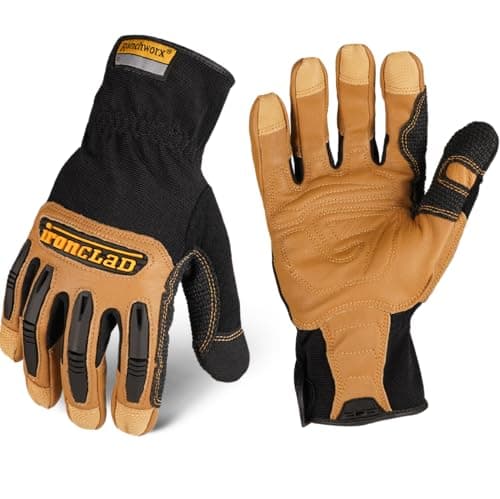 Ironclad Ranchworx Leather Work GlovesA heavy goatskin glove with reinforced palm and knuckle protection - the one that stops blackberry and locust thorns. | Brush, thorns and anything that bites back | 9.6 | |
| 2 | 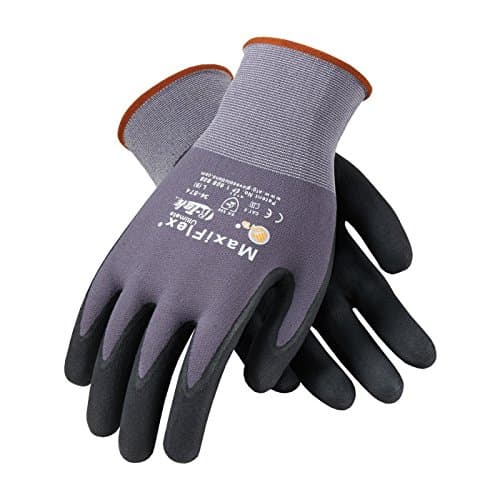 MaxiFlex Ultimate 34-874 Nitrile-Coated GlovesA 15-gauge micro-foam nitrile knit - enough feel to handle seedlings, enough coating to keep soil out of your nails. | Planting, weeding and anything needing fingers | 9.4 | |
| 3 | 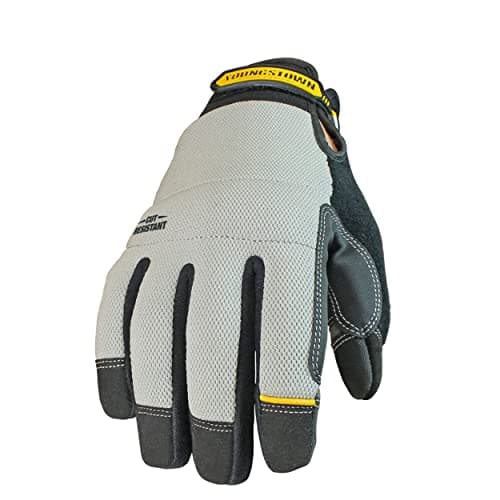 Youngstown Glove General Utility Lined with KevlarA Kevlar-lined synthetic-leather glove - cut resistance plus a snug fit for running powered tools. | Saw, trimmer and chipper work | 9.3 | |
| 4 | 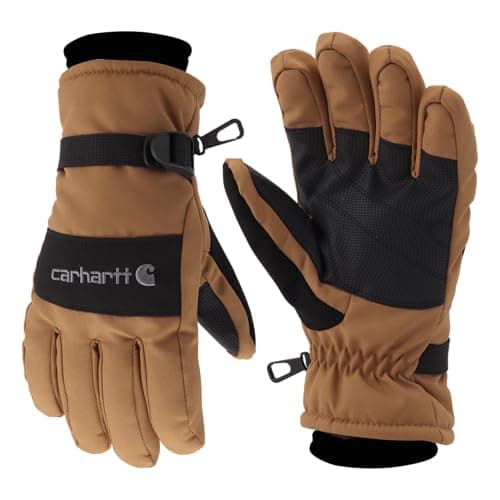 Carhartt Waterproof Insulated Knit-Cuff GloveAn insulated waterproof knit-cuff glove - for the part of the year when yard work means wet and cold hands. | Wet leaves, cold mornings and late-season clean-up | 9.2 |
#ad Prices pulled from Amazon and stamped as of November 14, 2026; they change, and we show no number we cannot verify. How we are funded.
Top pick · Brush, thorns and anything that bites back
Ironclad Ranchworx Leather Work Gloves
A heavy goatskin glove with reinforced palm and knuckle protection - the one that stops blackberry and locust thorns.
#ad Price as of November 14, 2026. How we are funded
- Our score
- 9.6/10
Category-defining
Clearing brush is the hazard that separates yard gloves from garden gloves. Blackberry, multiflora rose, locust and hawthorn go straight through a coated knit, and so does a broken branch stub driven into your palm. What stops them is thick leather, and goatskin is the best compromise available: it has a higher tensile strength than cowhide at the same thickness, so you get puncture resistance without a glove so stiff you cannot hold a loppers handle.
The reinforcement pattern is what makes it a work glove rather than a rigger glove. A doubled palm and thumb take the wear from pulling vines and handling split wood, and the TPR knuckle guards matter more than they sound - a lot of brush injuries are the back of the hand hitting a stub you did not see.
It is hot, it is the least dexterous glove here, and leather wet through from damp foliage takes a long time to dry and stiffens as it does. It is also the most expensive. For planting and fine work it is the wrong tool entirely - you want the next pick.
Specs that matter
- Palm:
- Reinforced leather with double stitching
- Protection:
- Padded knuckle and impact zones
- Cut rating:
- None published
- Care:
- Machine washable
Rubric profile
Raw per-criterion marks out of 10, before weighting — this is the shape of the pick, not its published score. A low mark is a scope limit, not a fault: how we score.
- Thorn protection
- 9.6
- Dexterity
- 6.4
- Grip
- 8.6
- Durability
- 9.4
- Value
- 8.0
Why we picked it
- Survives barbed wire and sharp sheet stock that destroy nitrile gloves
- Reinforced fingertips are where cheap gloves blow out first
- Washable, unusually for a leather glove
Good to know: A heavyweight leather glove: stiff until broken in and bulky for fine work, with no published cut rating despite the heft.
Best for planting · Planting, weeding and anything needing fingers
MaxiFlex Ultimate 34-874 Nitrile-Coated Gloves
A 15-gauge micro-foam nitrile knit - enough feel to handle seedlings, enough coating to keep soil out of your nails.
#ad Price as of November 14, 2026. How we are funded
- Our score
- 9.4/10
Outstanding
Half of yard work is fine work: setting plants, pulling weeds at the root, untangling line, handling fasteners and small tools. A heavy leather glove makes all of that worse, and most people respond by taking the gloves off, which is how you end up with soil-cracked hands and a thorn in your thumb. This knit is the glove that stays on: thin enough to feel a seedling stem, coated enough to keep dirt out of your fingernails, and breathable across the back of the hand so it is tolerable in summer.
The micro-foam nitrile palm also grips damp surfaces well, which matters more in a garden than in a shop - wet tool handles, wet weeds, a hose fitting. And at multi-pack prices you can keep several pairs going and let them get filthy.
No thorn protection worth the name, and that is the whole limitation: a rose cane goes through this like paper. No cut resistance either, so keep them away from blade work. And they are consumables - weeks of heavy use, not seasons.
Specs that matter
- Coating:
- Micro-foam nitrile, palm and fingers
- Liner:
- 15-gauge seamless knit
- Pack:
- Sold as 12 pairs
- Cut rating:
- ANSI A1 — minimal
Rubric profile
Raw per-criterion marks out of 10, before weighting — this is the shape of the pick, not its published score. A low mark is a scope limit, not a fault: how we score.
- Thorn protection
- 3.0
- Dexterity
- 9.6
- Grip
- 8.8
- Durability
- 6.4
- Value
- 9.4
Why we picked it
- Dexterity close to bare hands — you can pick up a washer
- Breathable back, so hands do not swim in sweat
- Buying by the dozen drops the per-pair cost dramatically
Good to know: The best bare-hand feel of any glove here, with essentially no cut protection — buy them by the box and treat them as consumable.
Best for power tools · Saw, trimmer and chipper work
Youngstown Glove General Utility Lined with Kevlar
A Kevlar-lined synthetic-leather glove - cut resistance plus a snug fit for running powered tools.
#ad Price as of November 14, 2026. How we are funded
- Our score
- 9.3/10
Outstanding
Once a powered tool is in your hands the hazard changes from puncture to laceration, and a plain leather glove is no longer the right answer. This one is lined with Kevlar for cut resistance and built on a snug, articulated synthetic-leather shell, which is the combination you want when running a string trimmer, a pole saw, a hedge trimmer or feeding a chipper: protection against a glancing blade, and a close fit that does not snag or bunch around a throttle.
The fit is the safety feature people underestimate. A loose glove near rotating equipment is a hazard in itself, and a bulky glove makes you grip harder, which fatigues your forearms and makes a trimmer harder to control.
It is warm, it is not waterproof, and the synthetic shell does not take the abuse of heavy brush dragging the way goatskin does. It also is not a chainsaw glove - no general work glove is, and saw work needs purpose-made protection. For the higher cut levels and what they cost you in feel, see cut resistant work gloves.
Specs that matter
- Liner:
- Kevlar lined
- Palm:
- Synthetic leather, reinforced
- Cut resistance:
- Kevlar liner; ANSI level not published for this model
- Made in:
- Designed in USA
Rubric profile
Raw per-criterion marks out of 10, before weighting — this is the shape of the pick, not its published score. A low mark is a scope limit, not a fault: how we score.
- Thorn protection
- 7.4
- Dexterity
- 8.2
- Grip
- 8.4
- Durability
- 8.0
- Value
- 8.4
Why we picked it
- Kevlar lining adds real cut resistance to a normal-feeling glove
- Durable enough for utility and lineman work
- Good wrist coverage
Good to know: Kevlar-lined for heat and abrasion but with no published ANSI cut level, so you cannot spec it to a standard.
Best for wet cold · Wet leaves, cold mornings and late-season clean-up
Carhartt Waterproof Insulated Knit-Cuff Glove
An insulated waterproof knit-cuff glove - for the part of the year when yard work means wet and cold hands.
#ad Price as of November 14, 2026. How we are funded
- Our score
- 9.2/10
Outstanding
The hardest yard days are not the hot ones, they are November: wet leaves, cold rain, hands going numb on a rake handle. A soaked unlined glove is worse than no glove because it holds cold water against your skin. This one is built for that specific window - a waterproof insert plus insulation, with a knit cuff that keeps debris and water from running down your wrist.
Insulation plus waterproofing is the right pairing for wet cold specifically. Insulation alone wets out and stops working; waterproofing alone leaves your hands cold at the fingertips. For leaf clean-up, gutter work and winter prep, this is the glove that keeps you working rather than going inside.
It is far too warm for anything above about 50F, the insulation and insert cost you real dexterity, and insulated gloves get damp from sweat inside, which means they need drying overnight. There is no cut or thorn protection. If the cold is genuinely severe rather than merely wet, cold weather work gloves goes further.
Specs that matter
- Waterproof:
- Waterproof insert
- Insulation:
- Insulated lining
- Cuff:
- Knit, seals at wrist
- Touchscreen:
- No
Rubric profile
Raw per-criterion marks out of 10, before weighting — this is the shape of the pick, not its published score. A low mark is a scope limit, not a fault: how we score.
- Thorn protection
- 4.0
- Dexterity
- 6.6
- Grip
- 8.0
- Durability
- 7.6
- Value
- 8.6
Why we picked it
- Knit cuff keeps snow and water from running down your wrist
- Genuinely waterproof, not just resistant
- Warm without being a ski mitt
Good to know: A waterproof insert means no breathability, so hands get damp from the inside on warm days; no touchscreen compatibility.
The four picks side by side
| If the task is | Buy | Because |
|---|---|---|
| Clearing brush, brambles and fence lines | Ironclad Ranchworx | Heavy goatskin stops thorns; reinforced palm and knuckle guards |
| Planting, weeding, fine handling | MaxiFlex Ultimate 34-874 | 15-gauge feel with a grippy coated palm, breathable back |
| String trimmer, pole saw, chipper | Youngstown General Utility | Kevlar cut liner in a snug articulated fit |
| Wet leaf clean-up and cold mornings | Carhartt Waterproof Insulated | Waterproof insert plus insulation and a debris-stopping knit cuff |
Looking after yard gloves
- Dry leather slowly and never with heat. Wet goatskin left on a radiator becomes a hard, cracked shell. Open the cuff, stuff with newspaper if soaked, and let it dry in moving air.
- Condition leather gloves once or twice a season. The same logic as boots: oils leave, the leather hardens, and a hardened glove cracks at the flex points. Boot care and conditioning covers the products and the restraint required.
- Wash coated knits and let them air-dry. They come out of a washing machine fine on a cold cycle, and they last longer clean because trapped grit abrades the liner from inside.
- Keep a dry second pair for wet days. Damp gloves are the main cause of blisters in yard work, and a soaked pair does not recover mid-shift.
- Retire a glove when the palm is through. A hole in the palm of a brush glove is where the next thorn goes.
What we would skip
Skip the thin stretch gardening gloves sold in supermarket multi-packs for anything but potting - they tear on the first bramble and they leave your knuckles bare. Skip cotton gloves entirely: they soak up water and soil, hold it against your skin and abrade through in an afternoon. Skip any glove with a loose gauntlet cuff when running a trimmer or chipper, because a glove that can be caught is more dangerous than a bare hand. And skip buying one expensive pair to do everything - two cheap task-specific pairs will protect you better and cost less.
Frequently asked
What are the best work gloves for yard work?
The Ironclad Ranchworx for brush and thorn work - heavy goatskin with a reinforced palm is the only thing here that reliably stops blackberry and locust thorns. For planting and weeding, pair it with the thin MaxiFlex Ultimate, which keeps enough fingertip feel that you will actually leave it on.
Will cut-resistant gloves stop thorns?
Mostly no. Cut ratings measure resistance to a blade drawn across the material, while a thorn concentrates force on one point and pushes between the fibers. A high-rated knit can still be punctured by a rose cane. For thorns, buy thickness - leather - and look for a published puncture rating rather than a cut level.
What gloves should I wear for using a string trimmer?
A snug, cut-resistant glove such as the Kevlar-lined Youngstown General Utility. Two things matter: a liner that resists a glancing cut from the line or a thrown stone, and a close fit with no loose cuff, because a glove that can be snagged by a rotating head is a hazard in itself.
Are leather or coated gloves better for gardening?
It depends on the task, which is why most people doing serious yard work own both. Leather is for brush, thorns, split wood and anything that punctures. Coated knits are for planting, weeding and fine handling, where feel matters and the only hazard is soil and abrasion.
How do I stop my hands cracking from yard work?
Keep the gloves on for soil work rather than only for the heavy jobs - most skin damage in yard work is cumulative abrasion and drying from soil, not a single injury. Dry your hands properly before putting cold-weather gloves on, swap out of damp gloves, and use a barrier cream at the end of the day rather than treating cracks once they appear.
Our recommendation
If you read nothing else on this page, these are the two to look at — the one we would buy, and the one to take instead if its trade-off suits you better.
Top pick · Brush, thorns and anything that bites back
Ironclad Ranchworx Leather Work Gloves
A heavy goatskin glove with reinforced palm and knuckle protection - the one that stops blackberry and locust thorns.
#ad Price as of November 14, 2026. How we are funded
Runner-up · Planting, weeding and anything needing fingers
MaxiFlex Ultimate 34-874 Nitrile-Coated Gloves
A 15-gauge micro-foam nitrile knit - enough feel to handle seedlings, enough coating to keep soil out of your nails.
#ad Price as of November 14, 2026. How we are funded
Prices are read live from Amazon and stamped with the date. How we pick.
Sources
Back to Work Gloves, or see how we pick. Spotted something wrong? We publish corrections — see our editorial policy.